Guide to Japanese Knife Types
Tokyo Tools: Guide to Japanese Knife Types
Japanese cuisine emphasizes the ingredient itself, often served alone or with a small amount of other ingredients and often raw. Therefore, choosing the right knife for its preparation is crucial. The evenness of the cut, the precision of the shapes of sliced vegetables and meat significantly affect the taste of the food and the experience of it.
Contents of the Article
Why Santoku and Gyuto are the most common choices for everyday cooking,
when it makes sense to opt for a specialized knife for vegetables, meat, or fish,
what the differences are between the most famous types of Japanese knives,
and how to know which one will best suit your cooking style.
.
.
.
.
.
Universal Knives
The basic building block of any professional or home cook's equipment. While they may not perform specific cutting tasks as well as knives focused on those tasks, the following knives can handle most cutting perfectly.
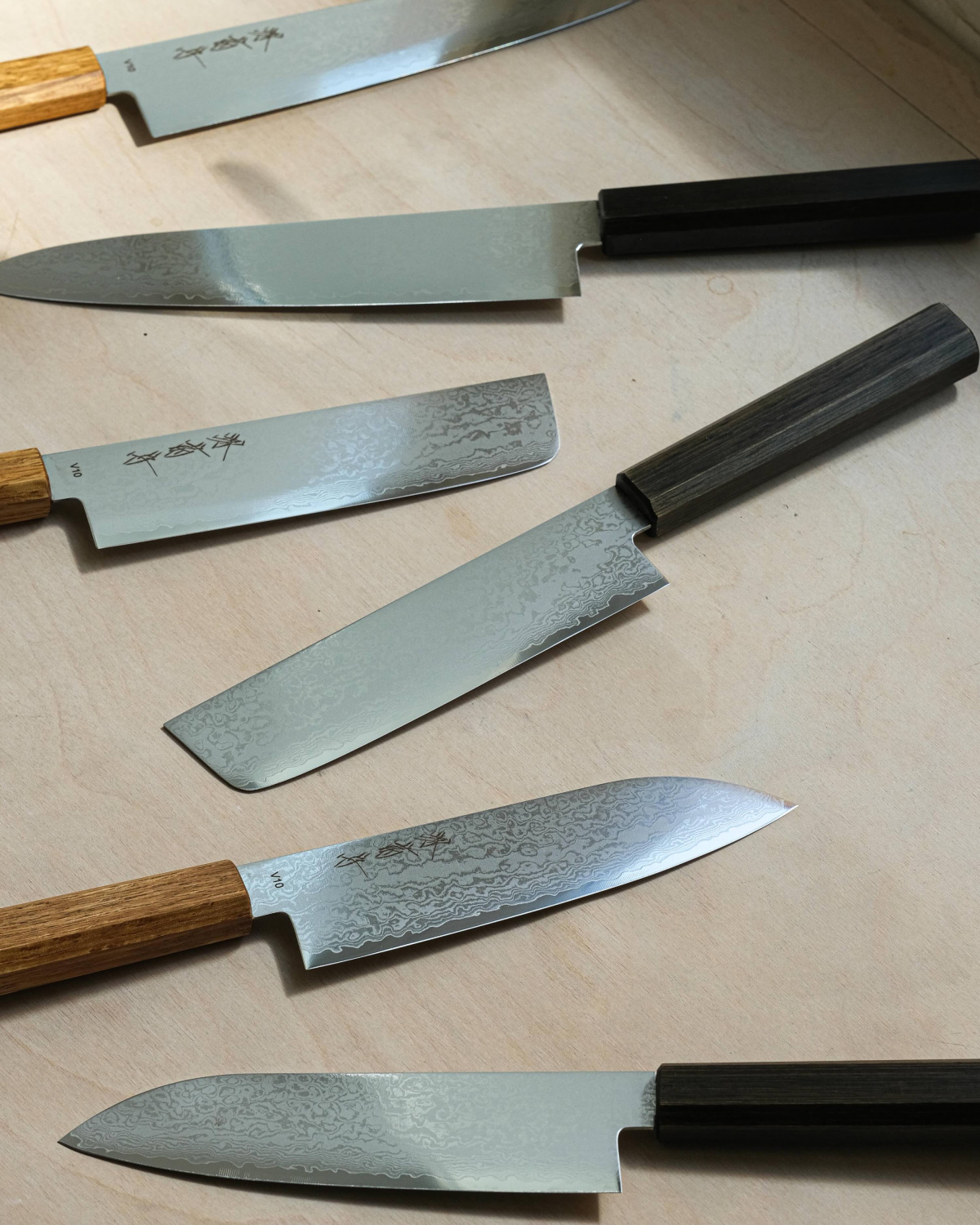
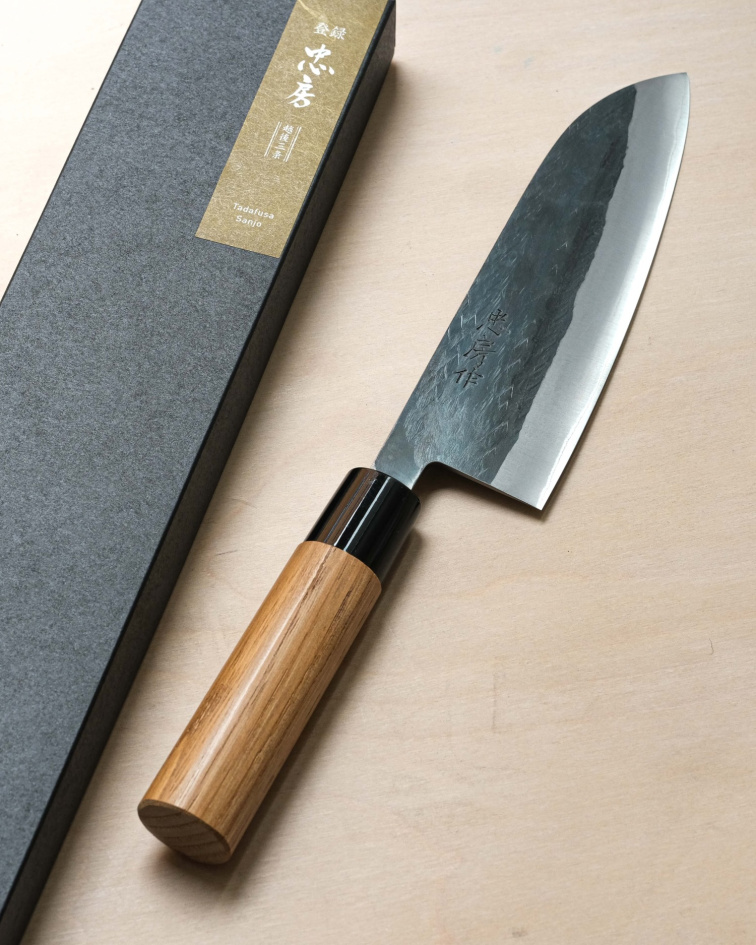
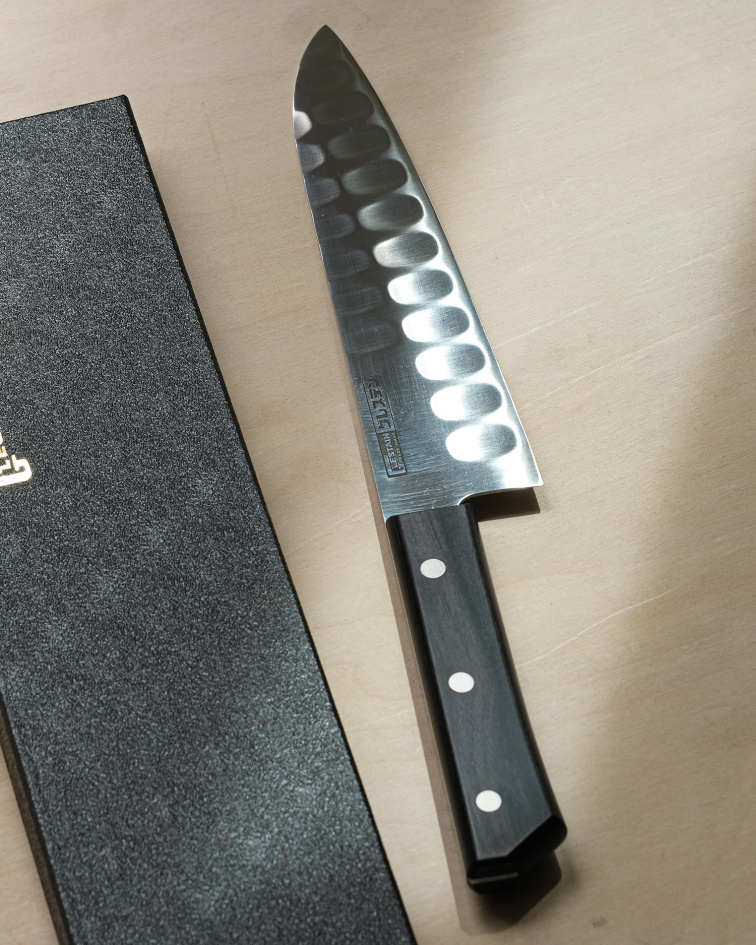
Santoku
The most popular type of Japanese knife today. Santoku originated in the late 40s - 50s, combining the functionality of traditional Japanese knives with the Western philosophy of kitchen knives. In Japan, it is considered a universal household knife, thanks to its rounded tip, medium-length blade, and profile that almost anyone can work with.
- Rounded tip - safer blade shape even for less experienced users
- Medium blade length (165-190mm) suitable for use even in small spaces
- Lightweight, thin knife that you will easily come to love using
- Suitable as a first Japanese knife
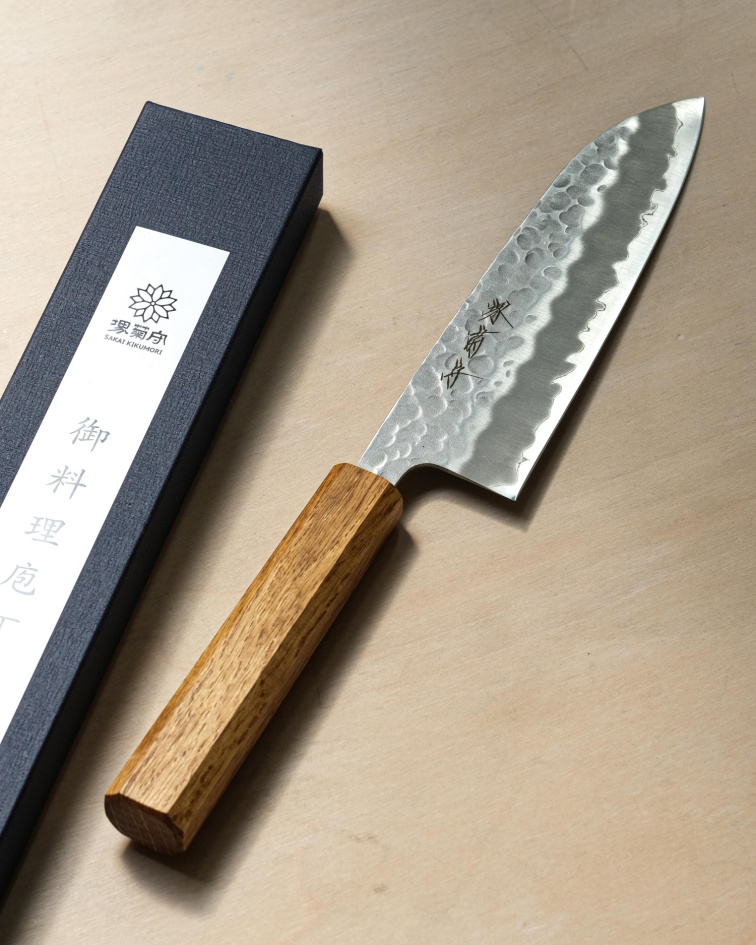
Gyuto
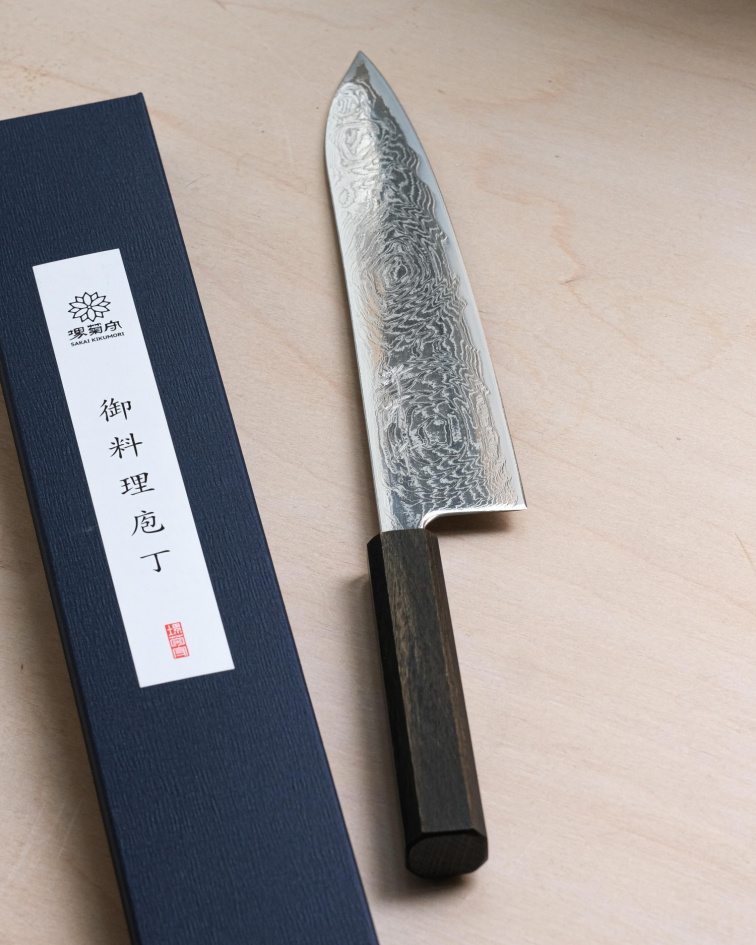
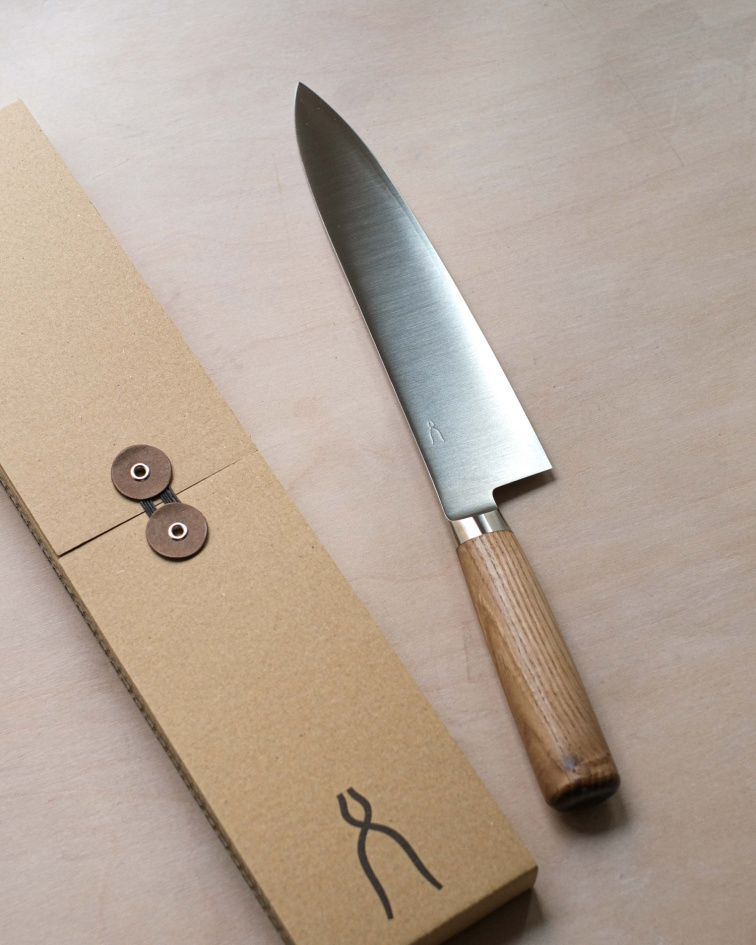
The Japanese counterpart of European chef's knives. It generally has a longer blade than the Santoku and more curved edge. This allows for rocking cutting motions (for example, fine herb chopping), as well as long, smooth cuts of all foods. Compared to their European predecessors, Gyuto knives have thinner blades and lower weight, ensuring more precise cuts and allowing long work without hand fatigue.
- Longer blade (180-240mm) suitable for cutting large volumes of food and making long, smooth cuts of larger ingredients
- More curved edge allows for not only pressure and pull cuts but also easy rocking motions
- Universal knife for enthusiastic home chefs and professionals
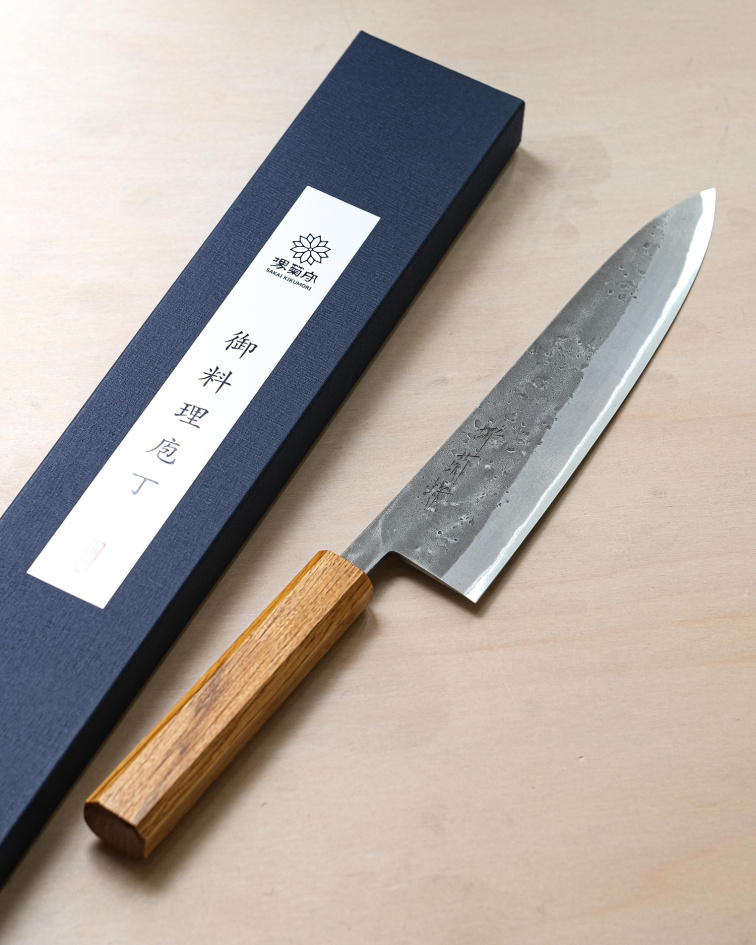
Kiritsuke
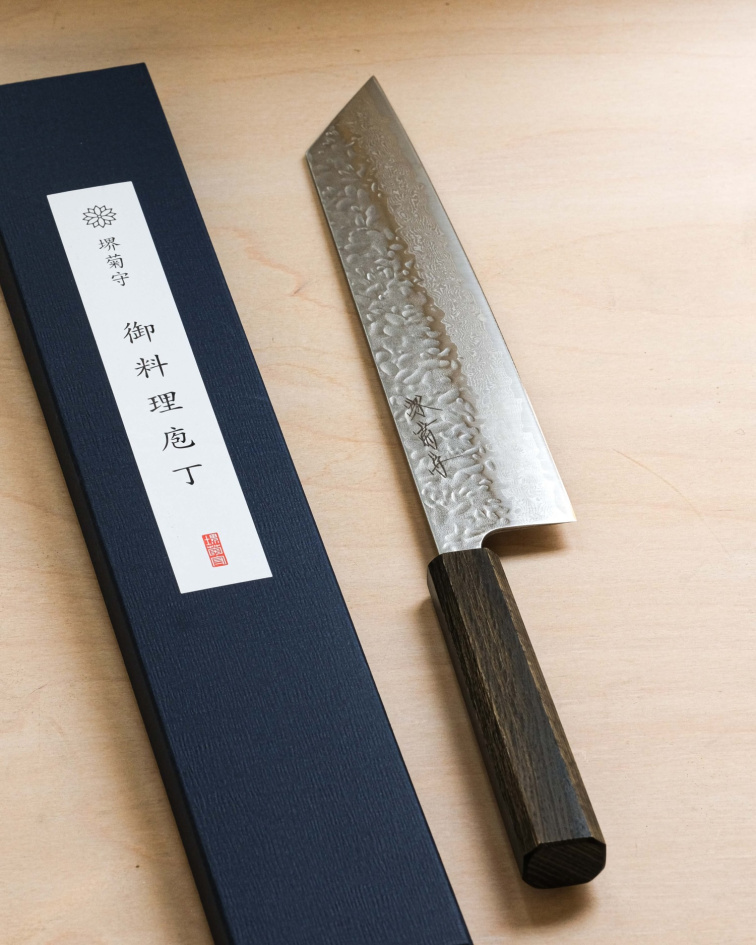
Kiritsuke Gyuto and Kiritsuke Santoku have sharply cut tips compared to their classic versions. This makes them much sharper and finer, suitable for delicate precision work. Kiritsuke variants of Gyuto and Santoku also have straighter edges and are therefore less suitable for rocking cuts. However, they make it easier to finish cutting ingredients on the cutting board due to increased contact between the edge and the cutting surface. The straight edge also has the advantage of easier sharpening.
- Visually unforgettable
- Straight edge maximizes contact between the knife and the board for precise completion of cuts
- Fine tip suitable for detailed work
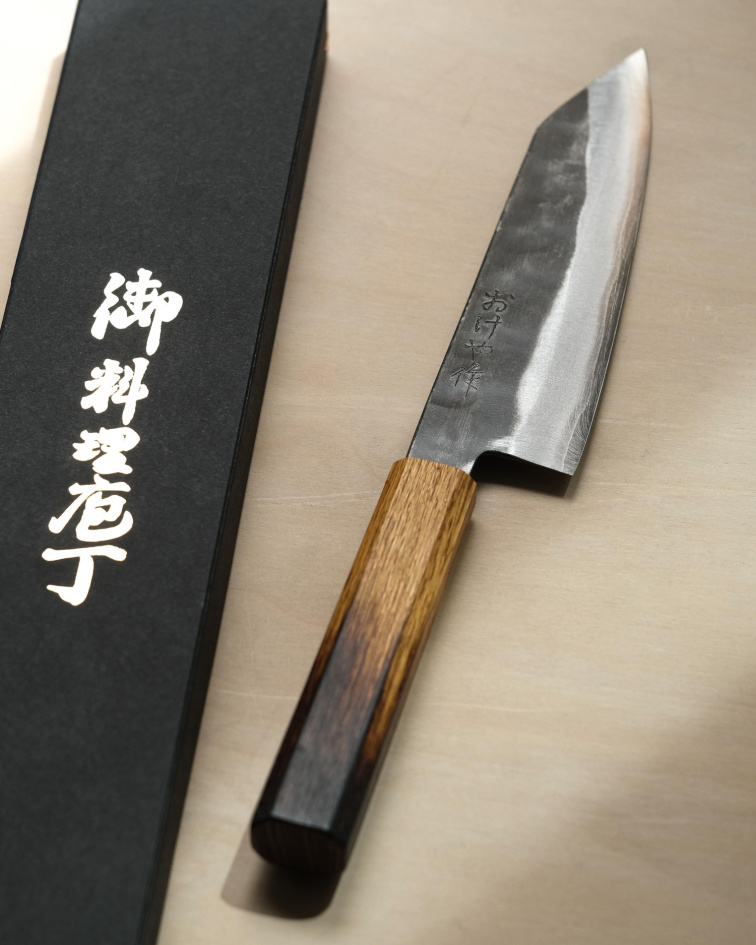
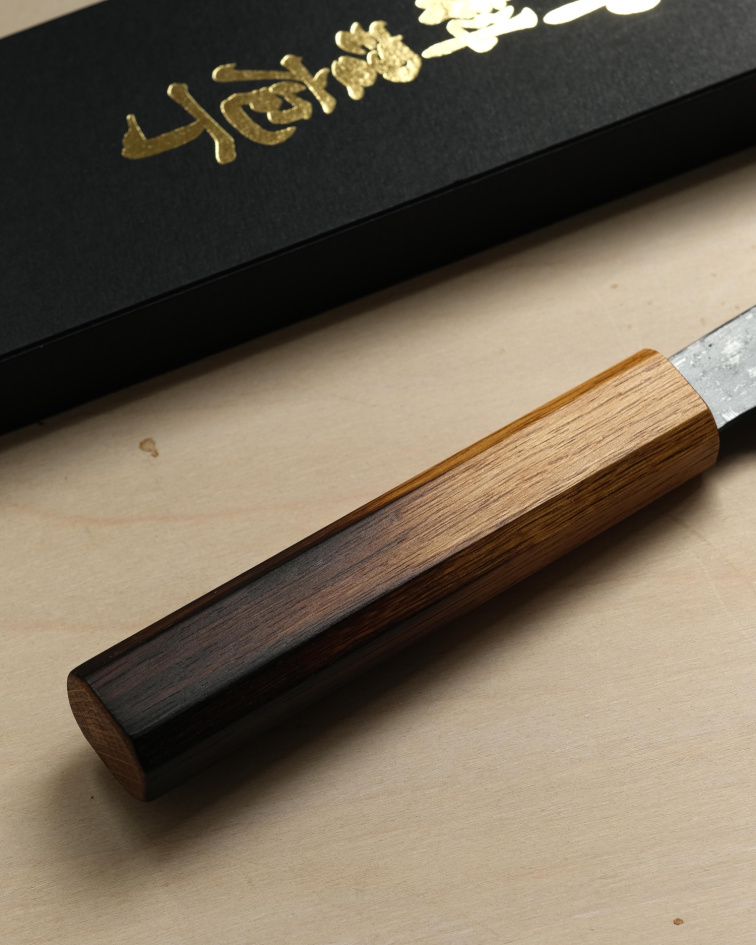
Bunka
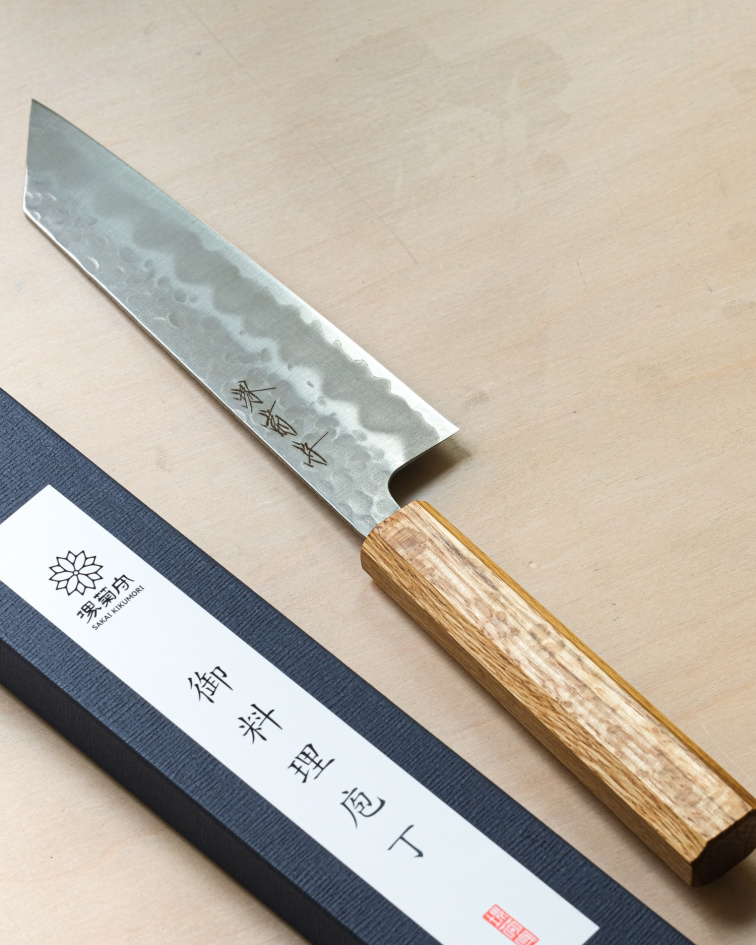
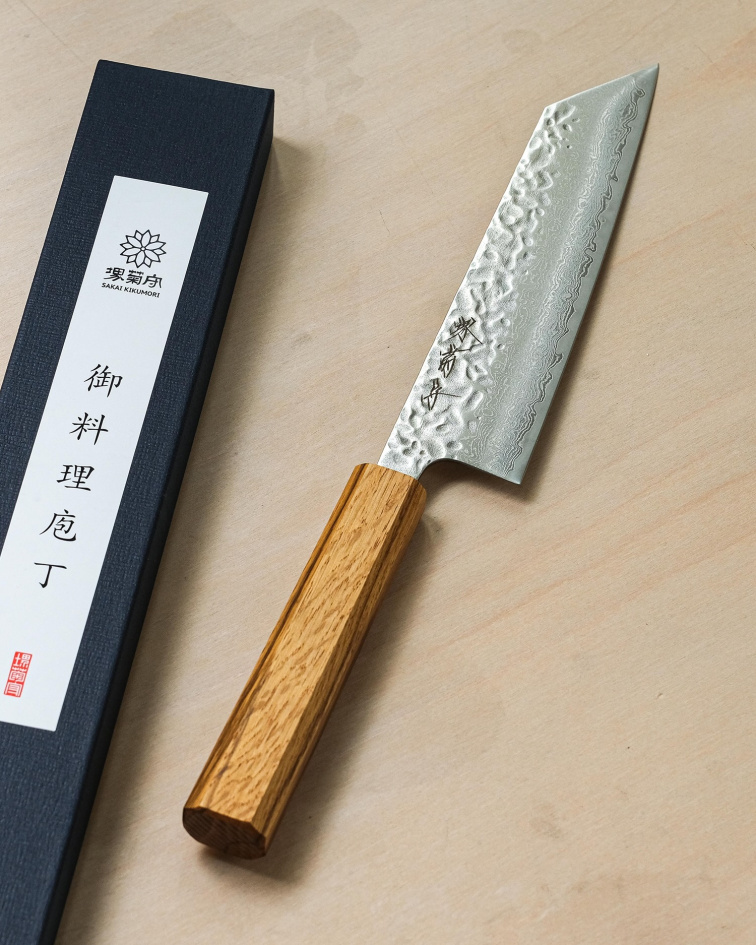
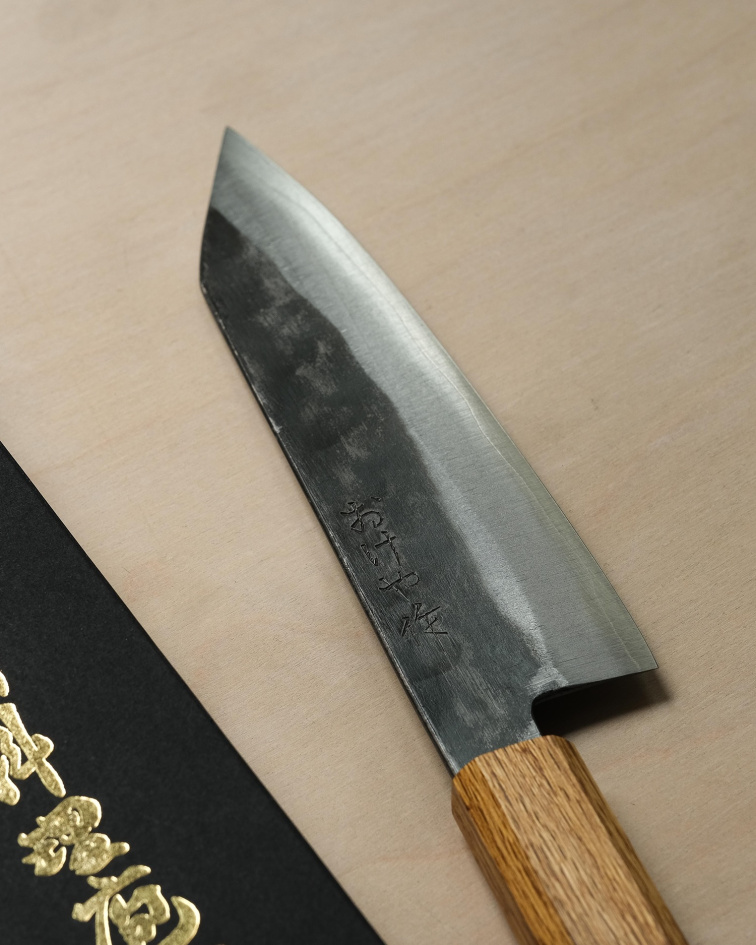
This is a counterpart to the Santoku knife. It was created in Japan around the same time as a reaction to the westernization of traditional household menus. Bunka features a sharply slanted tip, similar to Kiritsuke knives, which helps with detailed processing of ingredients.
Bunka is probably the most loosely interpreted type of knife by Japanese knifemakers. Sometimes it has a straight edge and wide blade like the Kiritsuke Santoku, other times it has a taller blade like the Nakiri.
The Bunka we sell from Akihito Fujiwara has an edge with a slight curve allowing cutting with a gentle rocking motion.
- A finer tip than the Santoku
- Universal knife for those whom the regular Santoku tires
- Ideal for smaller kitchens due to shorter blade length
|
Santoku |
Gyuto |
Kiritsuke |
Bunka |
|
|
Primarily intended for |
Home cooking |
Home and professional cooking |
Home and professional cooking |
Home cooking |
|
Blade length |
165-190mm |
180-240mm |
165-240mm |
165mm |
|
Cutting movement |
Push-pull movement |
Push-pull movement and rocking |
Push-pull movement, detailed work |
Push-pull movement and slight rocking |
|
Ingredients |
Meat, fish, vegetables |
Meat, fish, vegetables |
Meat, fish, vegetables |
Meat, fish, vegetables |
Petty
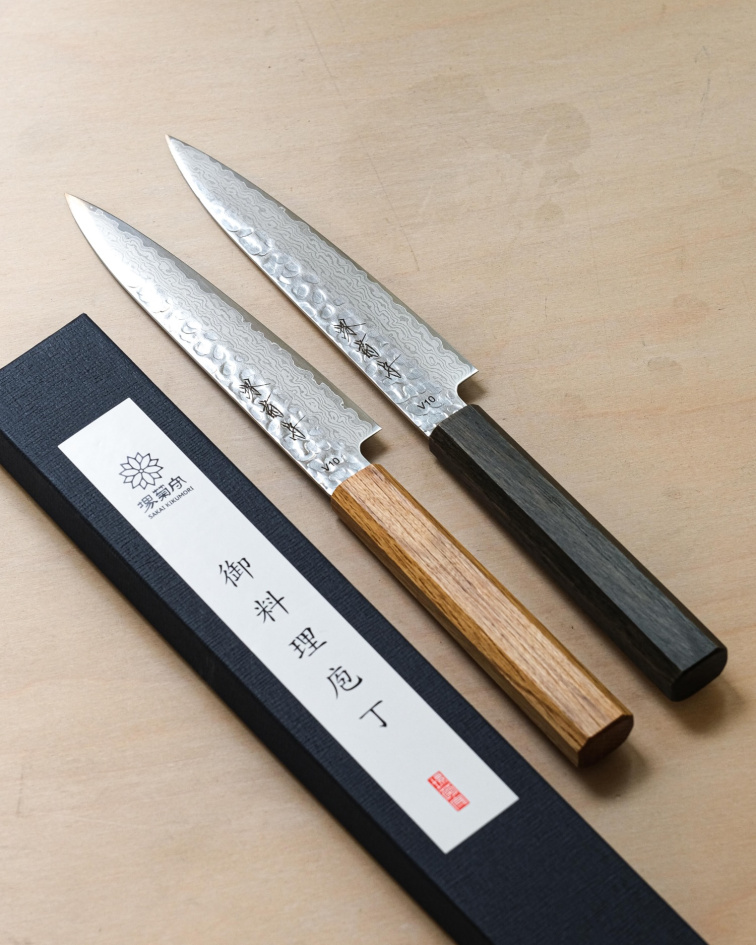
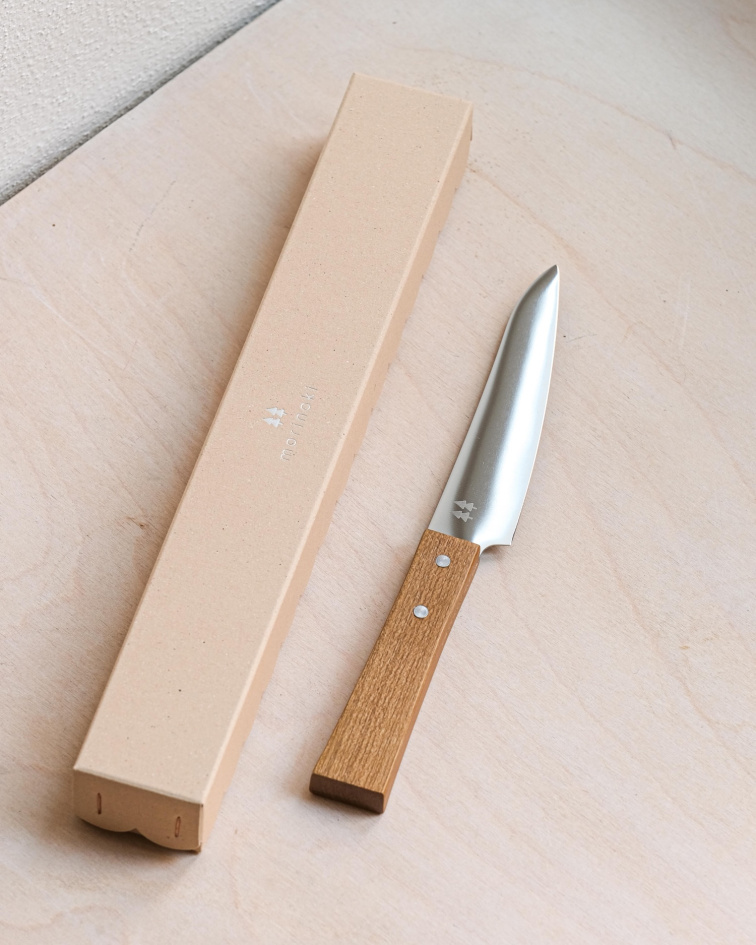
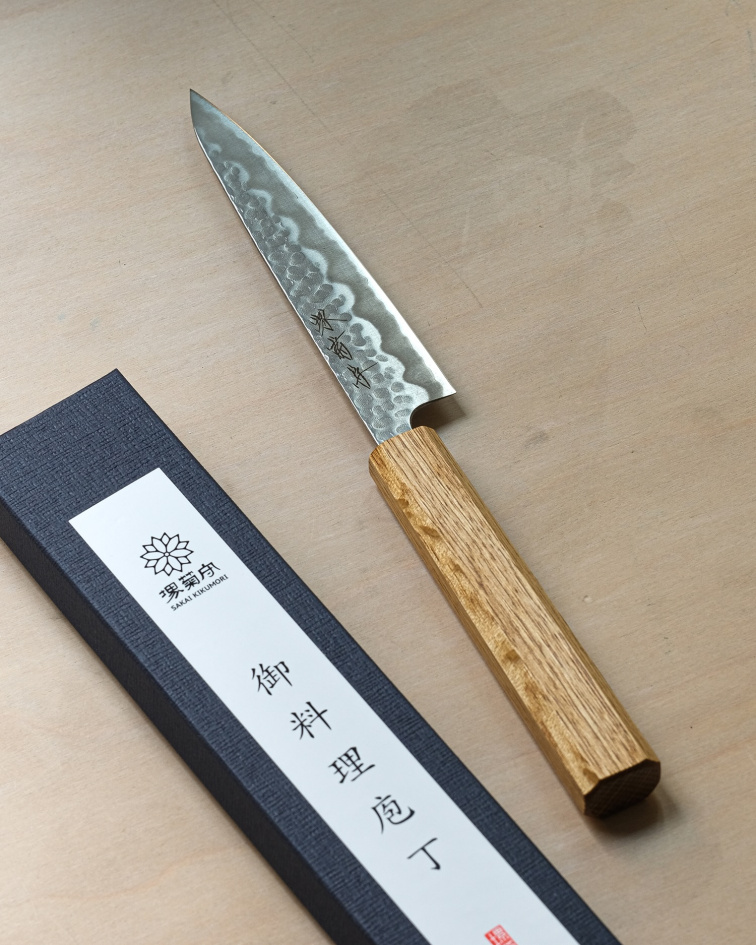
Petty is a small knife whose use knows no bounds. The length of the blade can vary significantly as well as the sphere of use.
Small petty knives (120-135cm) are suitable for small and quick tasks. Peeling vegetables and citrus fruits, quick slicing of small ingredients, scoring meat. Listing possible uses could take days. They are a perfect complement to large Gyuto or Santoku.
Larger petty knives (135cm and longer blades) are not as nimble as smaller versions, but they offer longer edges for longer cuts or short work on the cutting board.
- Best knife to complement larger universal knives
- Short/quick cuts, peeling ingredients, in-hand cutting
- Decorative cuts
Vegetables
Vegetable knives are indispensable in Japanese cuisine. Thin long slices of vegetables or fruit not only taste and look better but can also be comfortably picked up with chopsticks. However, you don't have to cook only Asian dishes to fall in love with the thin geometry of rectangular knives. They are also great for classic European techniques such as Brunoise and Julienne.
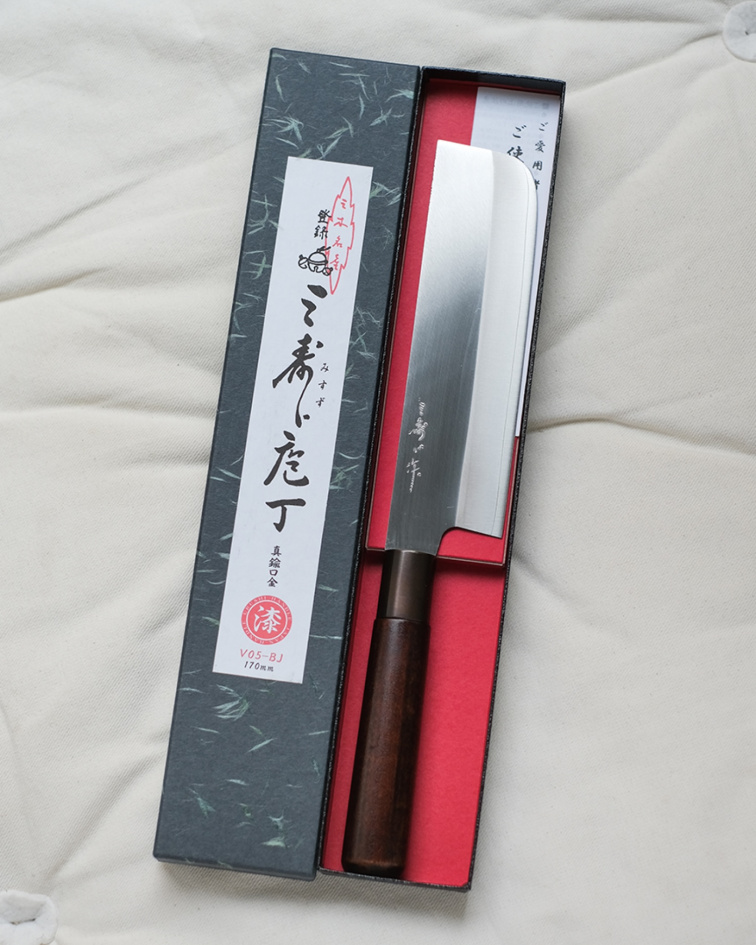
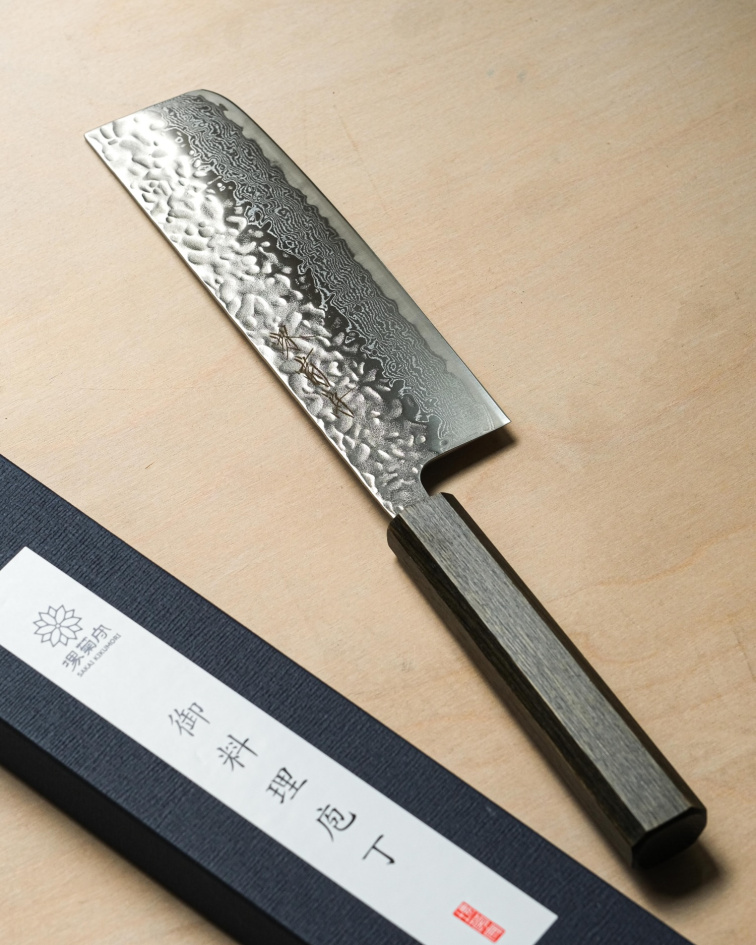
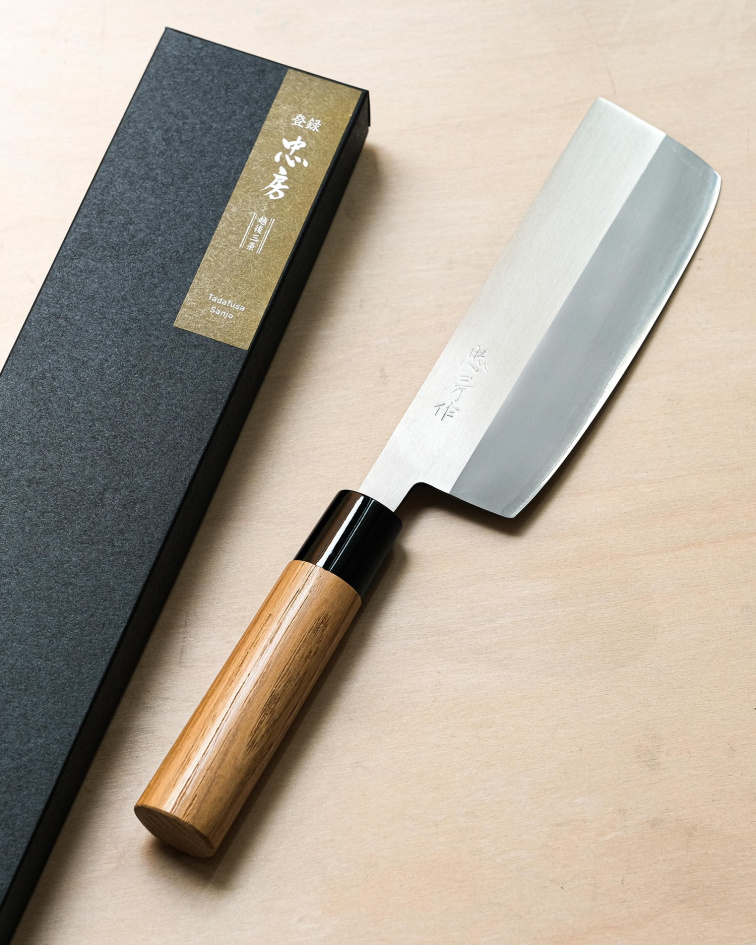
Nakiri
Of all the Japanese vegetable knives, this one is the most versatile. Nakiri features a double-sided symmetrical grind and is suitable for both right-handed and left-handed users. The straight edge combined with a very thin grind allows you maximum control over the cut. The large blade area allows easy scooping of vegetables from the cutting board.
- Ideal for precise processing of vegetables, fruits, and plant proteins
- Large blade area is suitable for scooping up chopped ingredients
- Vegetable cutting with push-pull movement
Meat
The share of meat in Japanese cuisine is constantly rising. Although beef is now closely associated with Japan (mainly due to the wagyu phenomenon), it wasn't always the case. Beef only started appearing on plates in Japan at the end of the 19th century, as the country began to open up to Western trends. In response to this ingredient, two knives were created. Gyuto, a versatile knife also suitable for meat handling, and Sujihiki, specifically designed for processing this new ingredient.
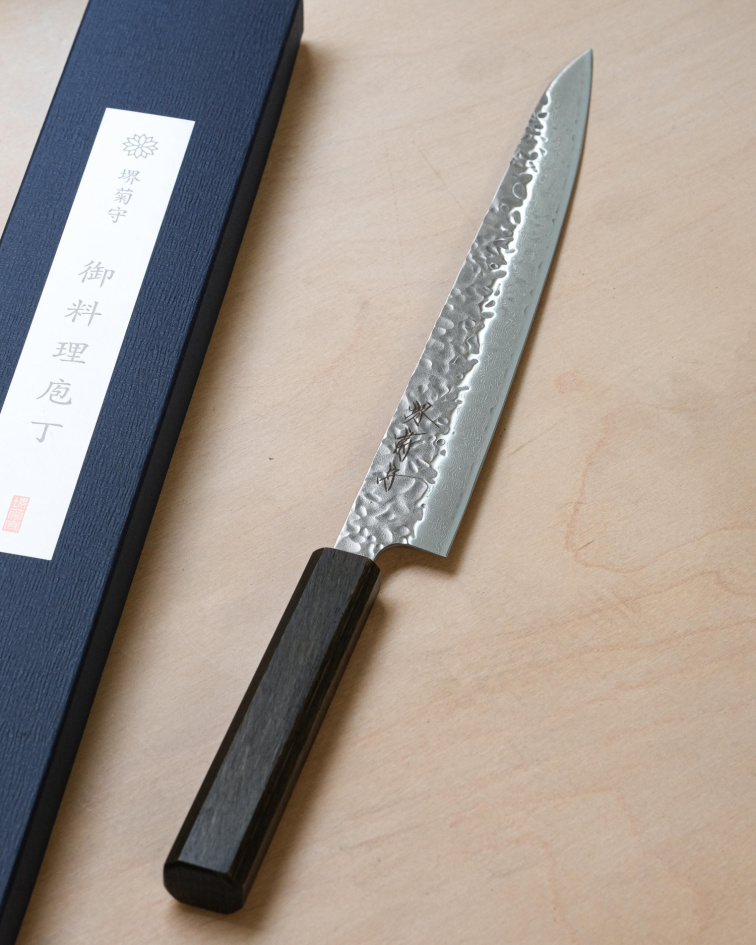
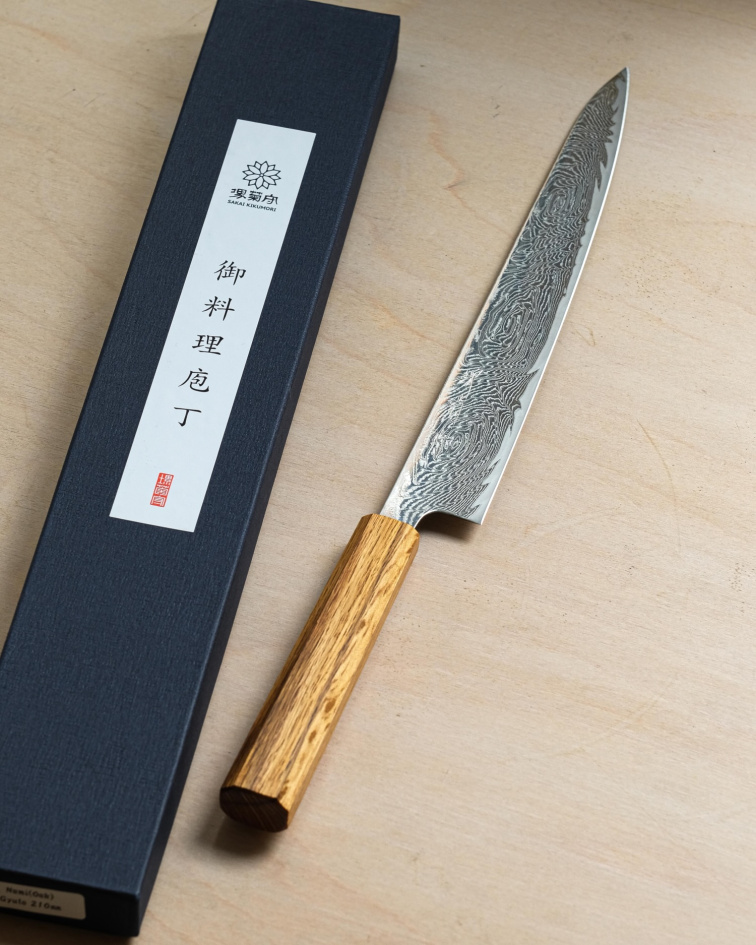
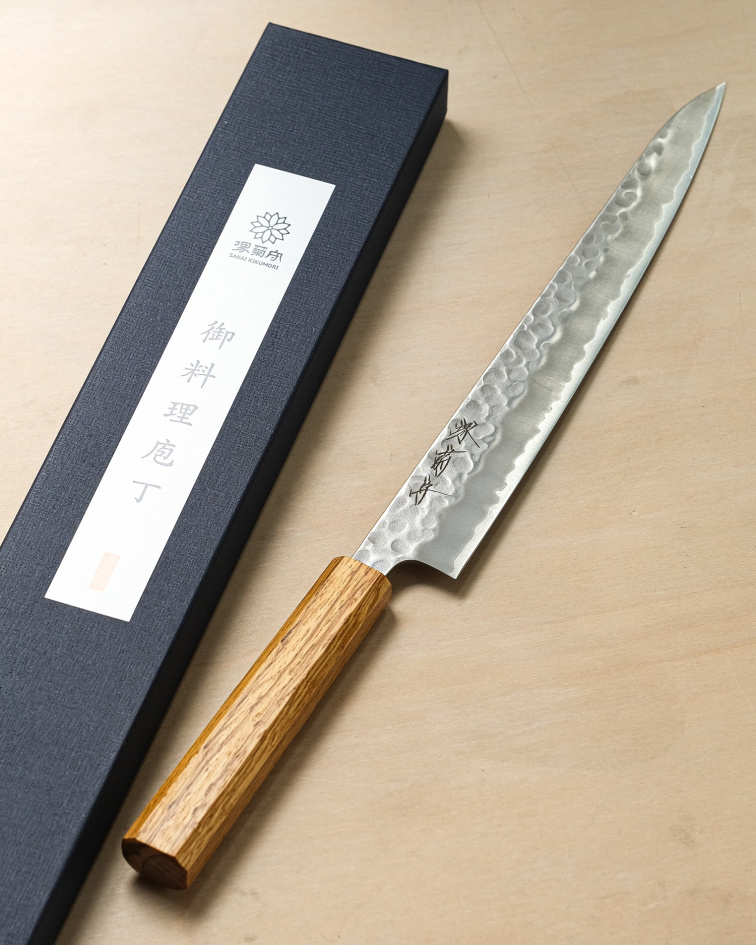
Sujihiki
It is a very long (often 240mm) and thin knife with a continuous curve edge. Sujihiki is designed for portioning and slicing thin slices of meat, which is extremely easy thanks to this geometry.
- Slicing thin slices of raw or cooked meat
- Simple removal of fat, skin, and membranes
- Ideal for portioning roasts, thanks to the long thin edge
Fish
Japanese cuisine pays attention not only to obtaining the maximum meat from each fish catch but also to deriving as much flavor as possible from that meat. Knives intended for processing fish have a truly fine edge due to their single-sided grind. The delicate fish meat cut by these knives has very fine and smooth texture. During slicing, the meat detaches from the knife thanks to the hollow grind on the back of the blade. The entire preparation process is efficient, smooth, and respectful of the precious ingredient.
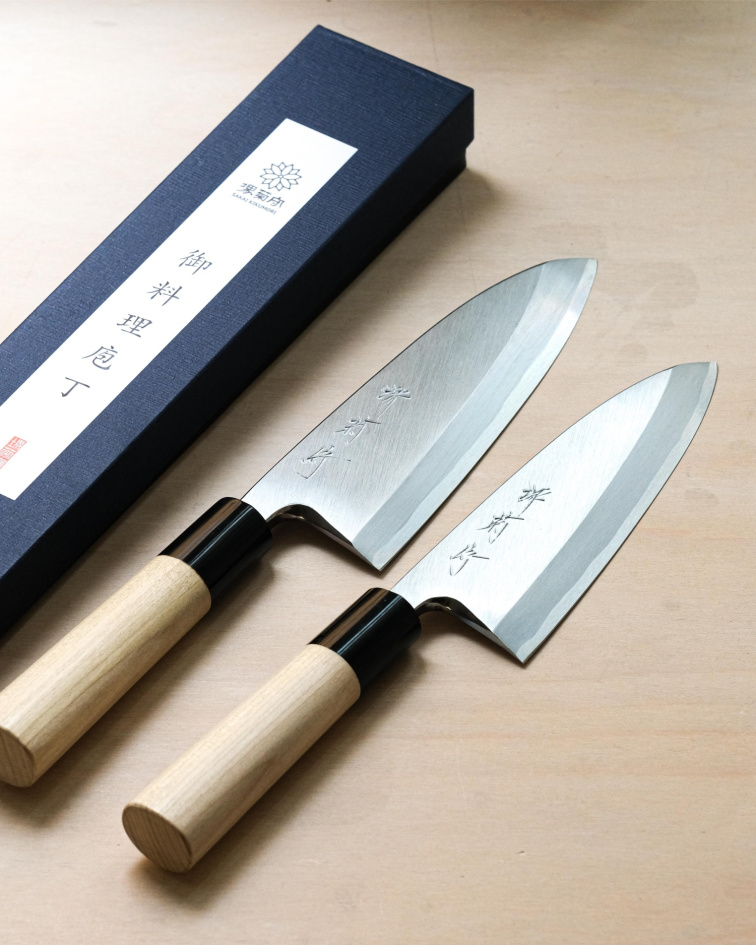
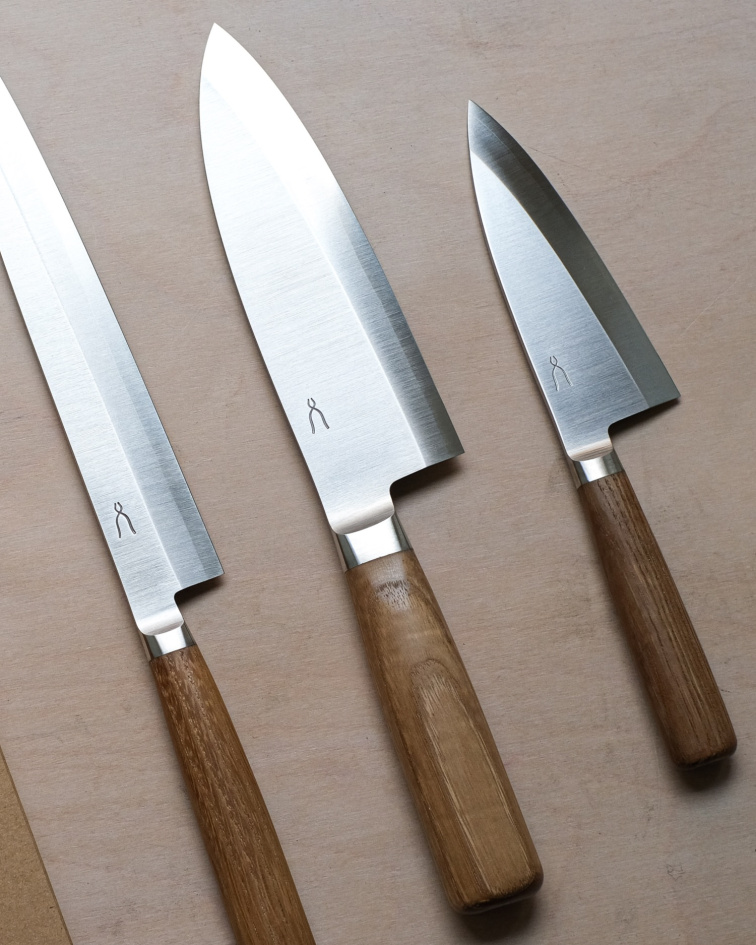
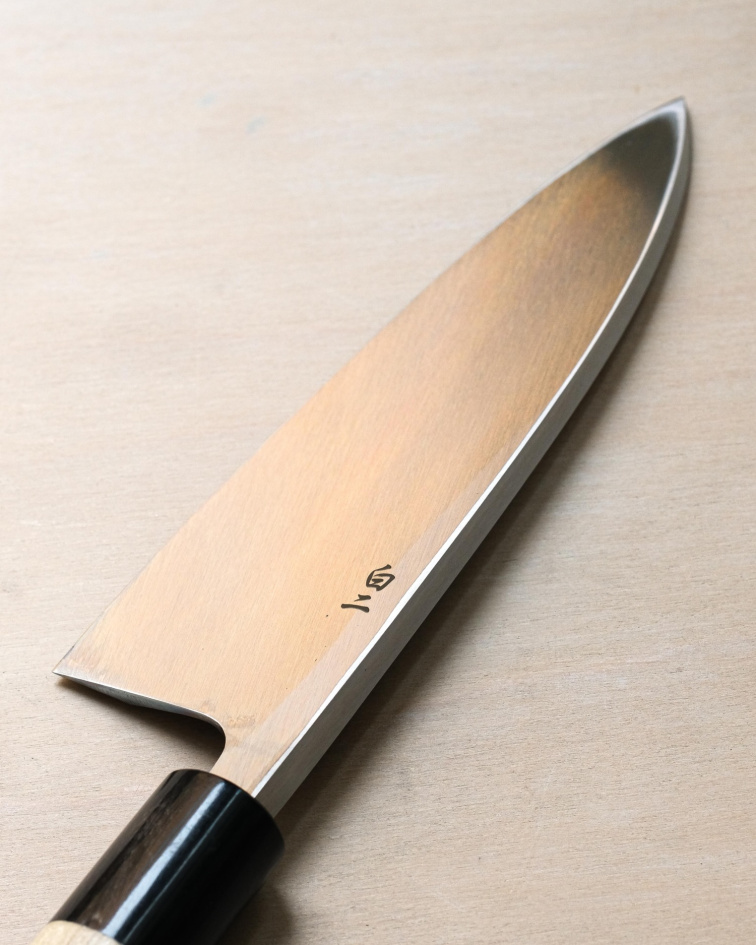
Deba
One of the oldest types of Japanese knives still in use today. It has found its place in restaurants focused on fish preparation, as well as in households around the world. Deba is used for gutting, portioning, and filleting fish. Thanks to its thick blade, it can easily handle removing the head from the fish body, fins, and tail. The single-sided grind helps achieve uniform and smooth fillets without losing meat on the fish bones.
- Portioning fish without worrying about damaging the edge
- Processing fish with no waste
- Precise filleting thanks to the fine single-sided grind edge
Yanagiba
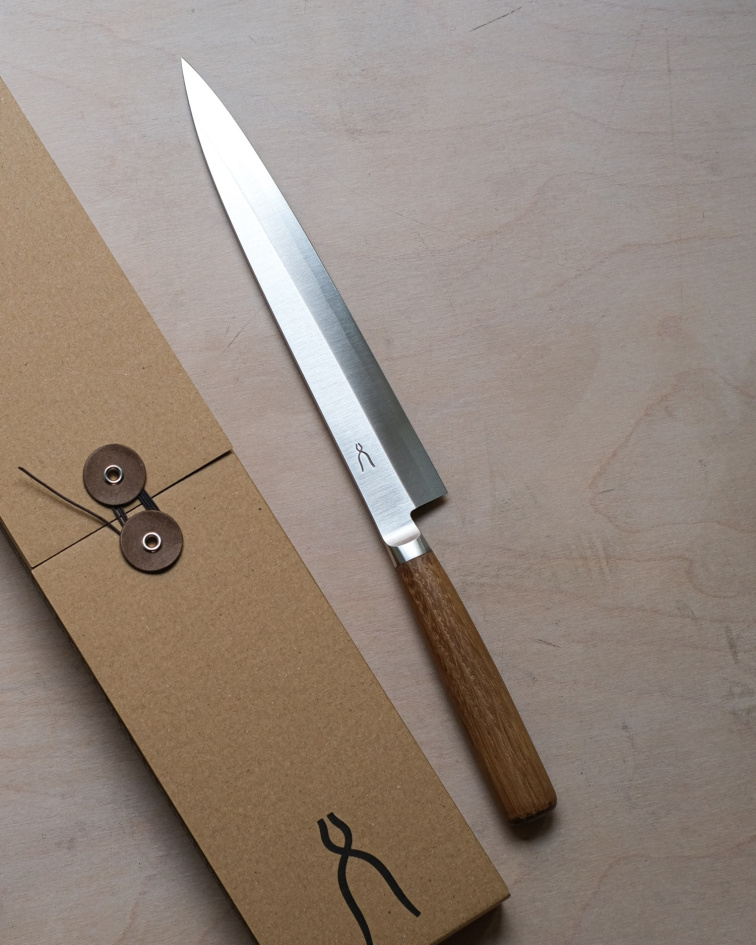
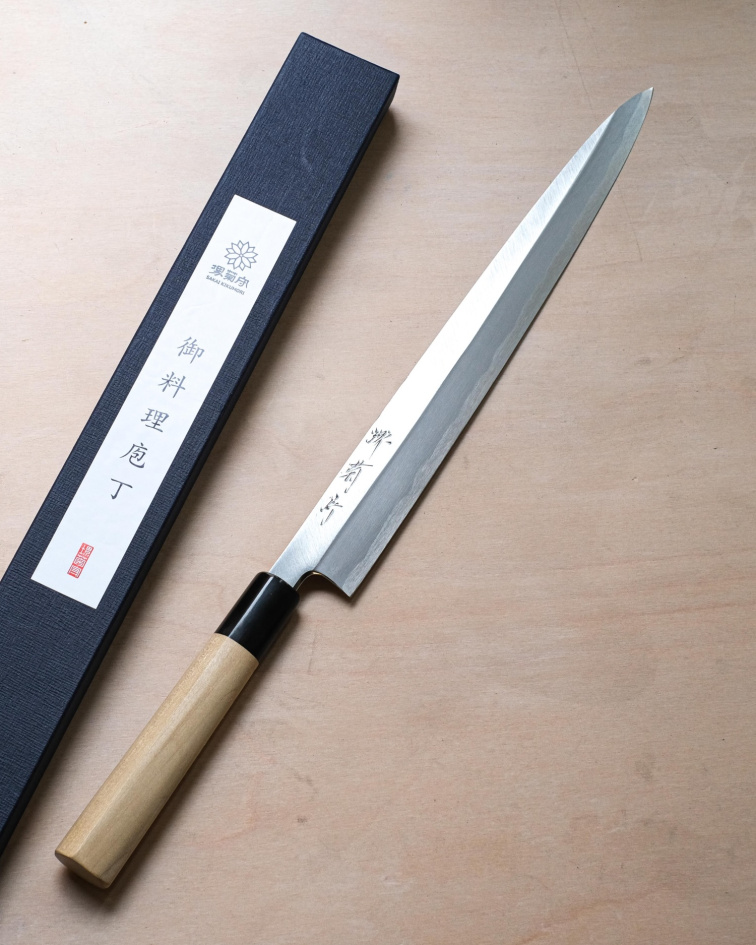
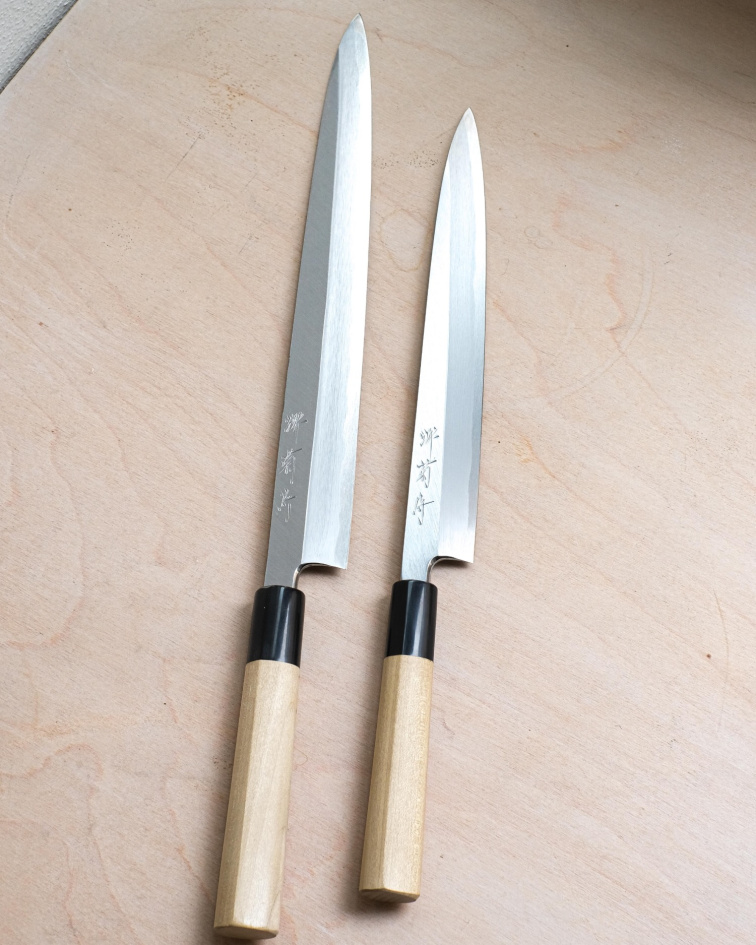
Construction-wise very similar to the Deba - single-sided grind, thick back of the blade. However, it differs in the thinness of the silhouette. Yanagiba literally means willow leaf, due to its specific blade shape. Thanks to the hollow grind on the back of the blade, cut meat smoothly separates from the knife. It is best suited for precise slicing of thin slices of fish meat - sashimi. It allows you to prepare the main ingredient for dishes based on symmetrically and smoothly cut raw fish meat. Japanese sashimi, sushi, usuzukuri, or even a Hawaiian poke bowl.
- Uncompromisingly thin and straight sashimi slices
- Meat does not stick to the blade much
- For enthusiasts of traditional Japanese cuisine and professional Itamae
Pankiri
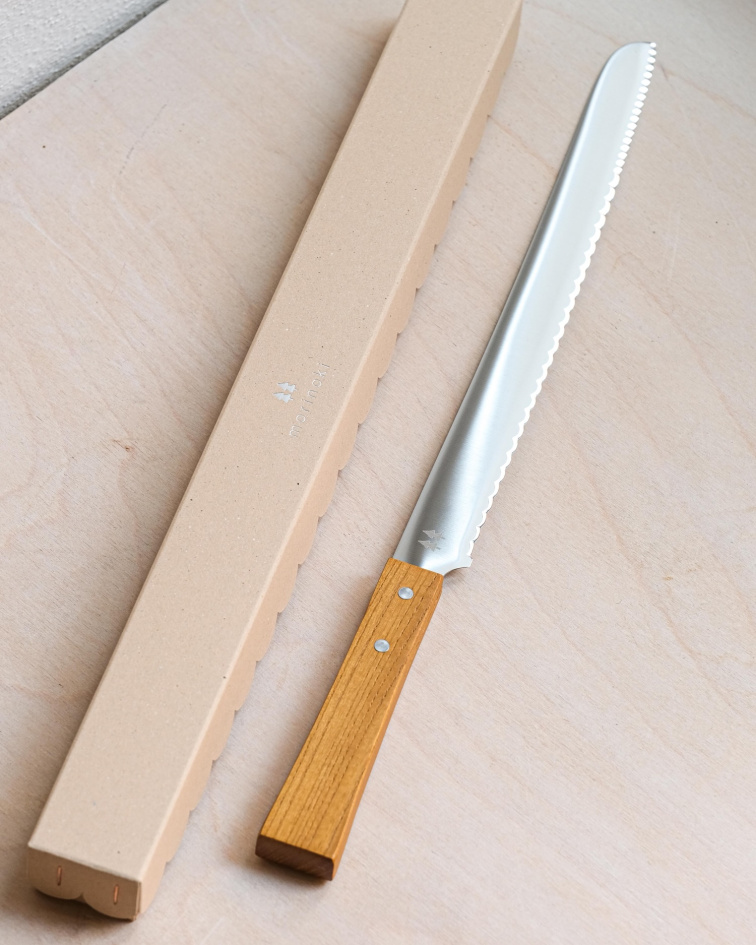
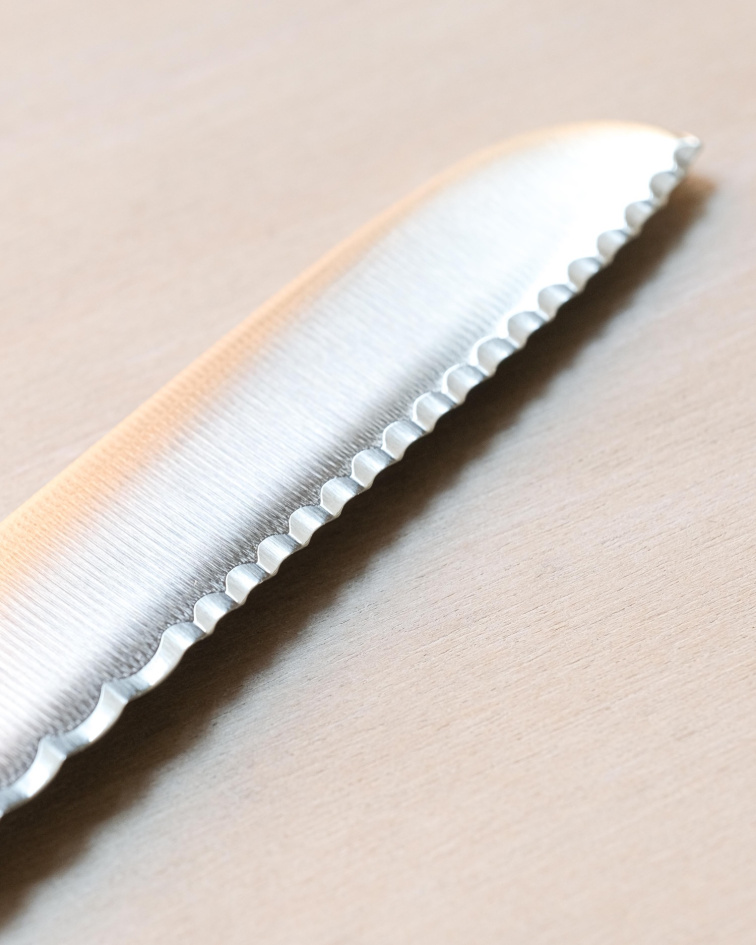
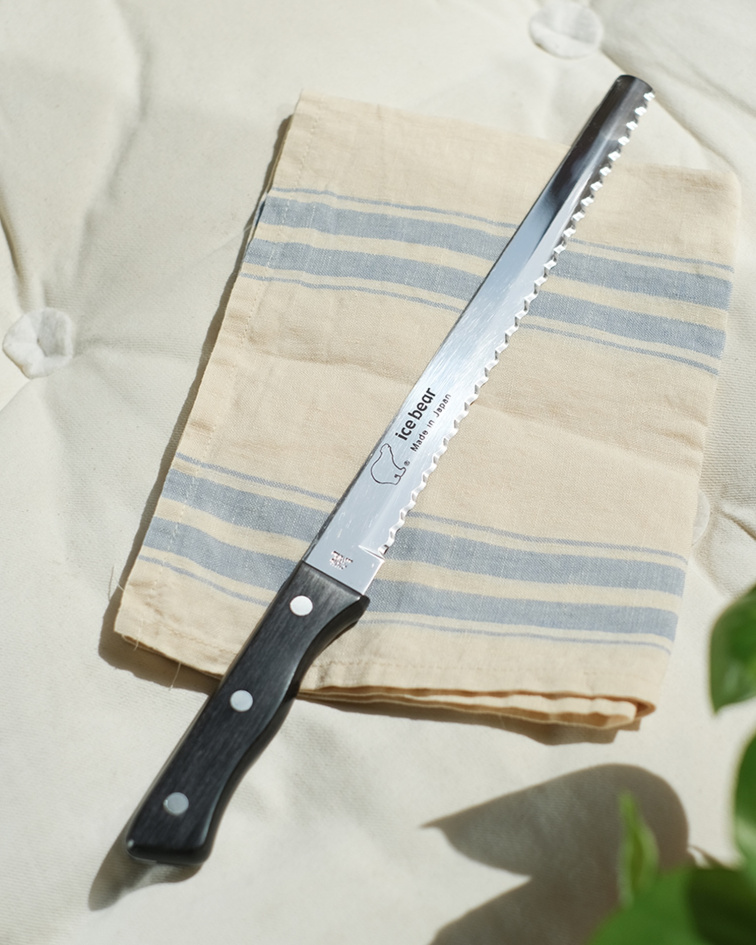
Japanese bread knives simply delight us. They are thin, sharp, and cleverly designed to cut even sourdough bread with a crispy crust with maximum evenness and without unnecessary crumbs. We offer the Japanese ice bear bread knife and the Morinoki bread knife, both featuring convex serrations for a smoother slice of your favorite gluten treat.
- Consistently straight slices of bread
- Minimal crumbs thanks to rounded serrations
- Can also be used for slicing cakes into flat layers
Why These Knives?
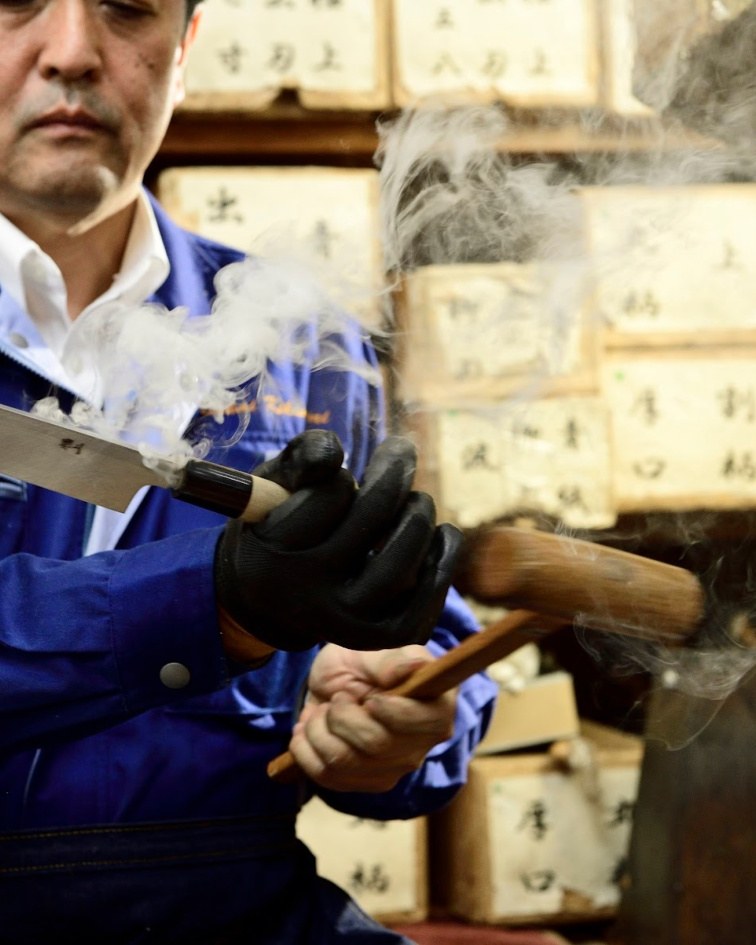
Quality Japanese knives are not consumable goods that patiently endure years of inappropriate treatment and wait to be replaced. They are beautiful functional tools shaped by centuries of blacksmithing tradition, developed to respect the ingredients you are cutting. With the right care, they will last a lifetime and reward you with hundreds of precisely prepared meals. You can combine types of Japanese knives and create a set that allows you to prepare even the most complex culinary creations, or you can stick to one universal knife that will quietly but proudly accompany you in everyday simple cooking.
FAQ
Not sure where to start?
If you are choosing your first Japanese knife, in most cases you can't go wrong with a Gyuto or Santoku. Both are among the most universal types of knives and can easily handle everyday cooking. Specialized knives, such as Nakiri, Deba, or Yanagiba, make the most sense when you already know that you will actually use them in your kitchen.
Gyuto or Santoku?
Choose Gyuto if:
- you often prepare larger pieces of meat,
- you want one knife for everything,
- you are used to European chef's knives.
Choose Santoku if:
- you mainly cook at home for the family,
- you prepare a lot of vegetables,
- you prefer a shorter and more agile knife.
Is one quality knife enough for me?
In most households, yes. Many customers start with one quality Gyuto or Santoku and need nothing else for several years. More important than owning multiple knives is having one that is easy to use and regularly maintained.
Do I need a whole set of Japanese knives?
No. Most professional and home chefs use one main knife, supplemented by a smaller utility knife and one specialized for the most frequently used type of ingredient (vegetables – Nakiri). If you are new to Japanese knives, we recommend choosing one quality model and then finding out if any specialized type is truly missing for you over time.
How to care for a Japanese knife?
Daily care for a Japanese knife is surprisingly simple. The basics are to wash the knife by hand after use, dry it, and store it in a safe place. Japanese knives do not tolerate dishwashers or prolonged contact with water well, and it is also important to regularly sharpen them to maintain their properties. Some materials may occasionally require additional care, but the reward will be an edge you can rely on for many years.
Matouš, Tokyo Tools ©