
Knife review: Yanagiba SHIRONIKO 240 Sakai Kikumori
Knife review: Yanagiba SHIRONIKO 240 Sakai Kikumori
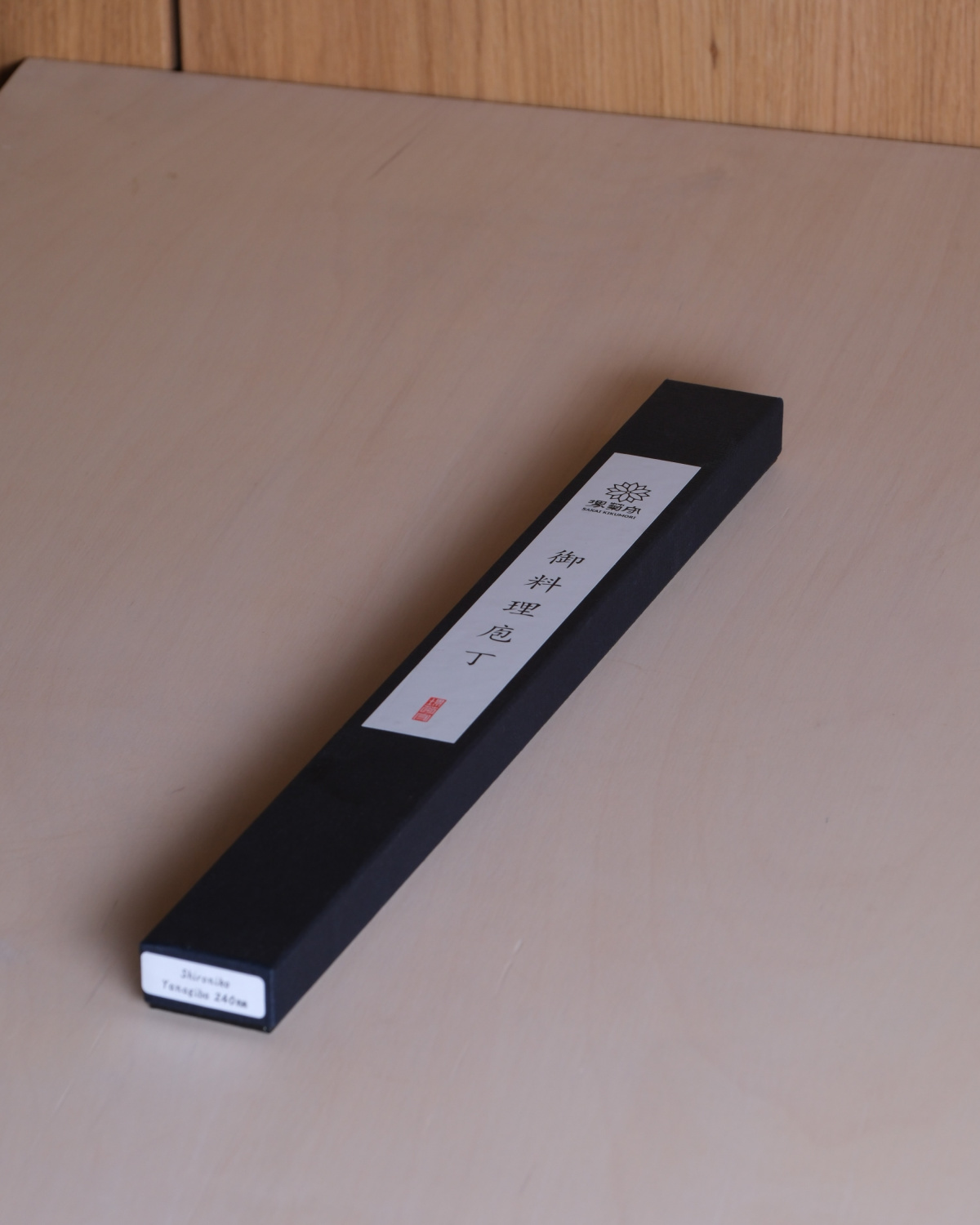
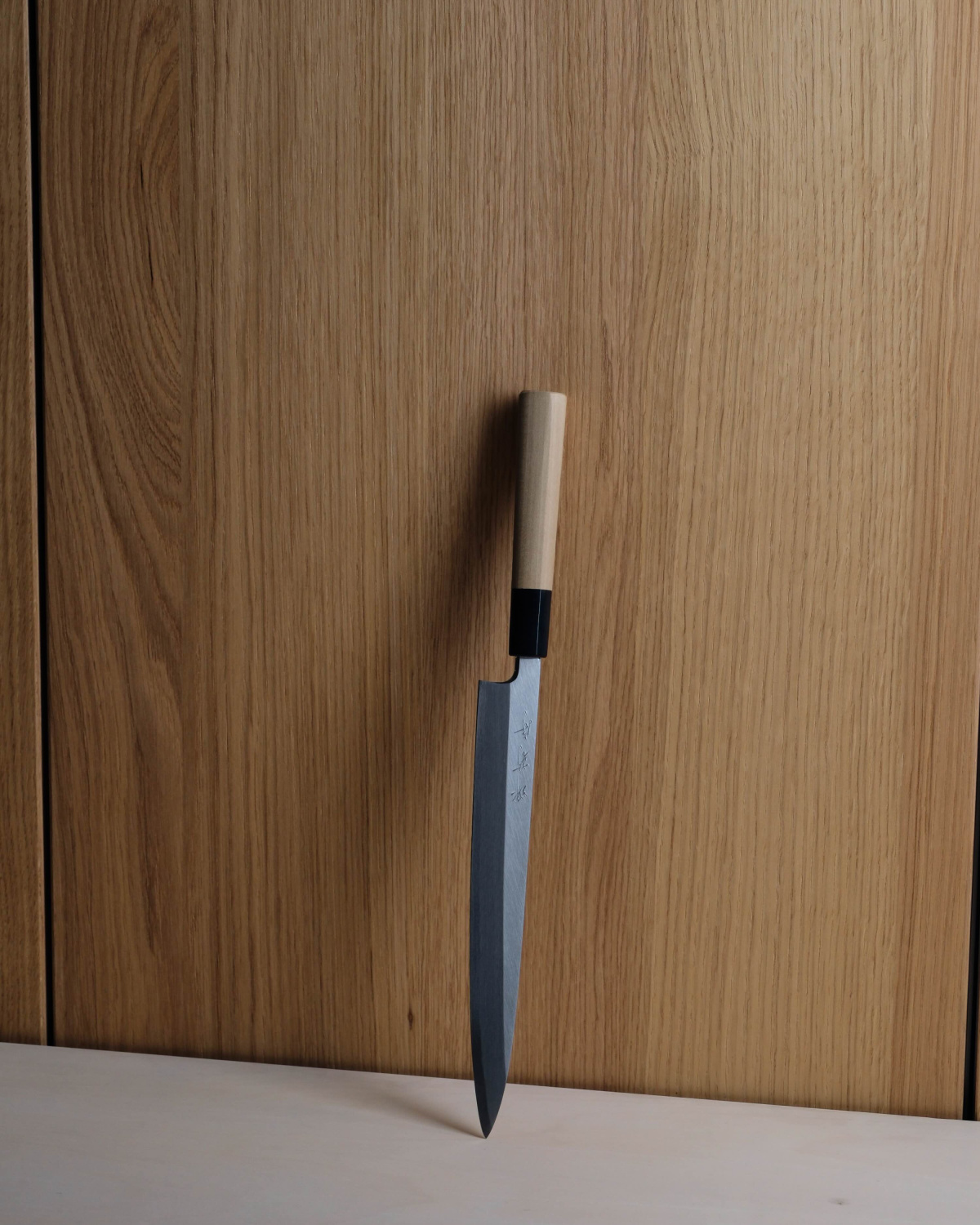
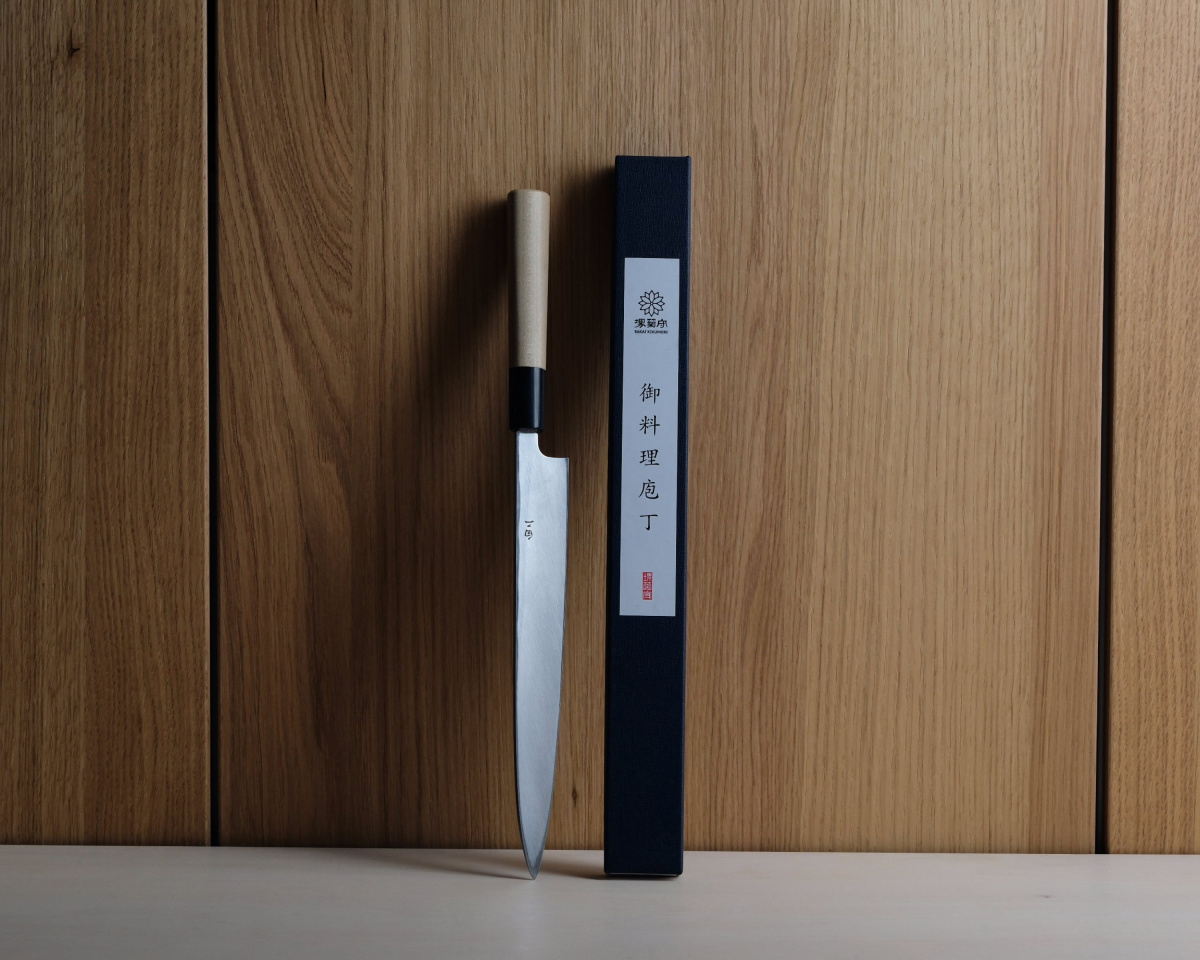
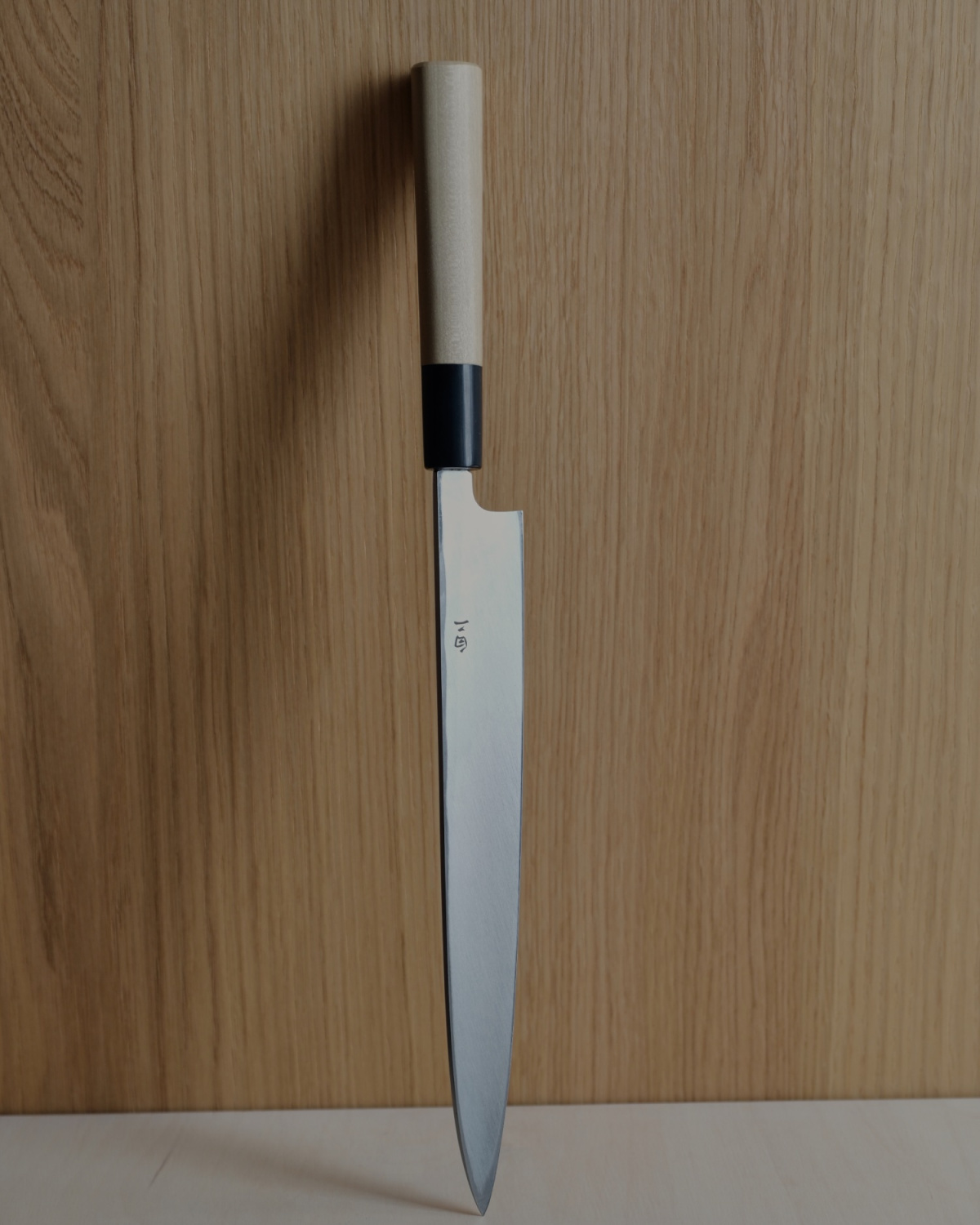
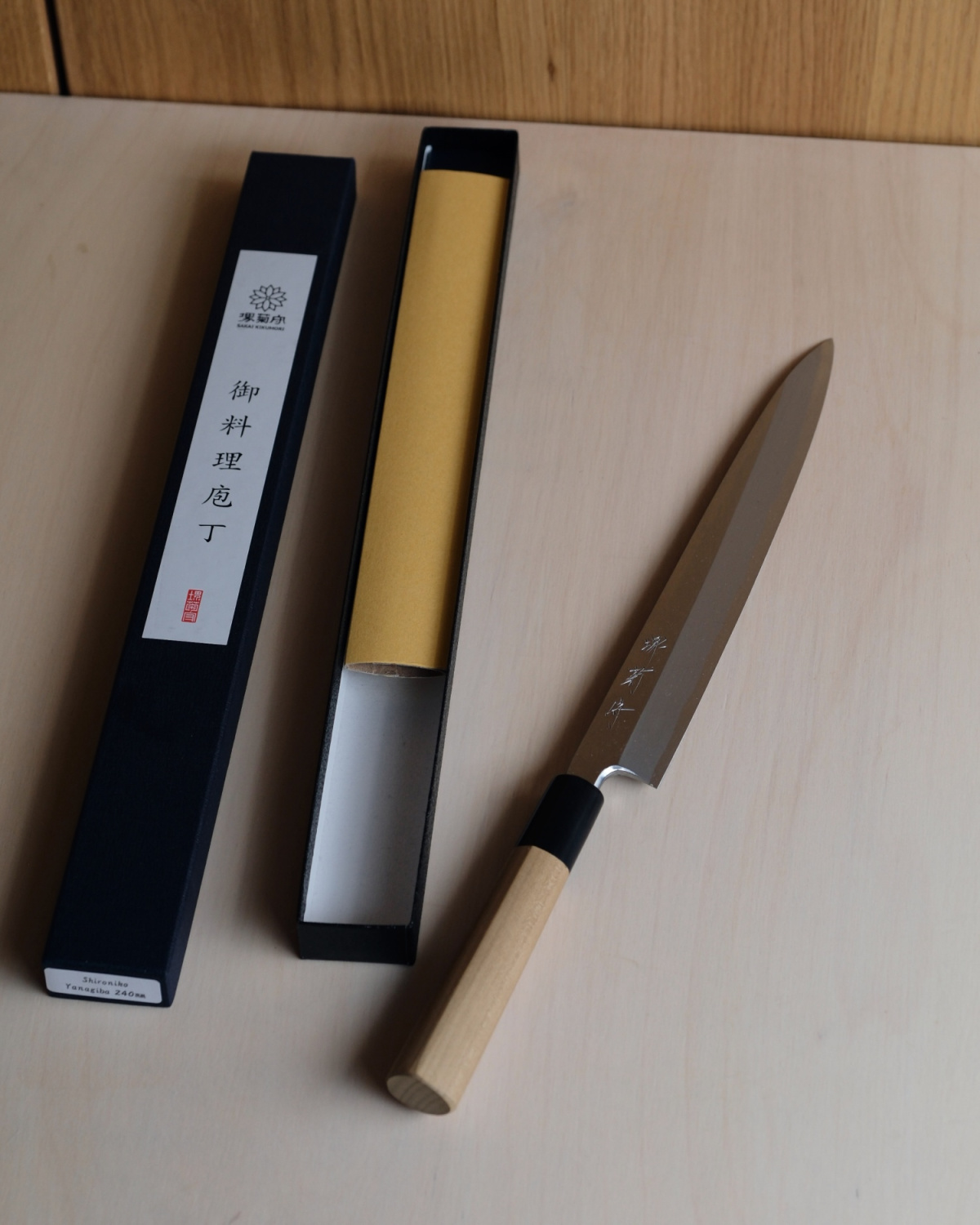
It couldn't be more Japanese. That was the first thought that crossed my mind after my first encounter with the Yanagiba from the Shironiko series by Sakai Kikumori. I was truly delighted to have this gem in our inventory. Migaki, Kasumi, Shirogami White, and the combination of untreated magnolia with buffalo horn? Only a plane ticket can bring you closer to Japan.
Table of Contents
Blade and Geometry
Single-Bevel Edge in Practice
Who Yanagiba Is (and Isn't) For
When Yanagiba Is a Good Gift
240 vs 300 mm - Which Length to Choose
Yanagiba vs Sujihiki
Steel and Edge - Shirogami White #2
Handle and Balance
Care and Sharpening (TL;DR)
What We Like About Sakai Kikumori
Final Evaluation
.
.
.
.
.
Blade and Geometry
The single-edged narrow blade with a sturdier spine is essential for a knife intended for long, exceptionally clean cuts. We most commonly associate yanagiba with sashimi and sushi, but the same principle excels in precise slicing of finely textured meat, such as wagyu or tataki. Japanese cuisine historically emphasizes not only the maximum utilization of the ingredient but also how to extract maximum texture, aesthetics, and flavor from it. Sashimi is not just about the quality of the fish - the quality of the cut is equally important.
This is precisely where yanagiba excels. Thanks to the single-bevel edge, it has an exceptionally fine edge that separates the material rather cleanly, rather than tearing or crushing it with pressure. The result is a smoother texture of the slice, cleaner appearance, and less disrupted structure - whether it's fish meat or very finely sliced quality beef.
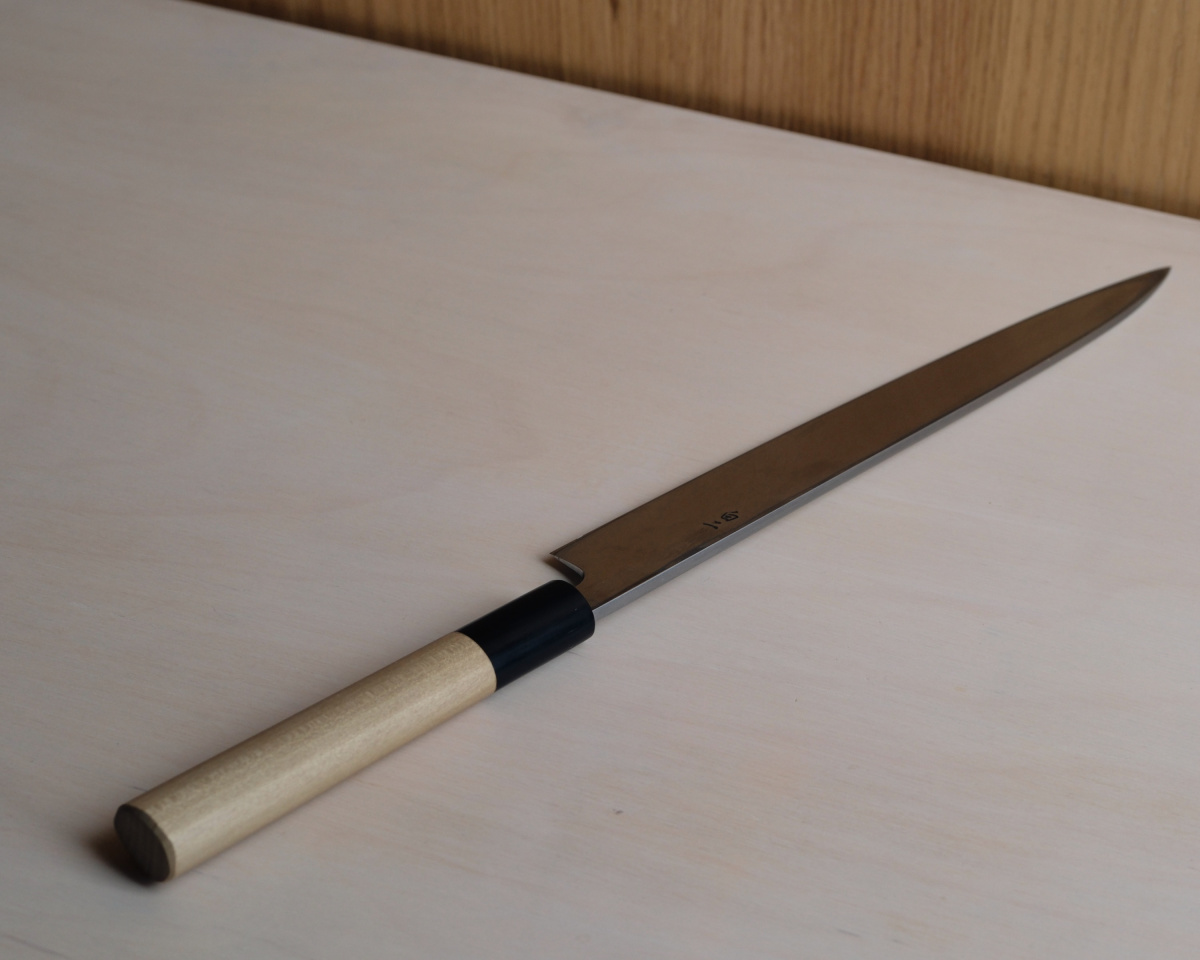
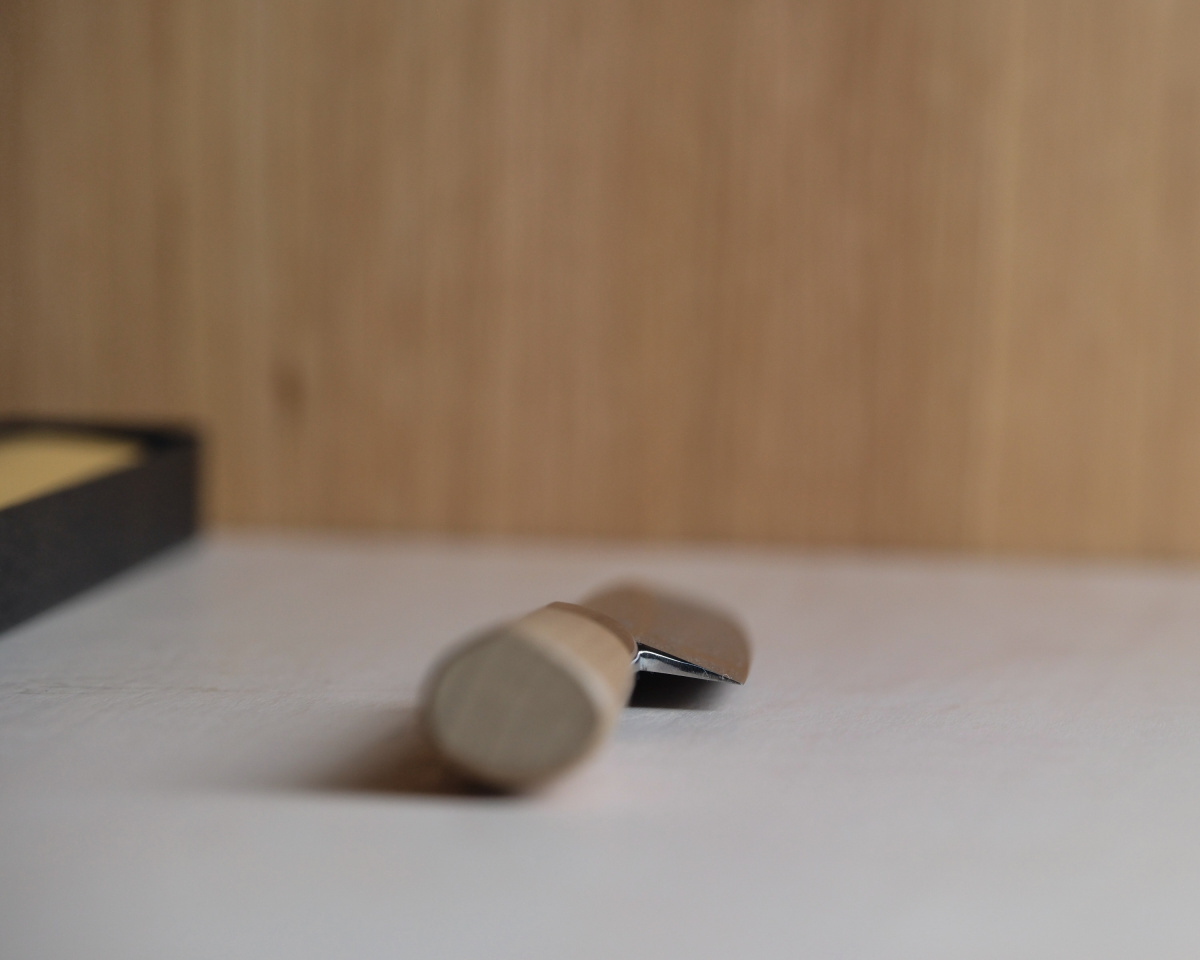
You might also be surprised by the relatively robust body of the knife and the more pronounced thickness of the spine on first contact. But with yanagiba, this is no coincidence. The extremely fine single-bevel edge is inherently more subtle and fragile than that of ordinary double-bevel knives. The robust body of the blade acts as a counterbalance here - providing stability, helping to guide long straight cuts, and simultaneously protecting the fine geometry of the edge from unwanted twisting during the stroke. In other words, the edge is almost as delicate as a scalpel, but the rest of the construction provides it with assurance and control.
The hollow ground on the back of the blade (urasuki) also plays a significant role. Thanks to it, slices adhere less to the blade during cutting and detach from it more easily. The entire process of preparing sashimi - or precise slicing of fine meat - is surprisingly smooth, fast, and gentle on the expensive ingredient.
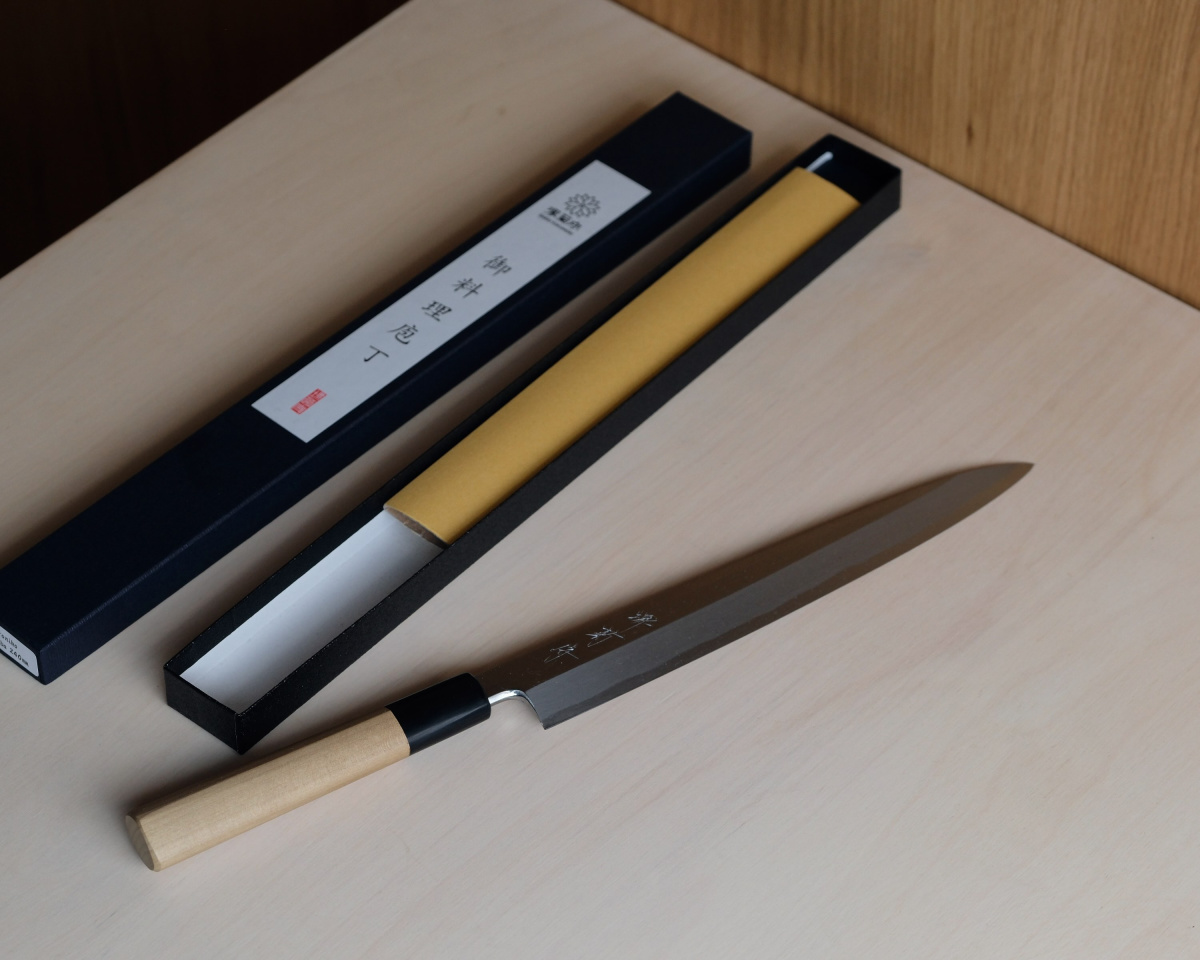
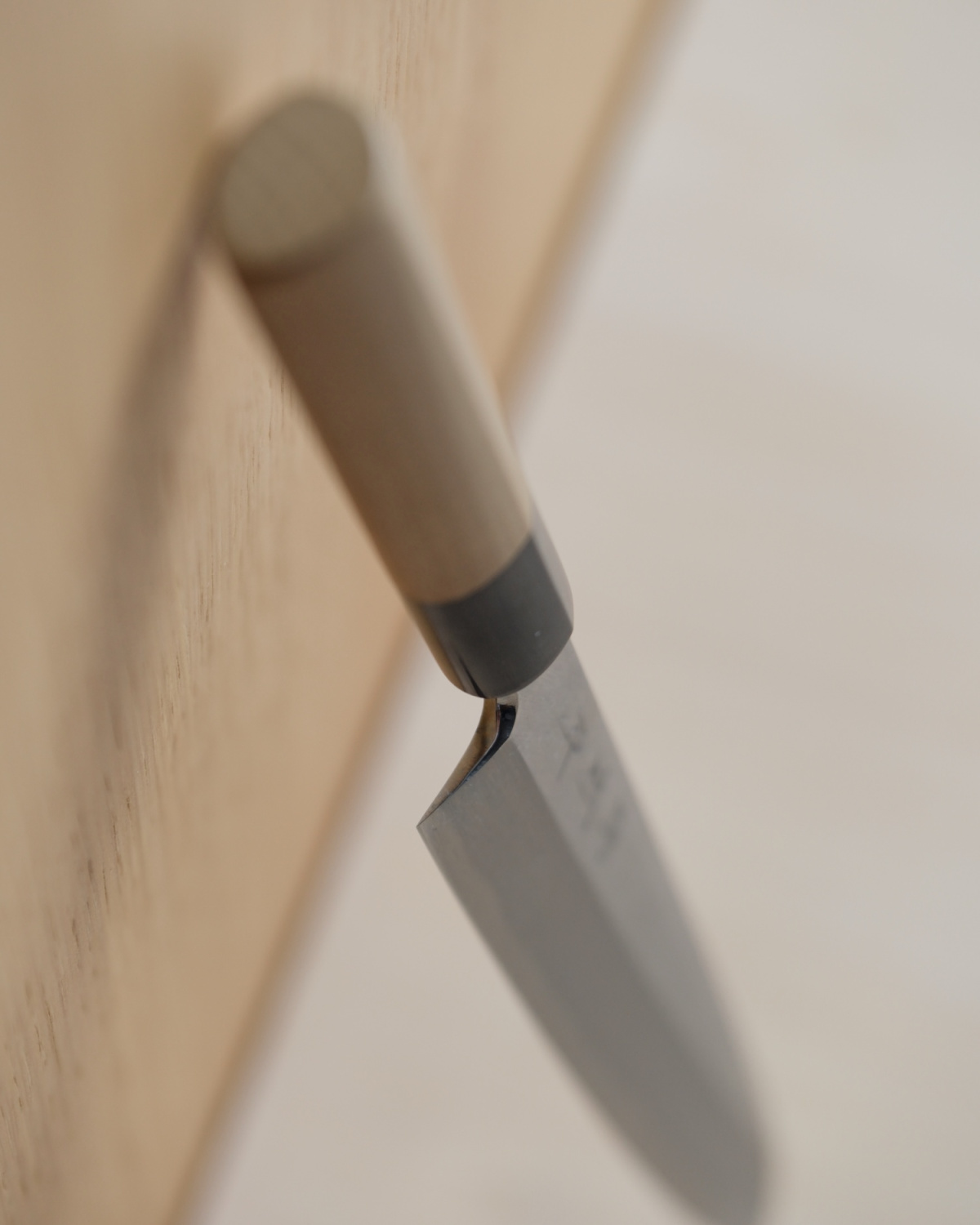
I also like the knife for its attention to detail. The edges at the heel of the blade are beautifully rounded and polished so that they do not press into the fingers when gripping. The Migaki surface casts soft reflections and naturally contrasts with the Kasumi finish on the main grind.
The blade has a Ni-Mai construction - a hard core made of carbon Shirogami White #2 complemented by a softer steel layer. This combination allows for an extraordinarily fine edge while maintaining reasonable resilience.
Single-Bevel Edge in Practice
This is a question almost everyone asks: "Won't such a knife pull to the side? Can you even make a straight cut with it? Won't it slip when slicing a larger fish?"
The short answer is: Yes, you can make a straight cut. Just a bit differently than you might be used to.
Single-bevel Japanese knives have a thinner and finer edge profile than common double-bevel knives. This means they cause less damage to delicate materials, leaving a cleaner cut. It's a similar principle to that of paper cutters - the edge guides the cut cleanly, precisely, and controllably.
Moreover, yanagiba is traditionally not cut with downward pressure. On the contrary. It works with a long stroke, often almost solely by the weight of the blade. Instead of pressing, you let the knife glide through the material. With the right technique, the knife doesn't veer off and feels surprisingly stable - whether you're slicing sashimi, a larger fillet, or even very finely marbled meat like wagyu.
In Japanese cuisine, two basic approaches are used. A perpendicular cut (Hirazukuri / Usuzukuri) is used for clean, precise slicing of sashimi and thin fillets. An angled cut (Sogizukuri) runs at about a 40° angle and creates longer, elegant slices with a larger surface area.
This is where the advantage of the long blade of yanagiba becomes apparent. With one smooth stroke, you create a clean slice without unnecessary "sawing" that would disrupt the delicate structure of the material - whether it's fish or quality beef.
It is important to mention one practical thing: this yanagiba is made for right-handers. The bevel is traditionally oriented and not suitable for the left hand.
Who Yanagiba Is (and Isn't) For
Yanagiba is not for everyone. And that's actually what's nice about it.
It's a tool for people who want to truly experience the Japanese way of working with a knife - not just be reminded of it. It will be most appreciated by lovers of sashimi and sushi, home enthusiasts of Japanese cuisine, people who are keen on precise slicing of delicately structured materials (from fish to wagyu), professional sushi chefs, and collectors of traditional Japanese knives.
If you're looking for your first truly authentic yanagiba to use regularly during home sushi nights, precise slicing of fish or quality meat, the SHIRONIKO 240 is a very convincing choice.
On the other hand, it won't be ideal if you're looking for one universal kitchen knife, prepare sushi only a few times a year, or don't want to pay attention to the care of carbon steel. In that case, you're likely to be more attracted to sujihiki - still a specialized slicing knife, but with a wider range of uses and an easier transition from common double-bevel knives.
Suitable for:
- lovers of sashimi and sushi,
- home enthusiasts of Japanese cuisine,
- precise slicing of delicate materials (fish, wagyu, tataki),
- professional sushi chefs and work around fish,
- collectors of traditional Japanese knives.
Less suitable if:
- you're looking for one universal kitchen knife,
- you prepare sushi only a few times a year,
- you don't want to deal with the care of carbon steel,
- you want a knife suitable for both right-handers and left-handers.
When Yanagiba Is a Good Gift
Yanagiba is not a universal "safe choice" for every chef - and precisely for this reason, it can be a great gift for the right person. It will most delight someone who loves sushi and sashimi, enjoys cooking Japanese cuisine, or already has a basic set of knives and wants to add something significantly more specialized. It will also please people who value precise slicing of quality materials - from fish to wagyu - as well as collectors of Japanese knives, fans of traditional craftsmanship, and professional chefs working with fish.
Conversely, it will be less suitable for someone who is looking for one universal knife for everything or doesn't want to pay attention to the care of carbon steel. Yanagiba is a bit of a ritual - and that's where its charm lies.
Simply put: if the recipient loves sushi, Japanese cuisine, or values precise slicing of quality materials, the chance that it will bring them joy is really high.
Yanagiba SHIRONIKO 240 Sakai Kikumori
Showroom mood
240 vs 300 mm - Which Length to Choose
This is by the way one of the most common questions.
240 mm is, in my opinion, the ideal length for home conditions. On a smaller work surface, it's easier to handle, doesn't require as much space, and still allows for long, clean cuts on common fish fillets and finely structured meat. If you prepare sushi, sashimi at home, occasionally slice wagyu, or process larger pieces of fish, it will be more than sufficient.
300 mm is more aimed at a professional environment or truly dedicated home enthusiasts. The longer blade allows for entirely uninterrupted cuts across large tuna or salmon fillets and works great for precise slicing of larger pieces of meat. It shines the most on a larger work surface and in the hands of someone who wants to get the most out of yanagiba.
If you're uncertain, I'd stick to a simple rule: 240 mm for the household. 300 mm for professional use, a larger work area, or a really big obsession with sushi and precise slicing.
Yanagiba vs Sujihiki
Both types can be considered slicing knives intended for clean cutting of both fish and meat. The difference is mainly in how specialized a tool you're looking for.
Yanagiba is primarily used for slicing sashimi - precise slices of fish and seafood - and excels at a clean, gentle cut of the delicate structure of the material. It also works great for slicing very finely marbled meat, such as wagyu, or for removing skin from fillets. In tandem with deba, it forms the traditional duo for fish processing - deba serves for portioning and bone work, yanagiba then for long clean slicing of fillets and sashimi. If you're interested in how deba works in practice, also check our review of Hocho Kobo Deba 150 Tadafusa.
If you place a slice of sashimi cut with a regular knife next to one cut with a well-sharpened yanagiba, the difference in the cleanliness of the cut and texture is often visible at first glance.
Sujihiki, on the other hand, is the Japanese interpretation of a Western carving knife with a double bevel and a much wider range of uses. While it may not slice sashimi with as much precision as yanagiba, it handles slicing raw and cooked meat, roast beef, brisket, wagyu, and homemade sushi without the ambition of absolute authenticity.
If you're looking for a specialized tool for sashimi, fine fish fillets, or maximum clean slicing, go for yanagiba. If you want one elegant slicing knife for more things, you'll probably enjoy sujihiki more.
Steel and Edge – Shirogami White #2
The steel used here is not accidental.
Shirogami White #2 is among the purest carbon steels intended for exceptionally fine-edge work in Japanese knifemaking - and that's why it often appears on yanagibas.
Its greatest advantage is the ability to create an extremely fine, aggressively clean edge. Cutting efficiency and clarity are priorities here, which is precisely what you expect from a yanagiba: long, smooth cuts without unnecessary disruption of the delicate structure of the material.
Another significant advantage is its relatively easy sharpening. On fine water stones, Shirogami sharpens readily and is surprisingly accommodating even to those just beginning with carbon knives. Moreover, after a good touch-up, it quickly returns the sensation of an exceptionally clean cut.
However, it's fair to mention the flip side. It's carbon steel, so it requires a bit of attention. If you leave the knife wet, dirty, or stored in a humid environment for a long time, it can start to oxidize.
The good news is that in practice, it's just a simple habit: use → rinse → dry → store dry.
Handle and Balance
The untreated magnolia handle used on this knife is historically somewhat the "default" material in traditional Japanese knifemaking - and it's no coincidence. Magnolia is lightweight, easy to work with, has minimal movement in humid environments, and food odors don't easily cling to it.
Interestingly, even without a lacquered finish, it holds surprisingly securely in hand. When it comes into contact with moisture, the wood's texture subtly rises, giving the surface a naturally slightly anti-slip character.
The handle is complemented by a buffalo horn ferrule (buffalo horn kuchiwa), which adds a subtle feel of traditional craftsmanship and understated exclusivity during use.
The balance is typically "yanagiba-style" - slightly forward toward the blade. For long pulling cuts, this feels very natural: yanagiba is not meant to push but to guide the cut using its own weight and smooth movement. When you stop feeling like the knife smoothly "falls into the cut," it is often the first signal that it's time to restore the edge.
Care and Sharpening (TL;DR)
The good news is that maintenance isn't complicated. Just a bit different than with a regular stainless steel knife.
Just remember a few simple rules: rinse after use and immediately dry, don't leave it wet or dirty for long, store it in a dry place, and occasionally treat it lightly with camellia oil.
The single-bevel edge requires a slightly different sharpening technique than European knives, but it's nothing to fear. On the contrary – Shirogami White #2 is a very grateful steel for routine maintenance on water stones.
What We Like About Sakai Kikumori Knives
It's really hard to find faults in Sakai Kikumori knives. Authentic proportions, traditional materials, excellent craftsmanship, and surprisingly favorable price considering what you get.
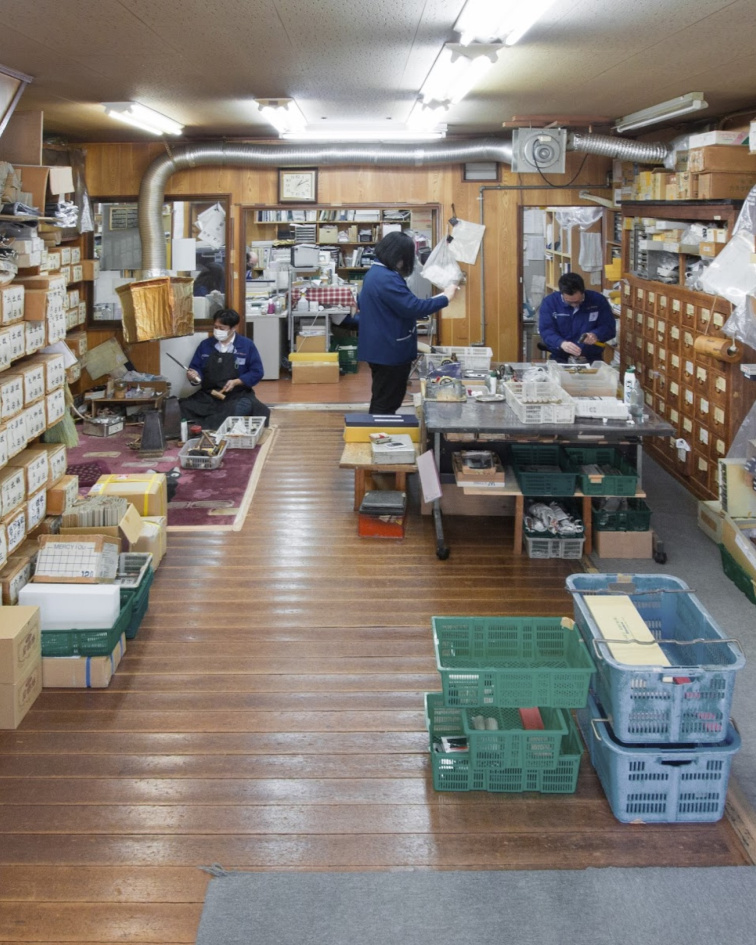
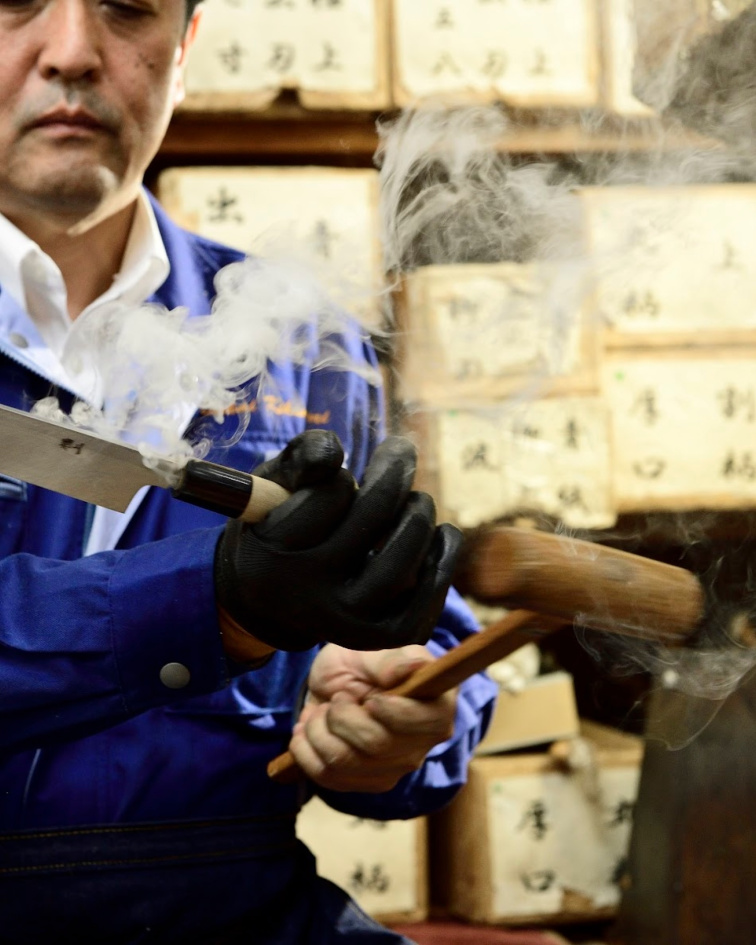
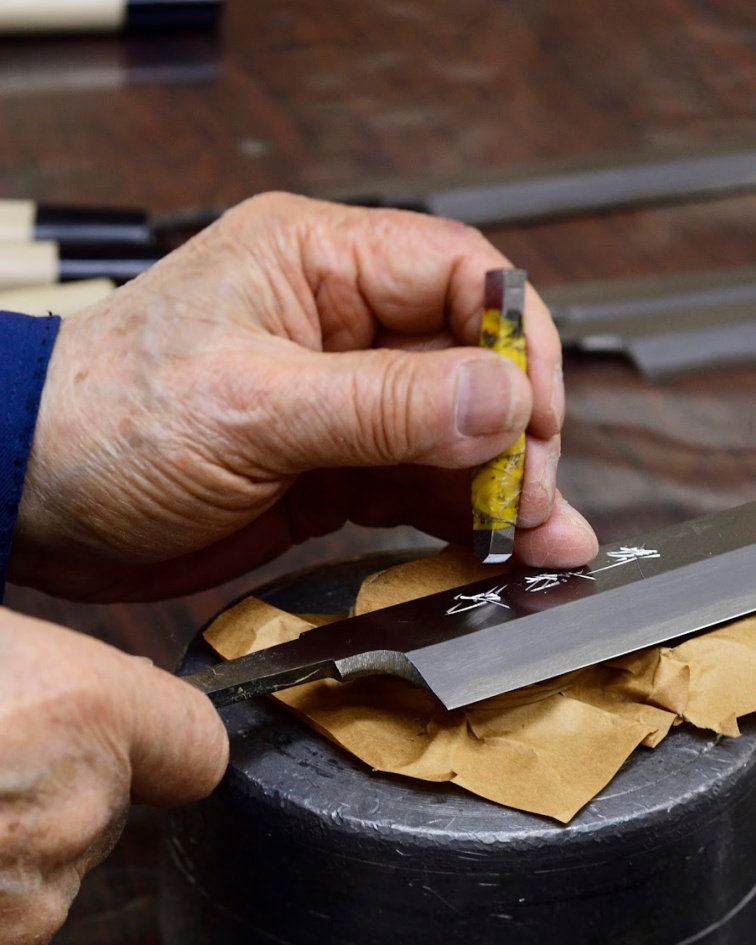
That's because Sakai Kikumori doesn't rely on just one production under one roof. The manufacturer brings together several specialized workshops from the Sakai area – a city with over six hundred years of knifemaking tradition. One master is dedicated to forging, another to sharpening, and others to assembly or handles. The result is knives that feel very authentic and consistently high quality.
Sum up
Yanagiba SHIRONIKO 240 is not a universal knife - and that's precisely where its strength lies. It is a tool created for exceptionally clean and precise cuts with the soft structure of materials: from sashimi and raw fish to precise slicing of quality meat, such as wagyu or tataki. If you're looking for your first authentic yanagiba for sashimi, home sushi nights or you want to try the traditional Japanese way of working with a knife at home, SHIRONIKO 240 is a very well-made choice.
An experienced itamae will appreciate the uncompromisingly smooth cut and traditional geometry, a home enthusiast the authenticity, beautiful materials, and surprisingly pleasant feel during work. And a collector? They might be satisfied for a while just by looking at it. Because some knives aren't acquired just for what they can do, but for the feeling they evoke when used.
Interested in more knife reviews in a similar style? You can find them in the article overview on our blog.
FAQ
Is yanagiba suitable for home use?
Yes. The 240 mm variant is particularly well suited for home kitchens - offering a long clean cut, while still working well on smaller surfaces.
What is the difference between yanagiba and sujihiki?
Yanagiba is a traditional single-bevel knife mainly for sashimi, fine fish fillets, and the cleanest possible cut. Sujihiki has a double bevel and wider use for slicing meat, roast beef, or home sushi.
Can yanagiba also be used on wagyu or meat?
Yes - especially on finely structured meat intended for thin slicing. The long smooth stroke helps create a clean cut without unnecessary disruption to the meat's structure.
Is Shirogami White #2 difficult to maintain?
No, but it requires some attention. After use, simply rinse the knife, immediately dry it, and store it in a dry place. Since it's carbon steel, prolonged moisture could cause oxidation.
240 mm or 300 mm?
240 mm is ideal for most home kitchens, in my opinion. 300 mm stands out more when working with large fillets, on a larger work surface, or in a more professional environment.
Matouš, Tokyo Tools ©