
Knife review: Camping knife Misuzu
Knife review: Camping knife Misuzu
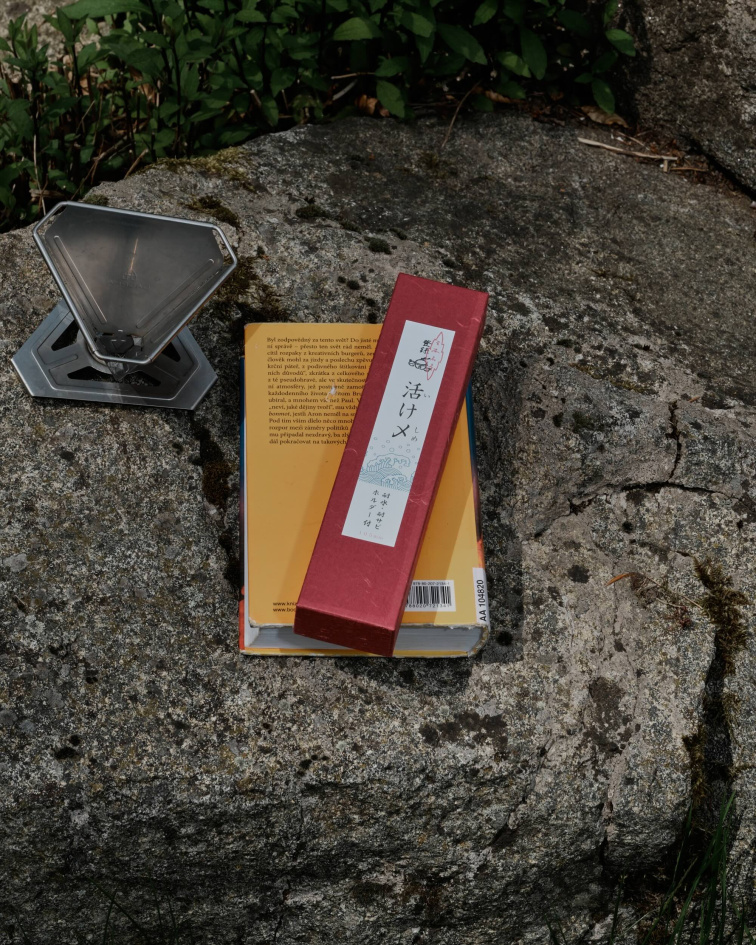
I often encounter this. Customers look around the showroom and usually notice the displayed Misuzu Camping Knife. They often like it but don't take it completely seriously. And I understand why. At first glance, it appears like a miniature version of Kiritsuke Gyuta with a compact wooden saya. However, it's not a gimmick. For me, it's a well-thought-out companion for traveling, cooking outdoors, and slower days away from home.
Table of contents
Design and materials used
Blade and geometry
Steel and edge – VG-10
Case and workmanship
How it performs in practice
Final evaluation
.
.
.
.
.
Design subordinated to function, materials honoring tradition
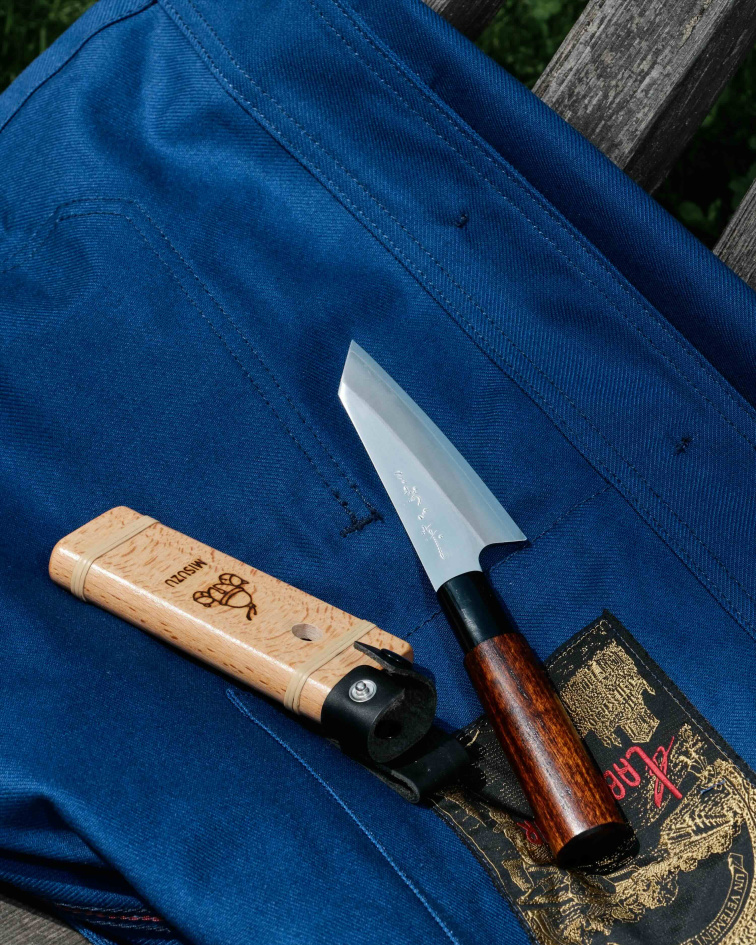
This is a smaller, travel version of the Kiritsuke Gyuta, which Misuzu Hamono also offers in a full-sized version. With a blade length of 105 mm, it, along with the Hocho Kobo Deba 105, ranks among the smallest Japanese kitchen knives in our offer. A truly petite Petty. The heel of the blade is sufficiently set back from the handle, making it comfortable to work on a cutting board despite the knife's compact size. In hand, it feels larger than its size would suggest, and you don't have to worry about your fingers hitting the board. Therefore, it will find its place not only in the field but also in the home kitchen.
Thanks to a weight of just 55 grams without the case, it feels almost weightless in hand. It won't get lost or heavy in your backpack - it will remind you of itself only when you need it. Despite the unconventional format, Japan is felt in every detail. The kiritsuke-type blade is adorned with a subtle kasumi finish reminiscent of cloud structures, which naturally highlights the laminated construction transition. The magnolia handle treated with urushi lacquer is complemented by an oval collar. As Japanese as it gets.
Blade and geometry
I am thrilled with the choice of blade shape for a small camping knife. Kiritsuke makes a lot of sense because rocking cut on a small board won't be very useful for you. However, the straight edge will always reliably sit fully on the cutting board. This maximizes the potential of knives of these dimensions. The sharp tip can easily handle opening plastic bags and other soft packaging materials while traveling. I can simply envision this knife excelling everywhere from cleaning caught fish, prepping skewers, or slicing and expressing an apple.
Steel and edge – VG-10
The blade has a core made of VG-10 stainless steel, an ideal material choice for a camping knife that can't be thoroughly maintained in the wild. The knife stays sharp for a long time, doesn't rust, and only develops a light patina. The edge is almost completely straight, with a really subtle even curve. Such an edge is my favorite when it comes to sharpening. Achieving a uniform bevel is very simple because the knife doesn't need to be tilted much on the stone to hit the entire length of the edge.

Case
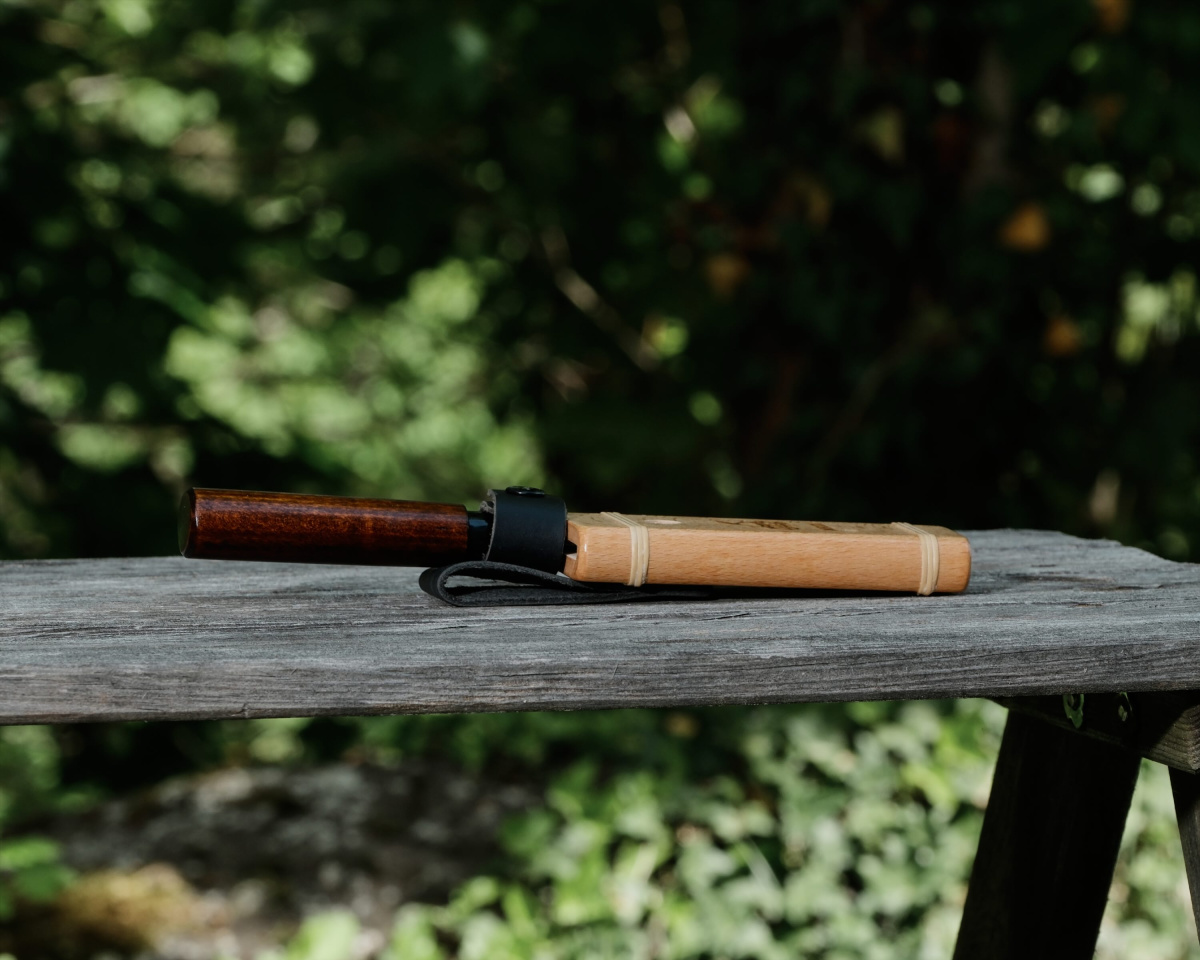
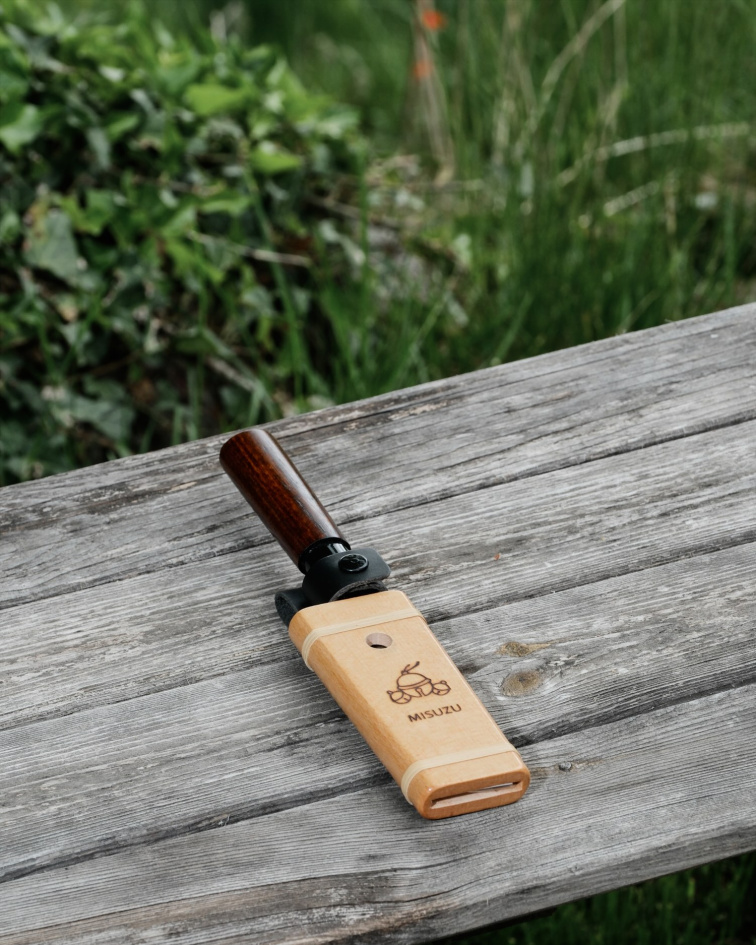
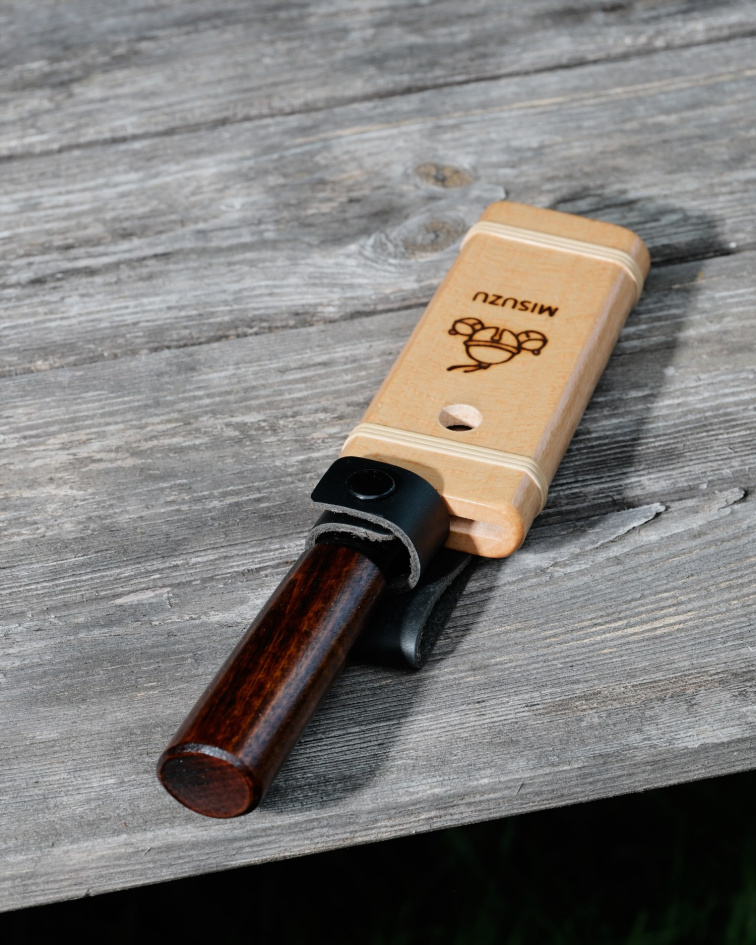
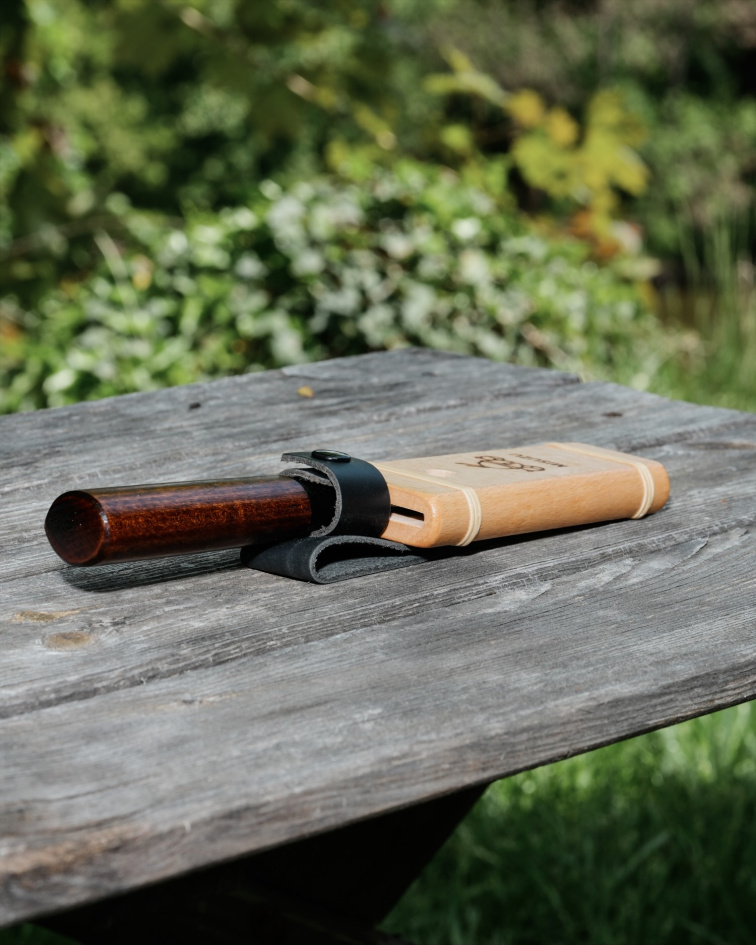
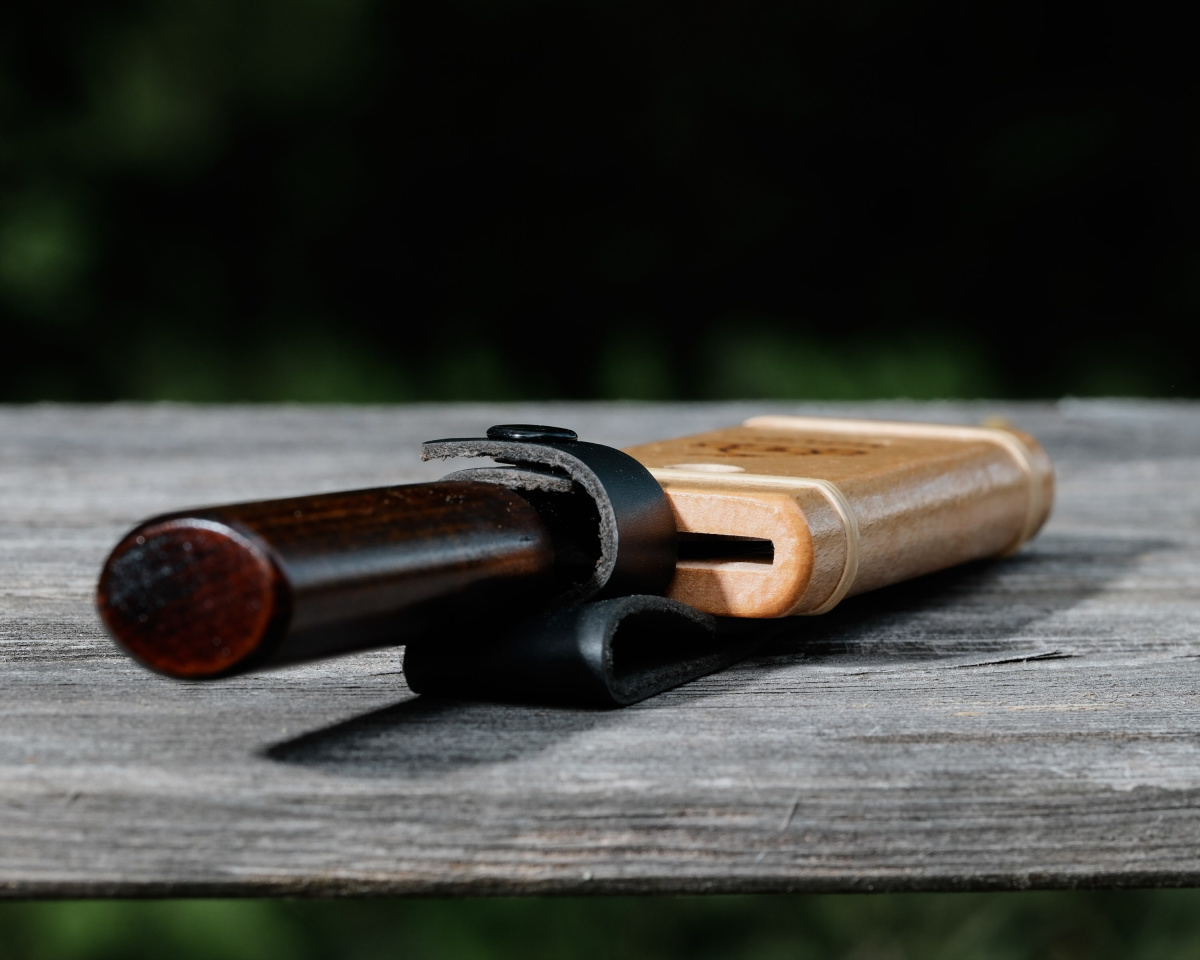
The knife is supplied with a practical wooden case (Saya), equipped with rattan elements on both ends. The case also includes a leather strap that prevents the knife from falling out and a leather loop that makes it possible to carry the knife on a belt or sump. On the front of the case, there is a burned motif of bells, an old Japanese protective symbol.
What I appreciate about the knife
- Ideal blade shape for preparing food in nature
- Suitable choice of steel for outdoor use
- Nice and practical case
Kind reminder:
- The knife is not suitable for wood carving or processing other hard materials due to its thin and hard blade
- the knife does not replace a solid outdoor knife or folder, but it complements them perfectly
Sum up
Misuzu does not act like an outdoor knife in the usual sense. It is closer to a small kitchen knife, which is simply easy to carry and naturally works outdoors - when cooking at a campsite, on a day trip, or during a slow morning under the tent. Its lightweight construction, thin blade, and wooden case don't make it a universal tool for every situation. But it clearly shows what it was designed for.
More knife reviews can be found in the knives section on our blog.
Matouš, Tokyo Tools ©