Knife review: Hocho Kobo Deba 150 Tadafusa
Knife review: Hocho Kobo Deba 150 Tadafusa
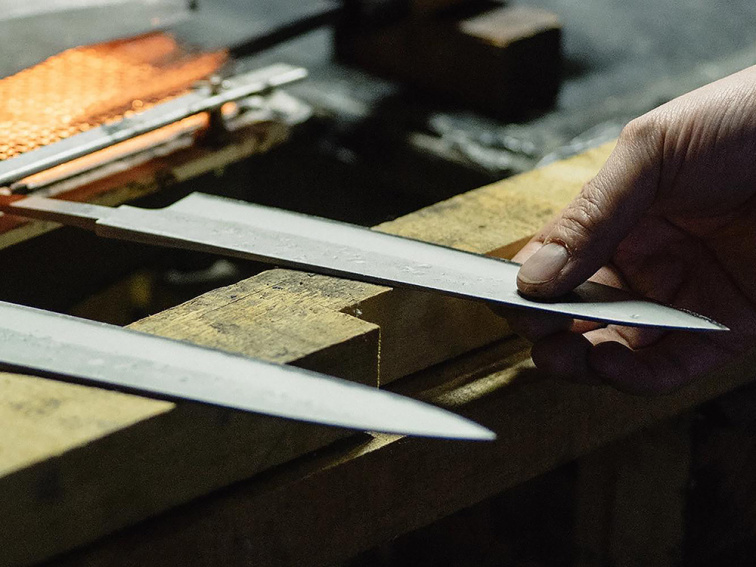
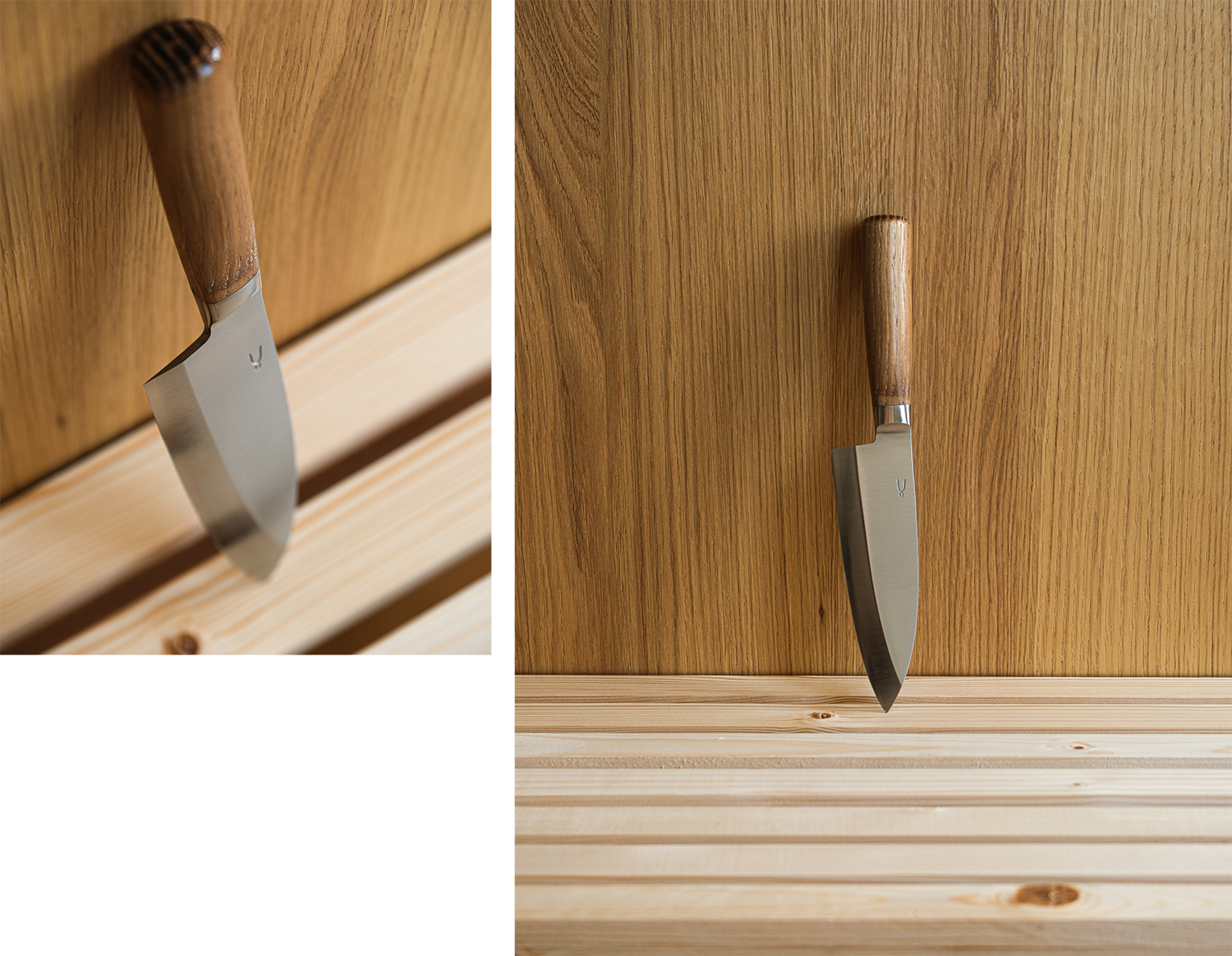
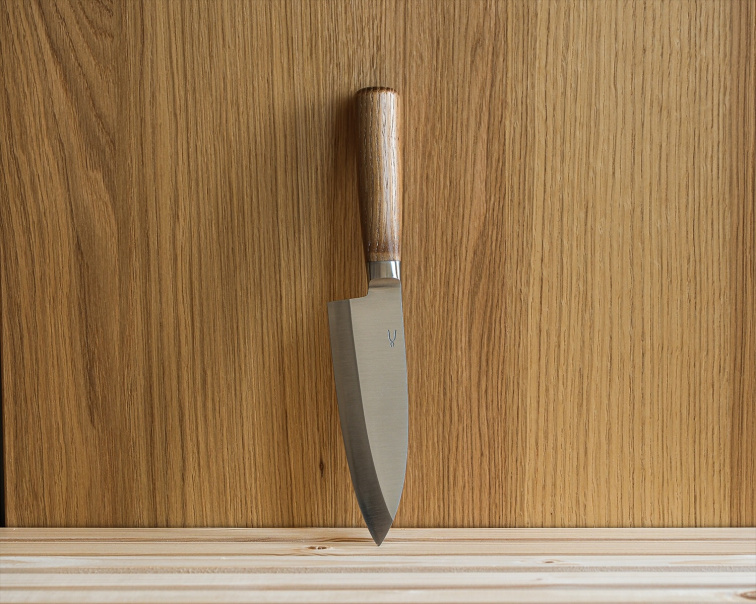
When I first visited the Tokyo Tools showroom, the Hocho Kobo Deba was the first knife I instinctively had to look at. Without a doubt, one thing attracted me to the knife, and that was the thickness of the blade - a 4 mm thick piece of steel! A thickness of 4 mm in the world of deba means rather the lower end of the standard, but compared to other universal kitchen knives, it is a big contrast. The deba won't slice paper-thin carrot slices for a stir-fry like a nakiri, nor will it prepare a complete Michelin dinner like a gyuto, but it can do one thing best out of all knives - portioning and filleting fish.
The Japanese are known for just two things (okay, maybe more...), namely the abundant presence of fish in their diet and a love for sharp objects. It is no surprise then that Japanese culture has a special knife for processing fish from start to finish. With a deba, you can easily gut, portion, and fillet a fish.
.
.
.
.
.
.Blade and Geometry
As I mentioned before, the blade is robust here and for good reason. Japanese knives are traditionally made from carbon steels that maintain a sharp edge for a long time due to being processed to a high hardness. However, this has one negative effect: brittleness. Japanese blacksmiths in the Edo period needed to compensate for the properties of the steel with the thickness of the blade to create a knife that would cut through fish bones - thus, the deba was born.
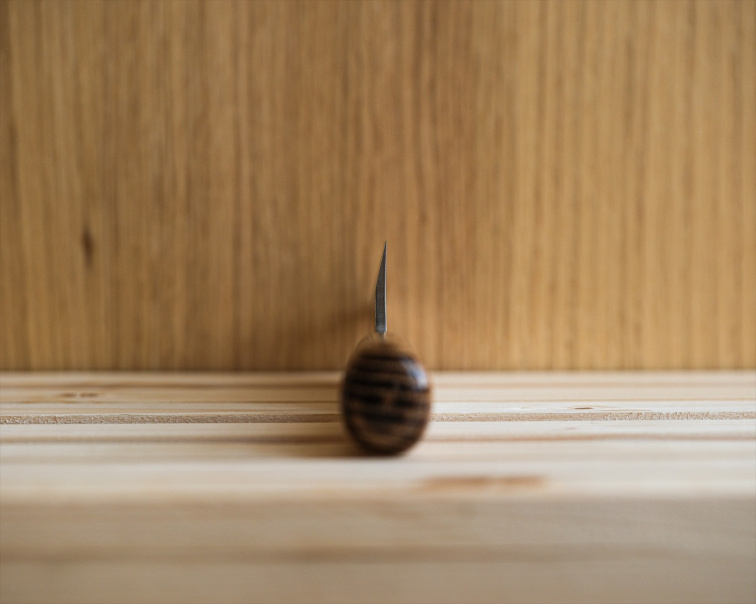
The blade is also single-beveled. This makes it easier for you to have 100% control and achieve cleaner cuts when slicing through fish cartilage and bones. It's the same principle as paper cutters, which are also single-beveled, allowing them to cut paper precisely, smoothly, and cleanly every time. The other side of the deba has a hollow grind, preventing ingredients from sticking to the blade due to the air bubble between the steel and the food. The blade also has a beautiful satin finish that throws off fine pearly reflections and never becomes boring.
Design
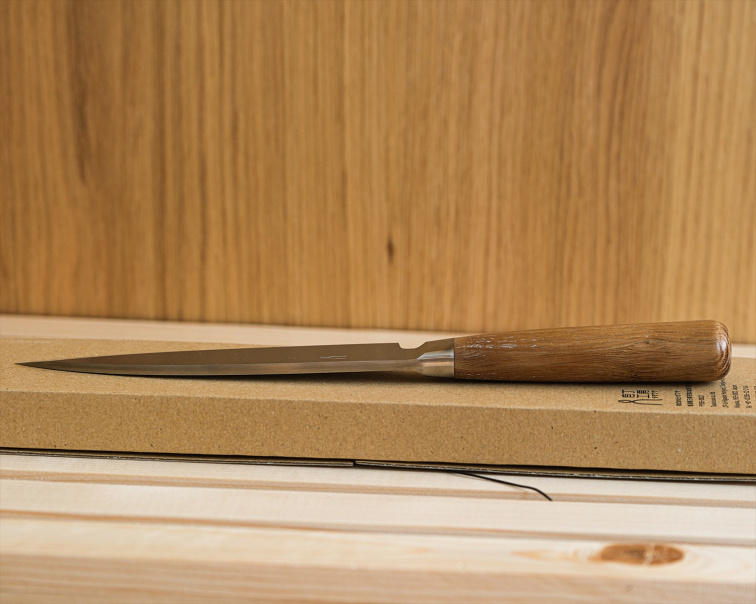
As for design, only the blade of the knife is traditional. The rest of the construction can be described as a tasteful fusion of Japanese tradition and modern European knife design. At the end of the blade is a bolster, typical of German knives, which smoothly continues into a handle made of carbonized chestnut wood. The handle fits naturally in the palm, is ergonomic, and does not feel cold. In the true sense of the word, the design is timeless – it would have been cool in the past, just as it is today, and will undoubtedly be in the future. Perhaps this is one of the reasons why the Hocho Kobo series from Tadafusa has earned the prestigious Good Design Award.
Handle and Balance
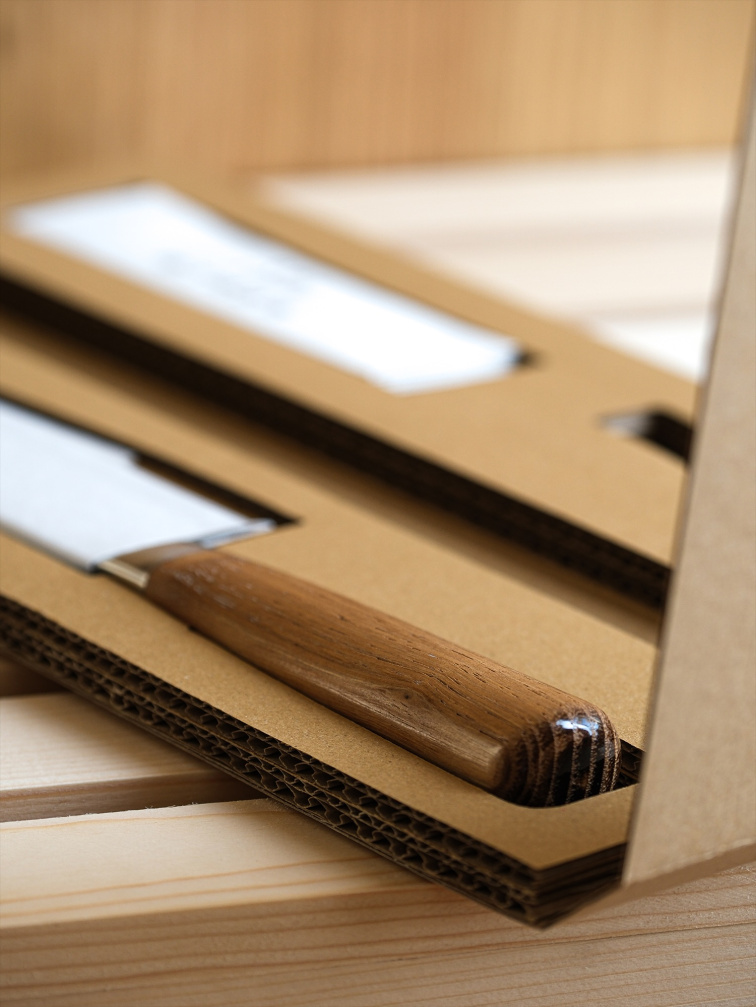
The handle is made from carbonized wood, making it more resistant to wear and water, and it requires no maintenance. Carbonization is essentially a partial petrification of the wood. The material is placed in ovens devoid of oxygen, and at higher temperatures, its chemical properties change. The wood becomes harder and less porous.
The knife does not have its center of gravity at the junction of the handle and blade, as is the case with most santoku knives, but rather further along the blade. The knife is known as Blade Heavy when held, which is advantageous for this knife's intended use, and you'll quickly appreciate this attribute in practice.
How to use the Deba to its fullest
- For trimming fish and splitting larger bones, we recommend using the heel of the blade, where the edge is thickest
- For separating ribs from the spine inside the fish, use the sharp but robust tip
- For filleting, long even cuts with the whole blade are best
- With the Deba, don't chop the fish, but use even pressure and the natural weight of the blade, chopping can damage the edge due to impact on the board
What I appreciate
- robust construction
- suitable choice of steel considering the construction
- comfortable handle
- simplicity of work with the knife
What to keep in mind
- the knife variant is only for right-handers
- the knife should not go in the dishwasher
- care is part of the experience; to maintain its qualities, the knife requires maintenance appropriate for Japanese knives
Pro tip
Deba 150 is designed mainly for processing medium and larger fish such as carp and salmon. When portioning and filleting smaller fish like trout, it may feel cumbersome. Therefore, for working with small fish, we recommend the mini version of the Hocho Kobo Deba Deba 105, which allows you to maintain maximum control even when portioning larger sardines.
Sum up
The Deba is not a knife for everyone. It's for fish lovers who want to process their catches, whether caught or purchased, with maximum efficiency. For precisely cut fillets. In short, for processing fish without waste and lost time.
Matouš, Tokyo Tools ©