
Knife review: Polished Nakiri Azumagata 150 Tadafusa
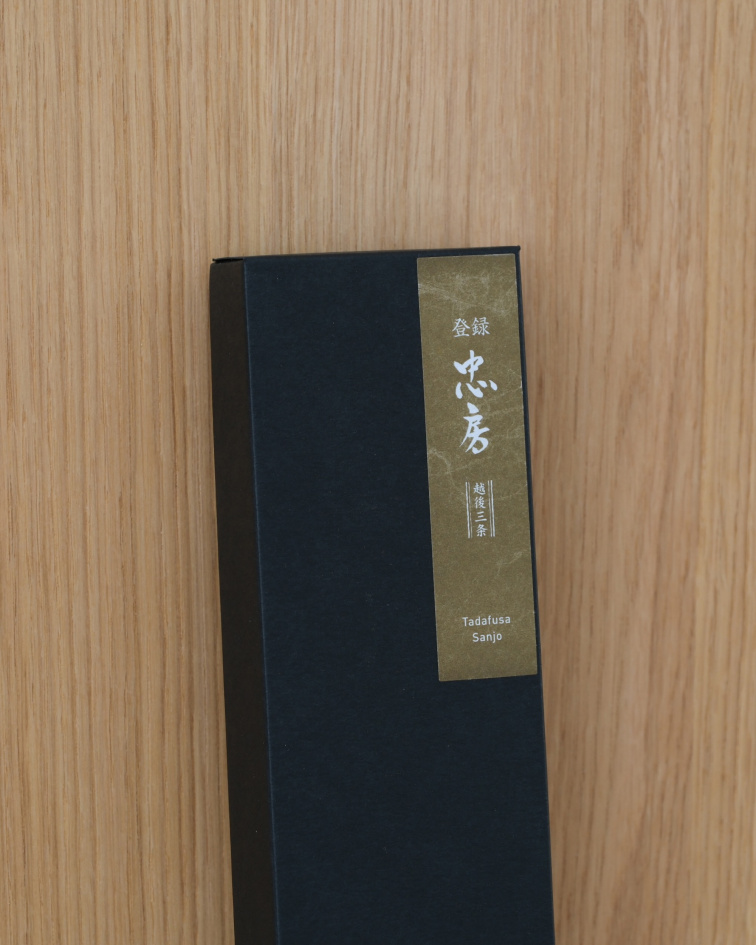
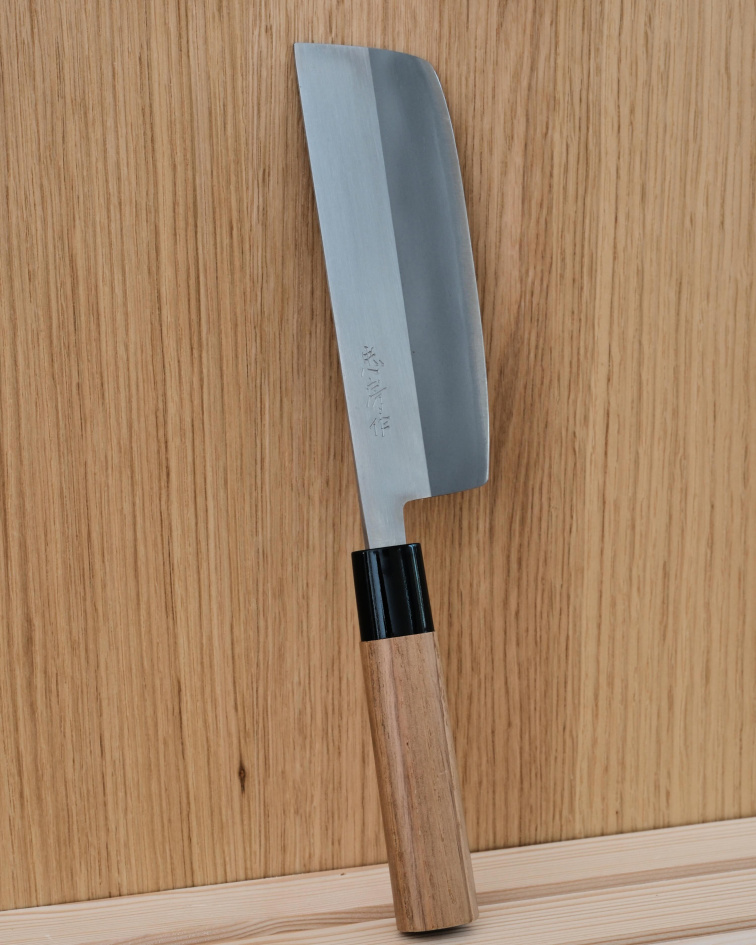
Knife review: Polished Nakiri Azumagata 150 Tadafusa
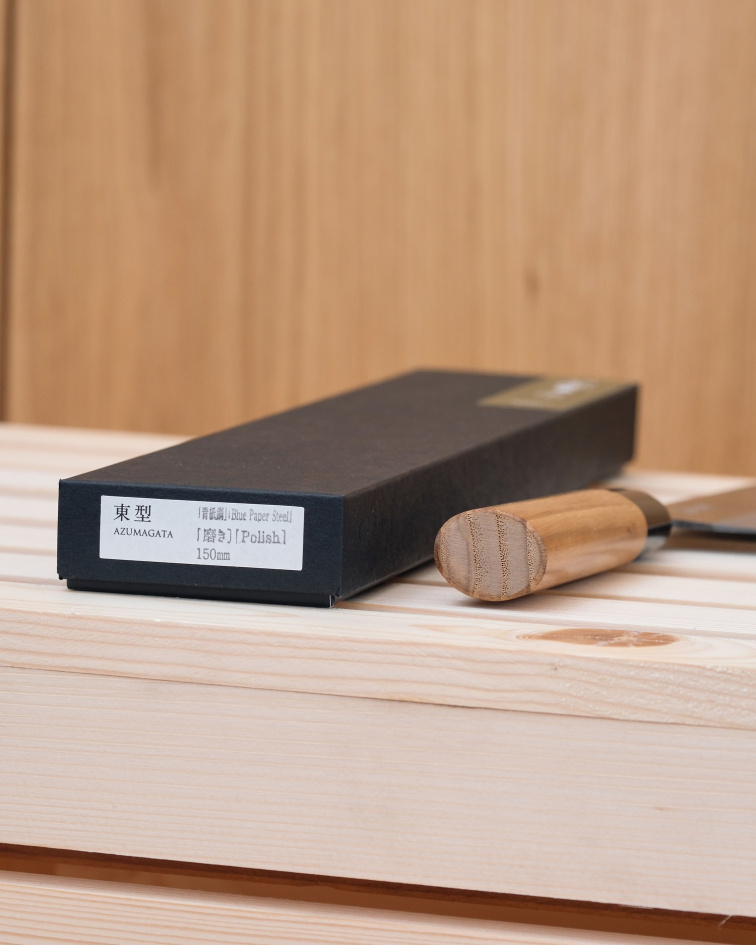
Asian vegetable knives are my main domain. A tool that on first impression seems like a narrowly focused piece of equipment, which you use occasionally, is my most used knife in the kitchen, completely overshadowing all other types of my kitchen knives. Azumagata in this category does not represent anything groundbreaking, but it is an interesting twist on the classic nakiri that will not disappoint you in any way.
Contents of the article
Blade and geometry
Steel and edge – Aogami Blue Steel #2
What is Azumagata?
Handle and balance
Final evaluation
.
.
.
.
.
Blade and geometry
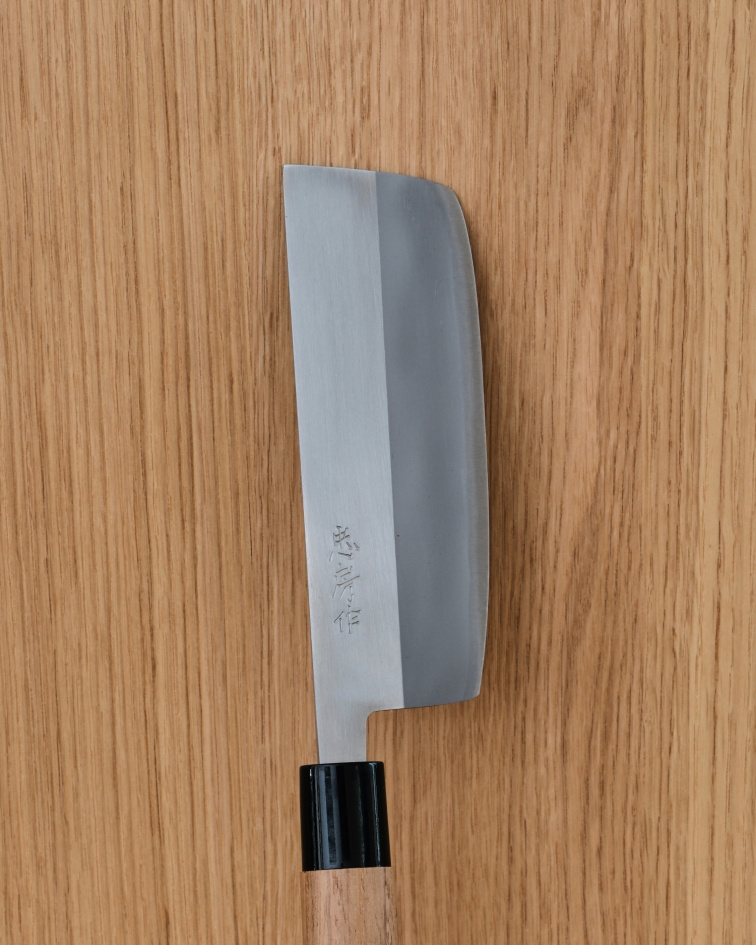
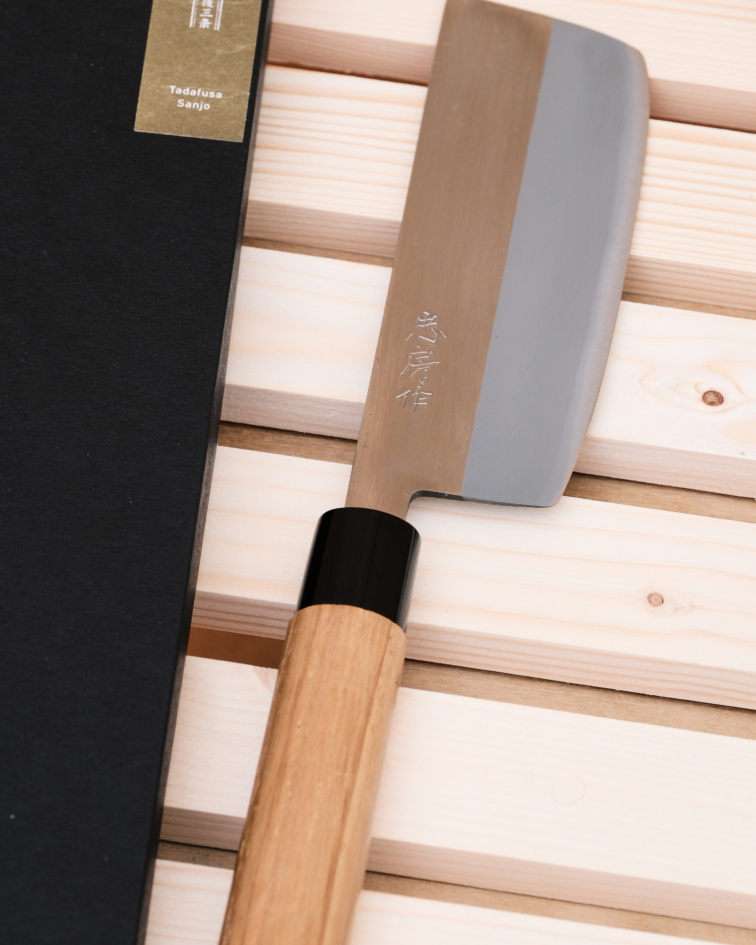
The blade geometry is very similar to the models of nakiri, Azumagata's siblings. The blade has a rectangular shape, thin back, and a very high main grind. In practice, this means that the thickness of the steel behind the edge is razor-thin (literally). The knife thus glides through even root vegetables effortlessly. Thanks to this, you can slice carrots into transparent strips for stir-fry or into miniature cubes for Bolognese sauce without swearing in front of your family that you'll never cook again. The width of the blade also has another advantage, which is the possibility of scooping up sliced ingredients and transferring them across the kitchen without dropping anything. If you prefer a movement-intensive cooking style, Azumagata will gladly adapt to you.
Another difference with the classic nakiri is at the tip. Azumagata has a sharp tip (almost at a right angle), whereas most nakiri have a rounded tip. You will use Azumagata's sharp tip, for example, for slicing by pulling on the cutting board. I have used this feature in the past, among other things, for slicing nori seaweed.
Steel and edge – Aogami Blue Steel #2
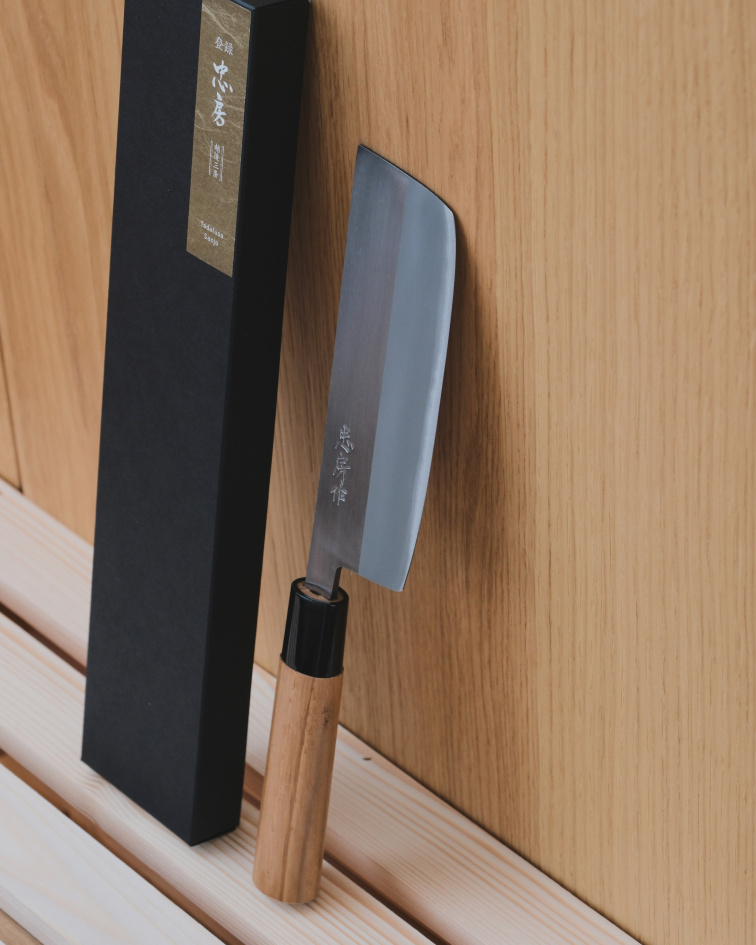
The laminated blade is enclosed between stainless steel cladding with a carbon core of Aogami Blue Steel #2. The chosen steel, with its properties, staying sharp for a long time, tactfully complements the thinness of the blade. Compared to Shirogami White #2, this blue steel is harder to sharpen. However, sharpening won't be needed as often. The steel is hardened in the range of 62-63 HRC, so the knife has the best possible mix of this material's properties (sharpness, edge retention, and toughness). Nonetheless, it is a more brittle steel, so we recommend avoiding sudden impacts on the cutting board or cutting frozen ingredients and bones. When using similar knives, I follow the mnemonic: don't cut anything I wouldn't dare to bite into.
What is Azumagata?
The word “azumagata” literally translates to - eastern shape. The name refers to the area of Japan where this blade shape has been historically used. Specifically, in the Kantō region (which also includes Tokyo, among others). In other parts of Japan, you are more likely to encounter a type of single-beveled vegetable knife called usuba. The most widespread type of nakiri knife was then developed primarily for home cooking.
What I appreciate about the knife
- maximum edge thinness
- use for rocking cutting
- use of the tip for precise board slicing
- using the blade surface for scooping up sliced food
- a universal tool for plant-based diet lovers
Kind reminder:
- the knife is not suitable for cutting hard foods
- avoid impacts on the board
- regular maintenance is necessary
- if you are looking for one universal knife for everything, a better choice might be santoku or gyuto
Handle and balance
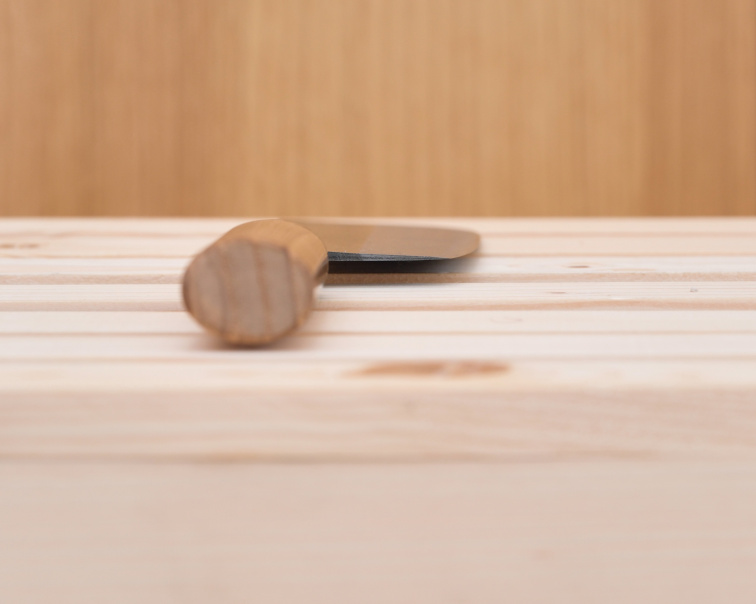
An oval wa handle is used here made of carbonized chestnut wood with a black polymer collar. The very lightweight handle in combination with the large blade surface causes the knife to feel blade-heavy in hand. With vegetable knives, I always appreciate this quality. The thin edge combined with the heavier blade glides through food almost on its own. You quickly get used to working with a knife on which you don't have to apply pressure, and when using knives at your relatives' place, you'll shed a nostalgic tear at the thought of your Azumagata.
Sum up
If you predominantly prepare vegetarian/vegan meals, a vegetable knife is a must-have! I would even dare to say that for a vegan-warrior, a nakiri combined with a handy petty and a robust cleaver, is a sufficient arsenal for most cooking sessions. Azumagata fits perfectly into this collection.
Are you interested in other knife reviews in a similar style? You can find them in the overview of articles on our blog.
Matouš, Tokyo Tools ©