
Knife review: Boxwood chef's knife by Pallarés Solsona
Knife review: Boxwood chef's knife by Pallarés Solsona
When I think of the two most iconic kitchen knife designs, two patterns come to mind. The second is undoubtedly the santoku, which has rightfully earned cult status over its nearly 80-year existence. The first, and it has been for a long time, is undoubtedly the German-style chef's knife. This large, universal knife beloved throughout the world is also made by Pallarés Solsona, which adds a few of its own Catalan ingredients to the traditional Solingen recipe.
Article contents
Why we love Pallarés
Blade, geometry and edge
What a German chef's knife is and why you should have one
Steel – 12C27
Sharpening pro tip
Handle and balance
Summary
.
.
.
.
.
Why we love Pallarés
Pallarés has been making knives in the Catalan town of Solsona since 1917, when it was founded by brothers Lluís and Carles Pallarès. The knife-making tradition did not arise here by chance, but grew out of regional knife production dating back to the 16th century, which gradually disappeared over time. Today, Pallarés is the last knife maker in the region.
Traditional Catalan blade shapes (Hoja de olivo, Punta clip – Ripolles) and handles are no longer available only in books and articles about historical knife making, but also directly through e-shops and brick-and-mortar stores all over the world.
Production is now overseen by the third generation – David Pallarès, who incorporates modern manufacturing processes into the otherwise traditional production, thereby expanding the possibilities for crafting Catalan tools.
Blade, geometry and edge
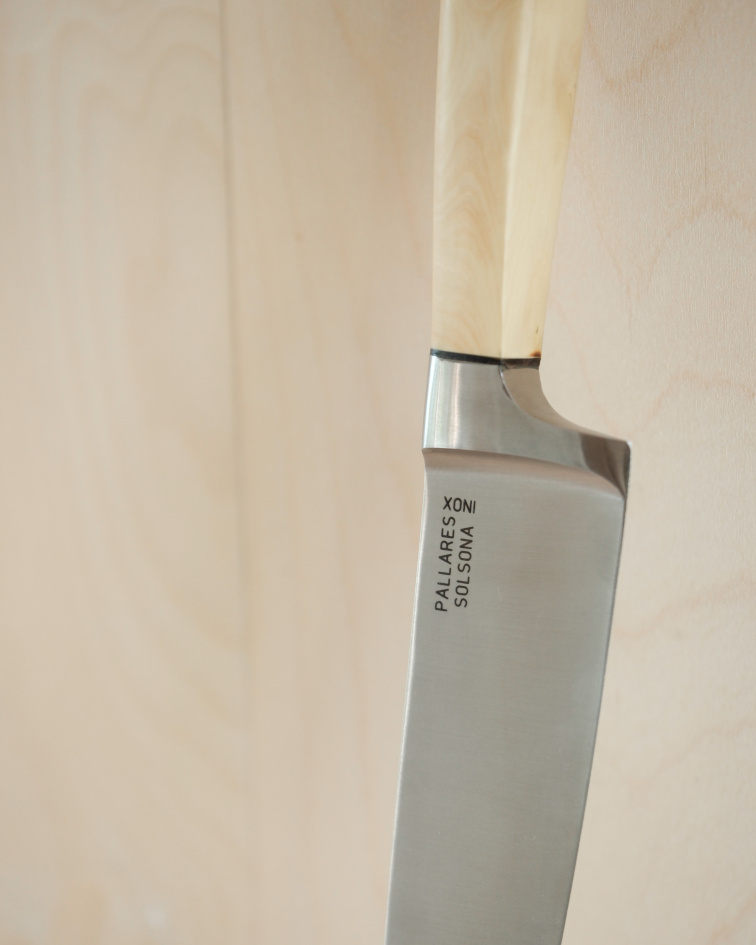
Compared to Japanese knives, the blade here is more robust. The grind is fully convex with a zero bevel and a slightly thicker spine. The knife can therefore withstand somewhat rougher handling than its Japanese relatives.
The blade shape is absolutely typical of knives of this type. A long blade with a gradually curved edge and a tip conveniently positioned on the knife's center axis make this tool an ideal choice for chopping with a rocking motion. It is also perfectly capable of long draw cuts and push cuts.
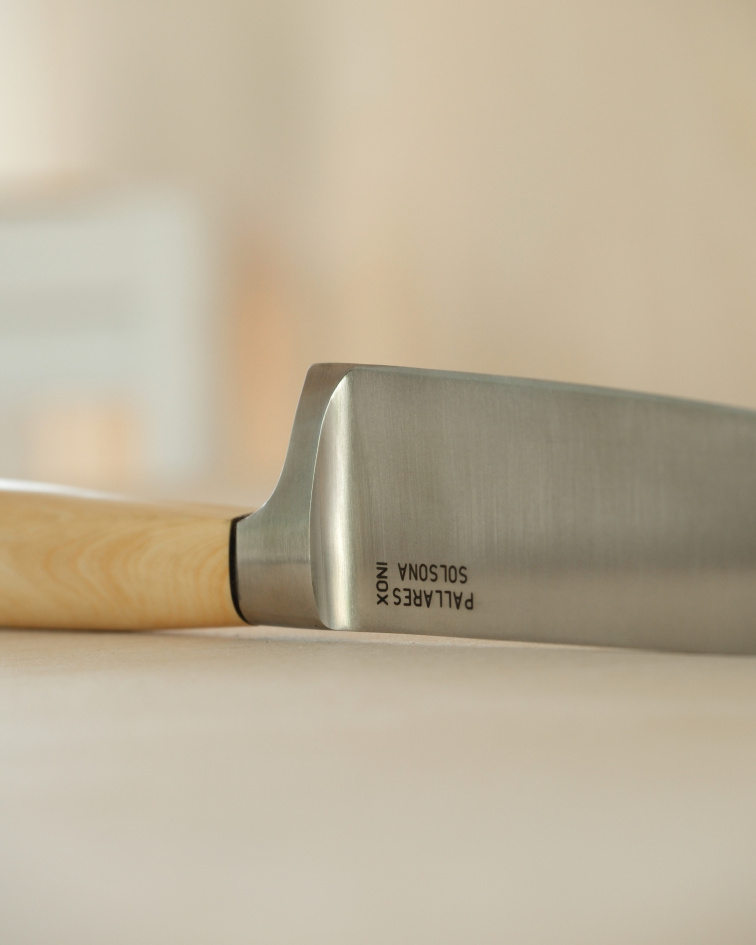
The blade ends in a substantial bolster that elegantly flows into the handle. Besides aesthetics, the bolster serves two additional purposes. It allows for a more comfortable pinch grip – holding the knife with the thumb and index finger at the end of the blade. The bolster also adds more weight toward the end of the handle, which helps with balance.
What a German chef's knife is and why you should have one
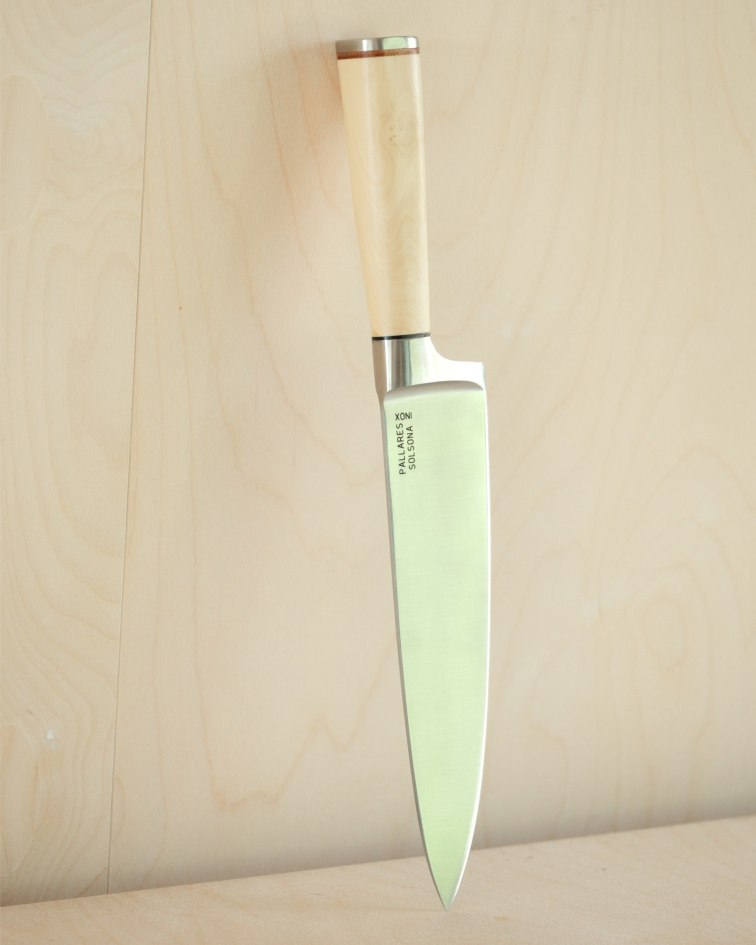
The origins of this knife can be roughly dated to the second half of the 18th century, in the vicinity of the German city of Solingen. Typical features include a relatively wide blade with the tip on its center axis, a slightly rounded edge, and a substantial guard. These knives are generally heavier and more robust, yet perfectly balanced.
The influence of this design on the shape of today's kitchen knife market is unprecedented. Although Japan has a rich tradition of its own shapes, many of today's popular Japanese knives were created by drawing inspiration from or adapting Western and German chef's knives. Gyuto, bunka, santoku – all of them stem from the design language of their Solingen predecessor.
The reason for its popularity? Durability, versatility, excellent ergonomics and balance. Rather than listing what it is suitable for, it makes more sense to say what it is not suitable for – detailed work. For that, this knife is perfectly complemented by, for example, an 11- or 13-cm version of the Catalan chef's knife.
Still not sure which knife is right for you? The Knife / How to choose tool will help you make your selection.
Steel – 12C27
This stainless, easy-to-sharpen Swedish steel is a perfect choice for this knife. The high chromium content ensures that the knife will not rust easily and can withstand rougher handling. Thanks to its easy sharpening – synonymous with Swedish steels – restoring a dulling edge on a ceramic honing rod is a piece of cake.
Sharpening pro tip
The knife has a convex grind with a zero bevel, but there is no need to be afraid of sharpening it. I recommend sharpening at an angle of approximately 18 degrees on KING or Suehiro whetstones. To extend the life of the edge, I recommend regularly honing it on a ceramic honing rod at the same angle.
I cover the entire process of sharpening kitchen knives in detail in the article A guide to freehand sharpening knives on waterstones.
What I appreciate about the knife:
- Robust knife construction
- Traditional large bolster
- Low-maintenance, easy-to-sharpen steel
- Versatility
- Ease of chopping with a rocking motion
- Perfect balance
Things to keep in mind:
- The knife is not dishwasher-safe
- Thicker and less precise cuts than with a gyuto
Handle and balance
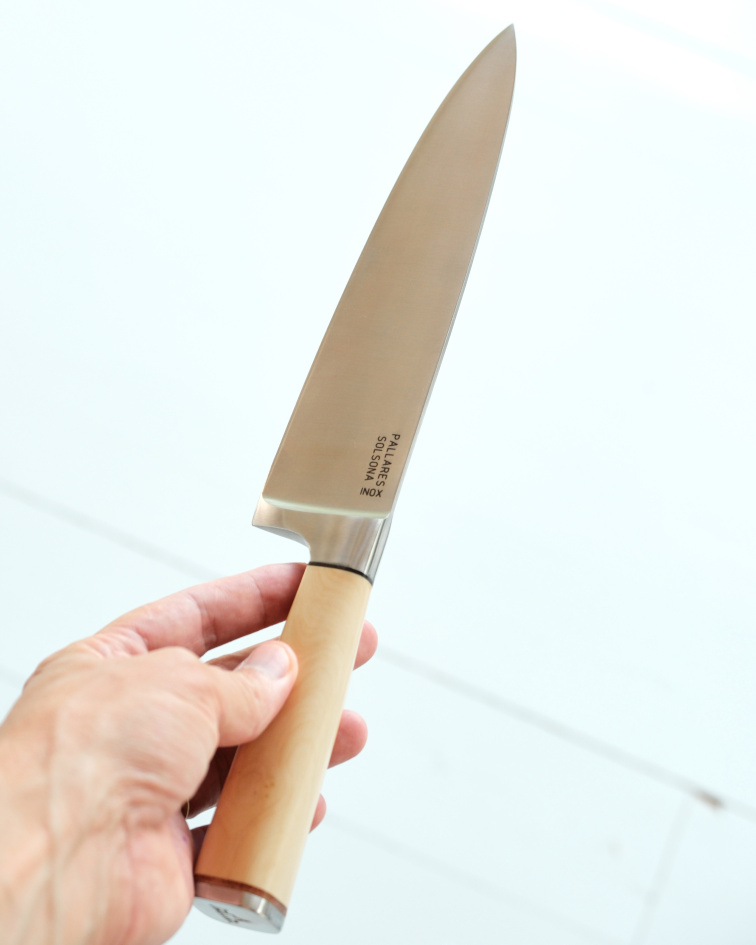
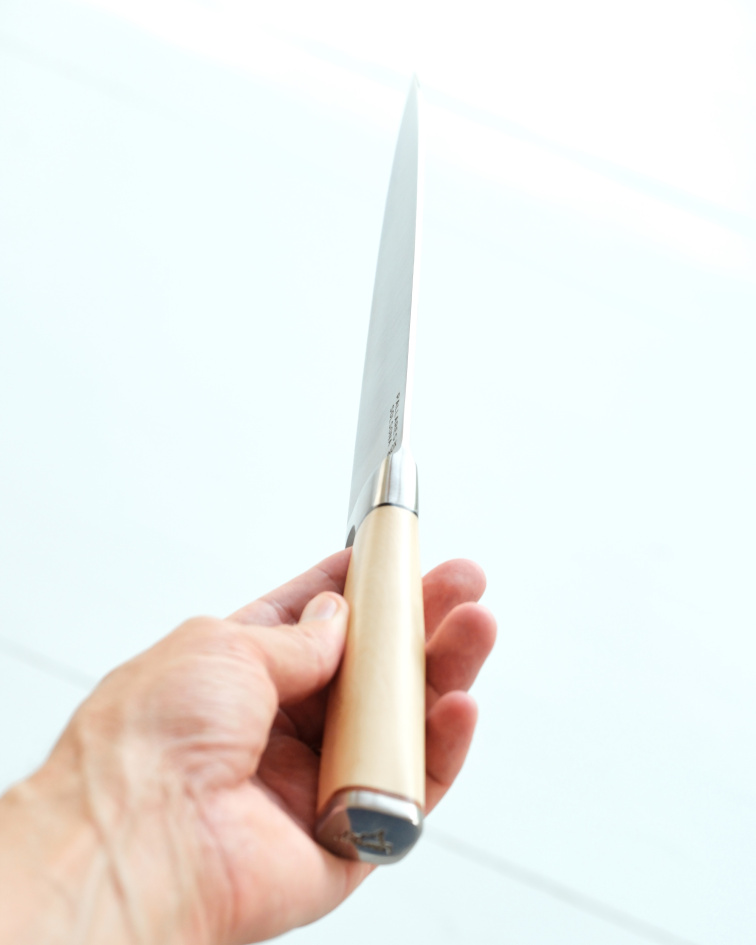
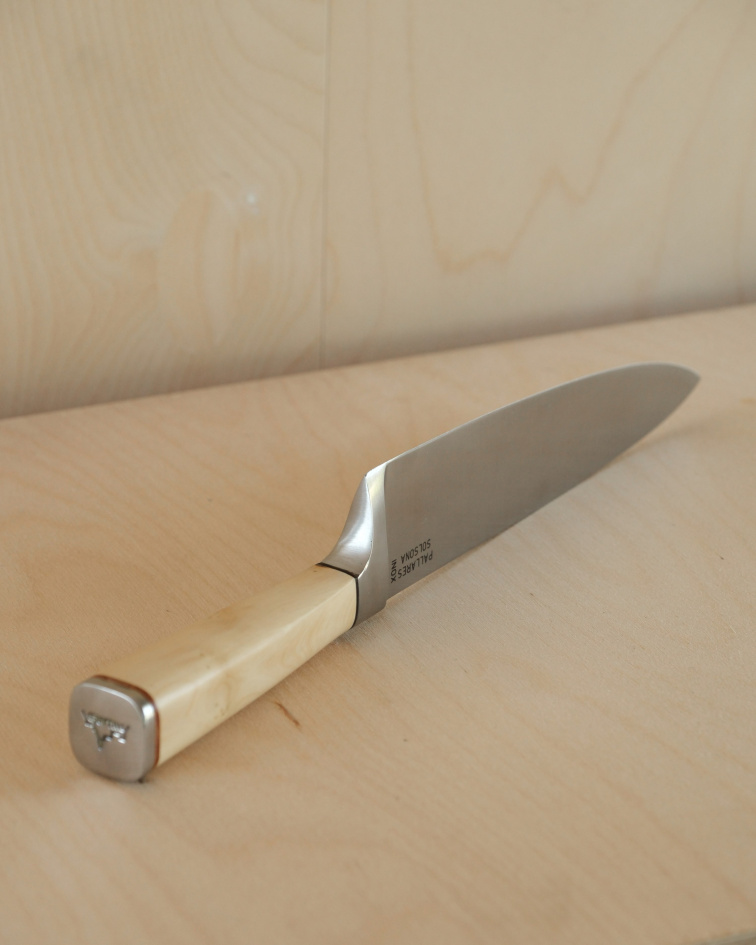
The main part of the handle is made of boxwood, also known as European box. This now mostly ornamental wood is notable for its high hardness and dense grain structure. When polished, it feels like a pebble in the hand.
The durable, sand-colored wood is fitted with leather washers on each side. Besides adding a certain je ne sais quoi, they also serve a practical purpose. They prevent direct contact between the wood, the steel guard and the bolster. Without them, the wood could crack during demanding use or production due to the construction in question.
Pallarés also thought about ergonomics. The upper part of the handle is rounded so that it fits perfectly in the palm. The underside is angular, providing good support for the fingers.
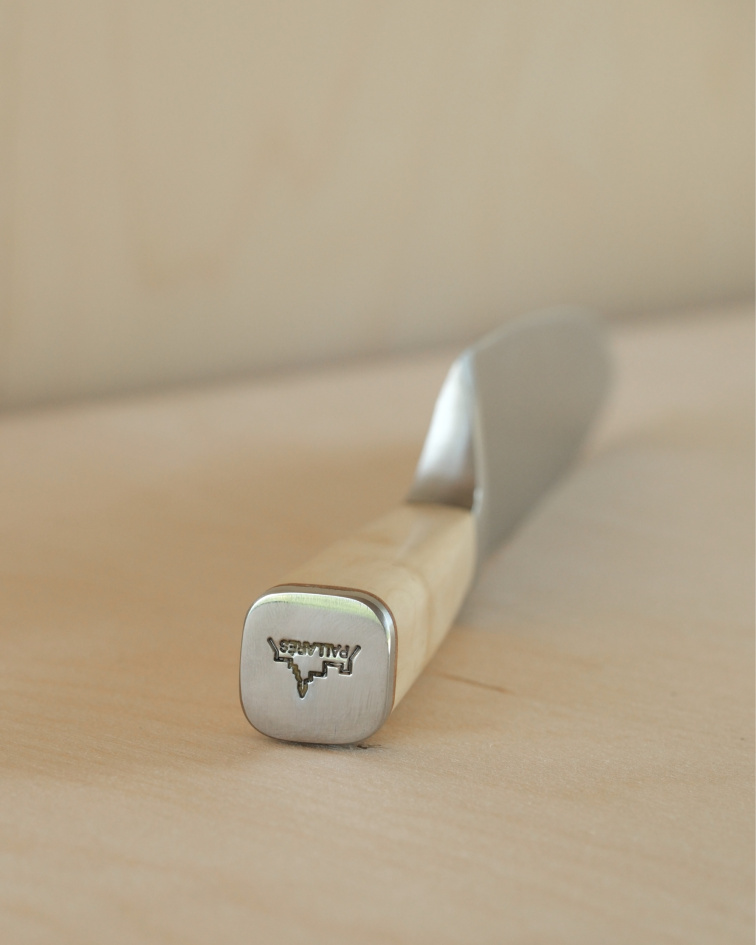
The handle ends in a substantial stainless-steel guard bearing the manufacturer's logo, depicting a scene from the town of Solsona – the home of Catalan knives.
Summary
Boxwood chef's knife is not revolutionary; on the contrary, it preserves a knife design proven by centuries of use and gives it a Catalan flair. This is a knife with which you cannot go wrong. It is not trendy, but it is eternally practical.
Matouš, Tokyo Tools ©