How to Choose a Wooden Cutting Board
How to Choose a Wooden Cutting Board
We use a wooden cutting board almost every day. Yet we often give it less attention when choosing one than we do a knife or a pan. However, almost every cooking process begins on it, and its quality affects much more than may seem apparent at first glance.
Contents
Why the choice of cutting board material matters
The origin of the wood as the foundation of quality
Which types of wood are used to make cutting boards
Solid or glued wood – what is the difference?
How grain orientation affects the properties of a cutting board
The role of adhesives and joint construction
Initial treatment before use
How to care for a wooden cutting board so that it lasts for years
The cutting board as part of both preparation and serving
.
.
.
.
.
.
Material Is Fundamental
Very hard materials such as glass or stone can place unnecessary stress on a knife's edge and cause it to dull more quickly. At the other end of the spectrum are soft materials such as plastic, whose surface gradually wears down with use.
Wood is one of the traditional materials that has earned its place in the kitchen thanks to its durability, renewability, and gentleness on knife edges. It is durable enough for everyday use while yielding slightly to the edge, which helps protect the knife blade. Alongside its practical properties, it also offers a natural grain that develops more character over time.
Every Tree Has Its Own Character
The character of wood develops over the years as the tree grows. It reflects the species, environmental conditions, and rate of growth. Every piece therefore has a unique grain, shade, and texture that cannot be precisely replicated. This natural uniqueness remains intact even when raw wood is transformed into a cutting board. Craftsmanship respects its natural character and allows the qualities that make each piece unique to stand out.
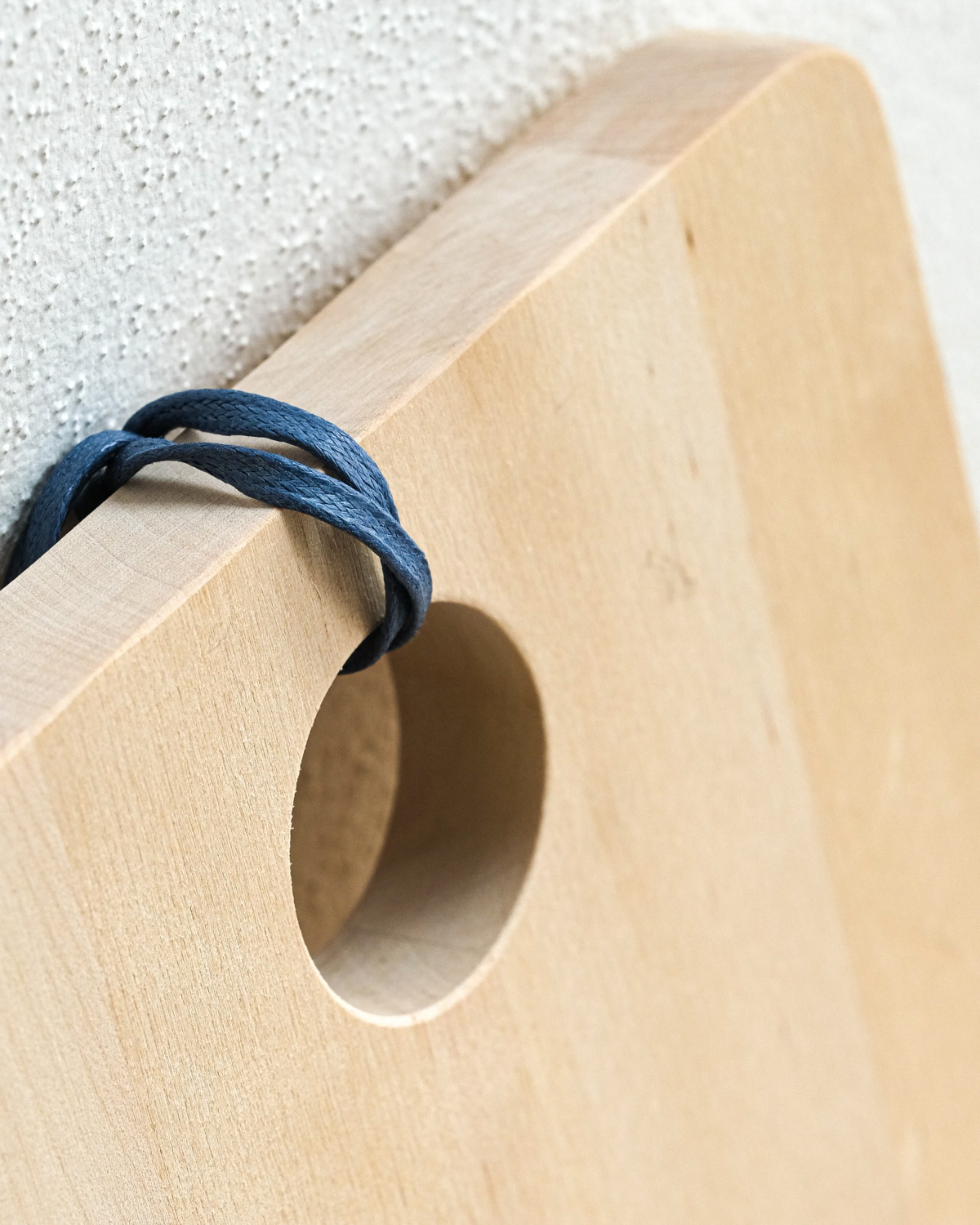
Birch
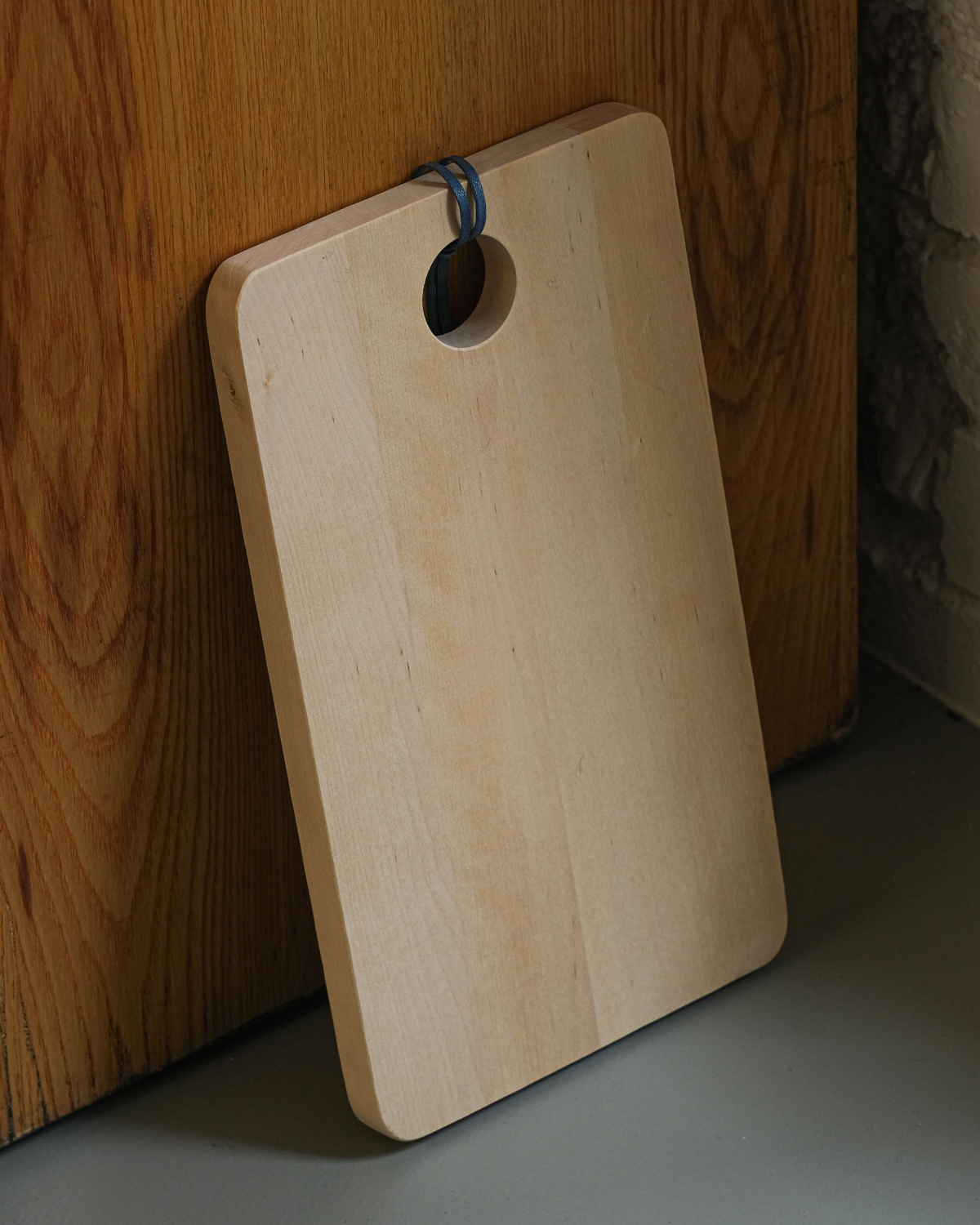
Birch is characterised by its fine texture, light weight, and properties that make it ideal for everyday use. Its pale colour and understated grain highlight both the natural beauty of the wood and the clean form of the product. It is therefore no surprise that birch cutting boards are among the traditional kitchen utensils of Scandinavia, where birch has been part of the local landscape for centuries.
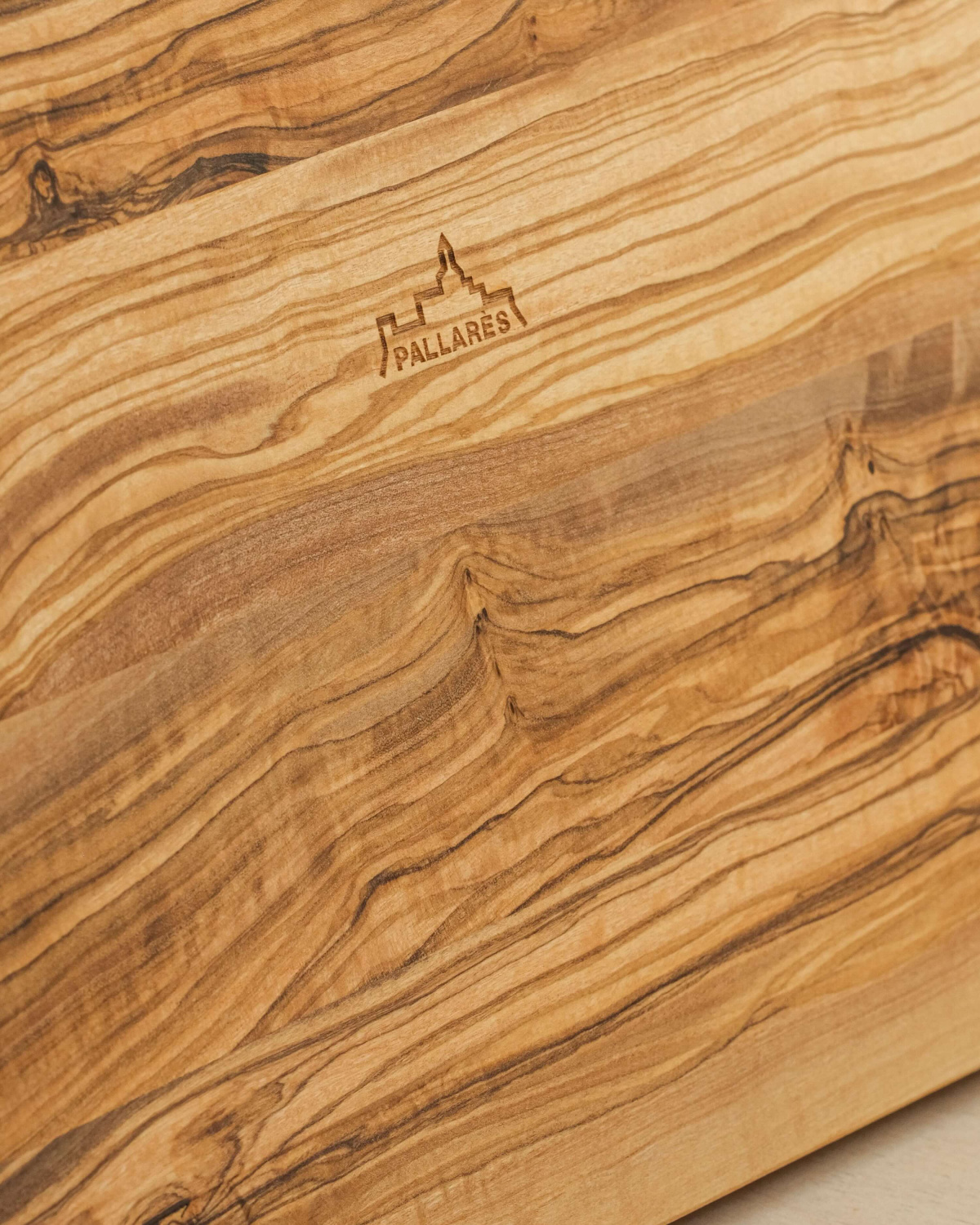
Olive Wood
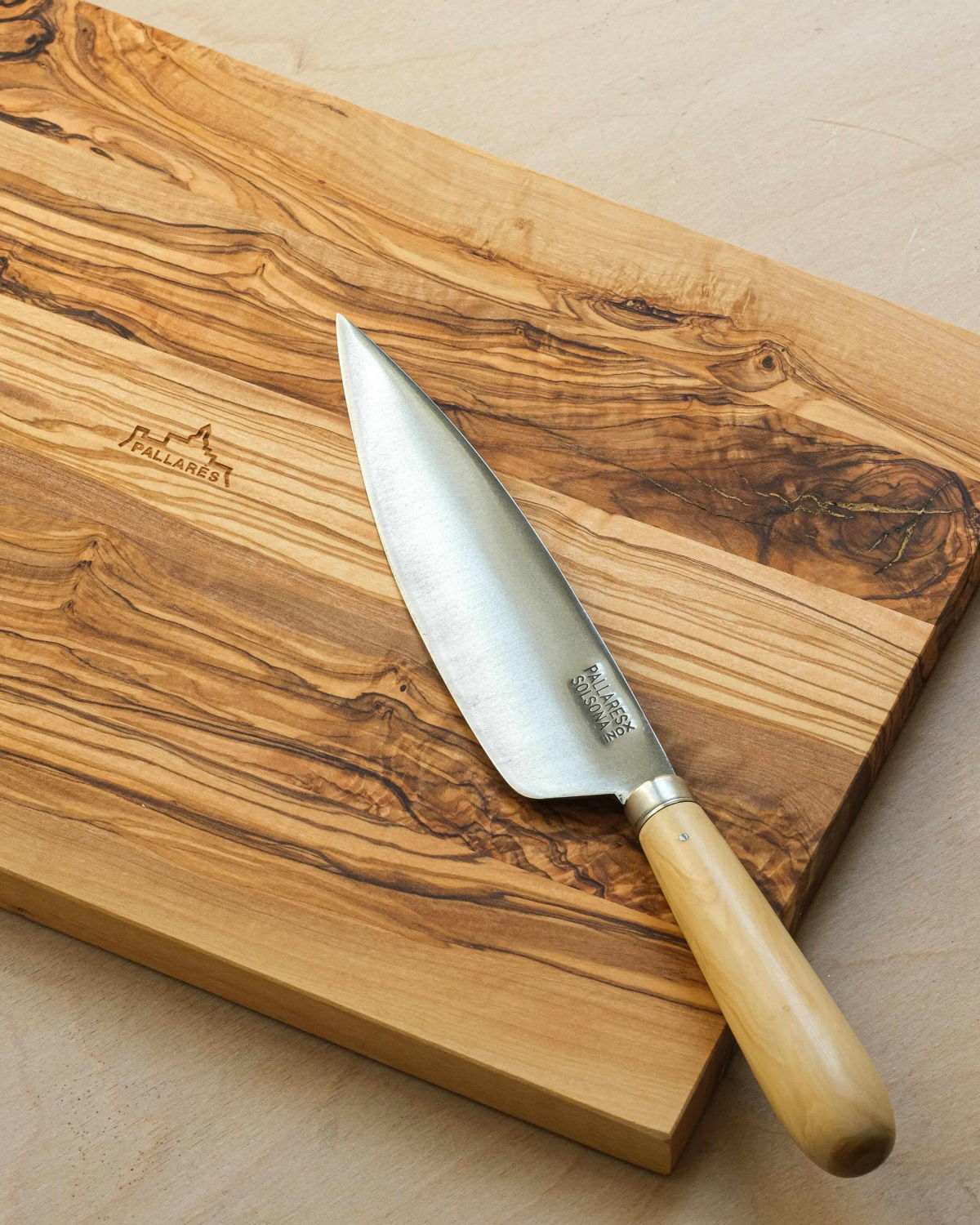
Olive wood stands out for its dense structure, natural durability, and distinctive grain. Thanks to its slow growth and natural oil content, it is strong, long-lasting, and highly resistant to moisture. The variations in colour and grain reflect years of growth and bear the imprint of the tree from which the wood came. In the Mediterranean, olive wood has been used to make kitchen utensils for generations, both for its properties and because of its availability in the local landscape.
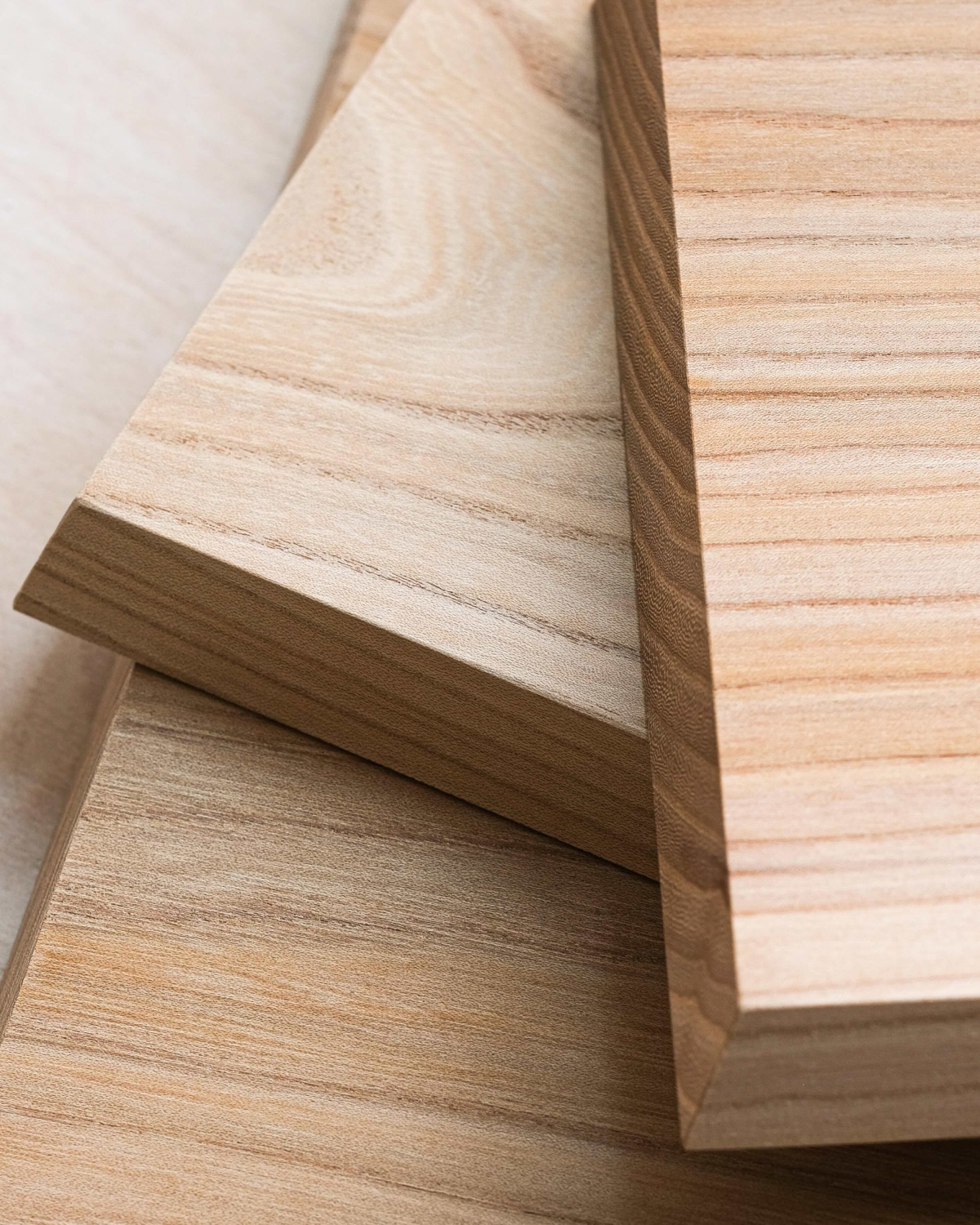
Japanese Elm
Japanese elm catches the eye with its distinctive grain, warm colour, and natural durability. Its tough structure withstands everyday use well, while clearly visible growth rings give each piece a distinctive appearance. In Japan, elm is one of the traditional woods used to make kitchen utensils. It has gained popularity thanks to its durability, stability, and the way it naturally matures over time.
The Importance of Grain Orientation
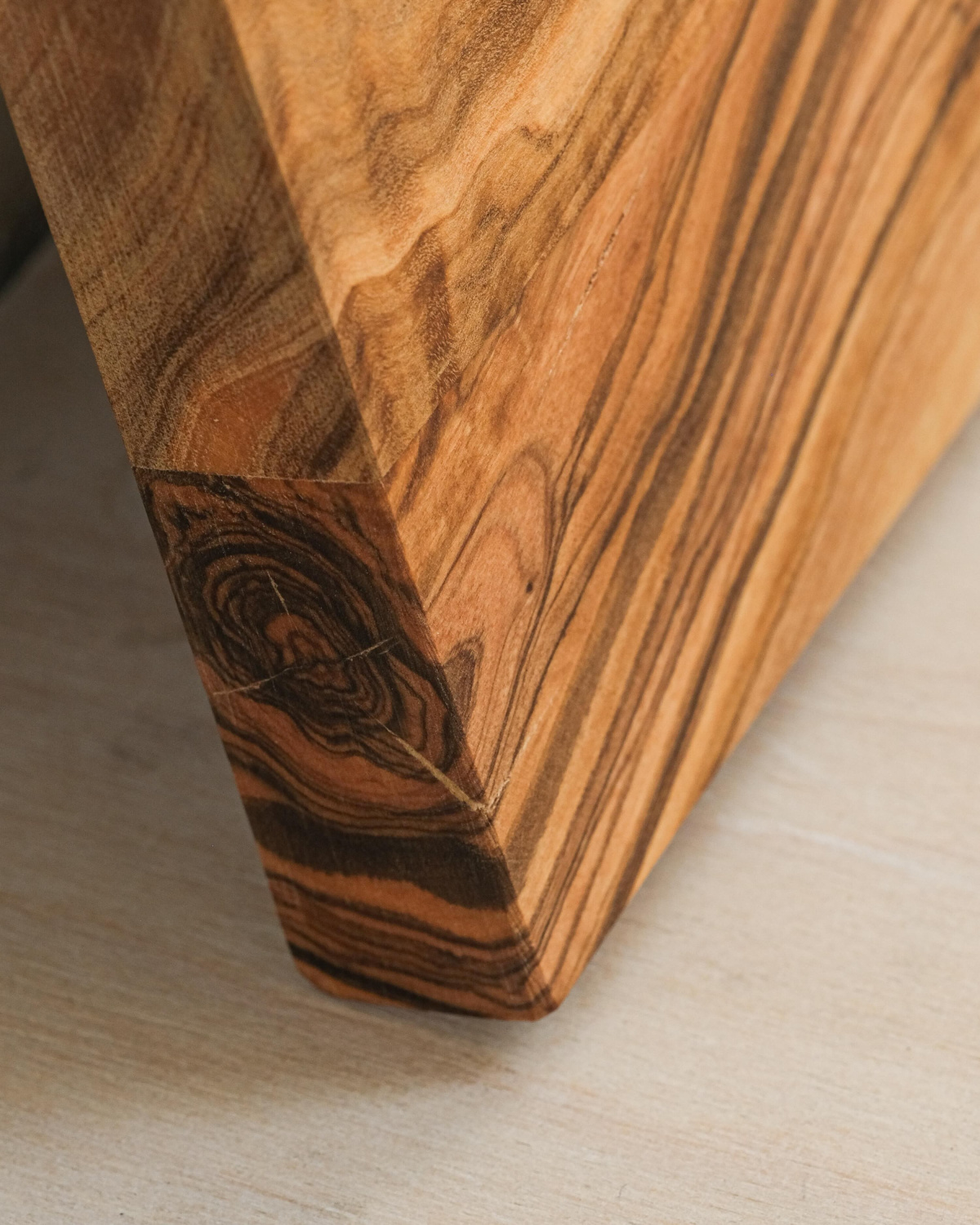
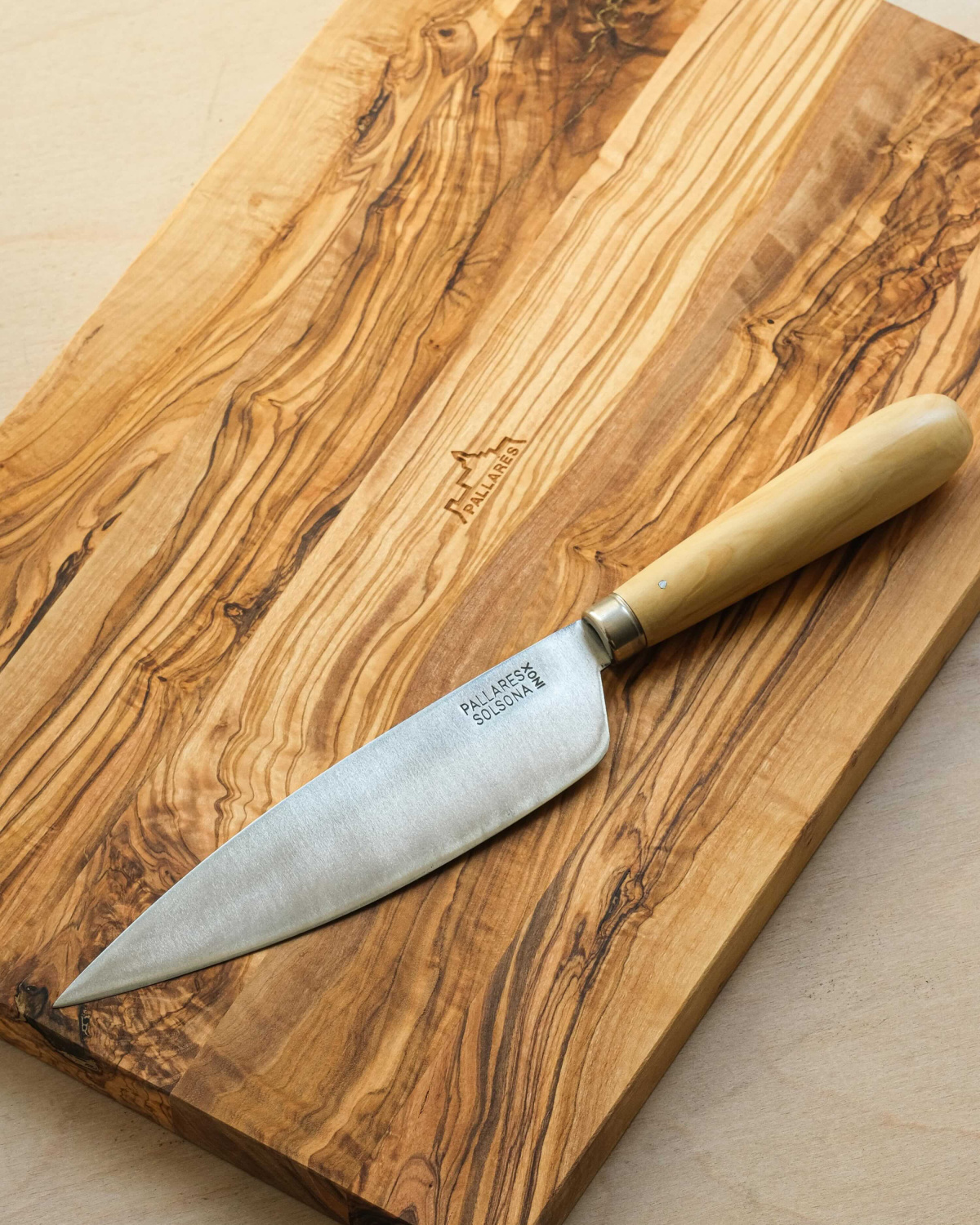
The direction of the grain has a surprisingly significant effect on a cutting board's properties. End-grain construction, in which the characteristic grain of the wood is clearly visible on the surface, is one of the most durable options. When cutting, the edge passes between the fibres, which partially return to their original position after use. As a result, the board withstands everyday use better, develops signs of wear more slowly, and remains gentle on knife edges.
This construction is beautifully apparent on the olive wood cutting board by Pallarès Solsona, whose surface showcases the growth rings characteristic of an end-grain cut. This principle originates from traditional butcher blocks, which were designed for intensive, long-term use over generations. The result is a construction that combines exceptional durability, functionality, and the natural beauty of solid wood.
A Cutting Board Made from One Piece or Glued Wood?
Cutting boards made from a single piece of wood are one of the purest material options. They contain no joints or adhesives, allowing the grain and texture of the wood itself to stand out.
One disadvantage of a cutting board made from a solid piece of wood can be its greater susceptibility to warping or cracking. The size of the material itself can also be a limitation. This is why many manufacturers opt for a construction composed of multiple pieces. A well-made glued cutting board is generally more stable, withstands changes in humidity better, and retains its shape for longer.
Adhesives and Joints
The amount of adhesive in a high-quality glued cutting board is usually very small. The adhesive forms only a thin layer between the individual pieces of wood and typically accounts for less than one percent of the product's total volume. The quality of the adhesive used is particularly important. PVA-based dispersion adhesives are most commonly used, creating a strong, water-resistant bond once cured. When used correctly, they are considered safe for normal use in the kitchen.
Preparing the Cutting Board
Before first use, it is advisable to treat the cutting board several times with food-grade mineral oil and or linseed oil. This saturates the wood, enhances its grain, and helps the surface resist moisture more effectively. Regular oiling helps preserve both its functionality and natural beauty for many years.
Caring for a Wooden Cutting Board
A high-quality cutting board deserves simple but regular care. After use, wash the board by hand with warm water, optionally adding a drop of mild washing-up liquid, dry it thoroughly, and treat it with a suitable oil to preserve its natural beauty and durability. Prolonged soaking and dishwashers are not suitable for it.
The Cutting Board as a Kitchen Essential
A wooden cutting board is one of those objects that naturally records the marks of everyday use. With proper care, it can last for many years, and its surface can easily be restored when necessary. Thanks to the wood's natural grain, it finds its place not only in food preparation but also on the table when serving bread, cheese, or small snacks. It therefore moves easily from worktop to table and becomes an indispensable part of dining.
FAQ
What should you look for when choosing a wooden cutting board?
It is worth considering the origin of the wood, the production method, and the surface finish. These factors affect both its lifespan and everyday use.
What are the advantages of a wooden cutting board?
Wood is gentle on knife edges and, with proper care, will last for many years. Its surface can also be easily restored.
Which cutting board should you choose for a carbon steel knife?
A wooden cutting board with end-grain orientation is a suitable choice. The edge passes between the fibres, which helps protect the knife blade.
Which materials are not particularly gentle on knife edges?
Glass, stone, and some hard plastic surfaces can place unnecessary stress on an edge and cause it to dull more quickly. With thin, hard blades, they may also increase the risk of damage to the edge over time.
Lucie, Tokyo Tools ©