
Hori Hori: Japanese garden knife
Hori Hori: Japanese garden knife
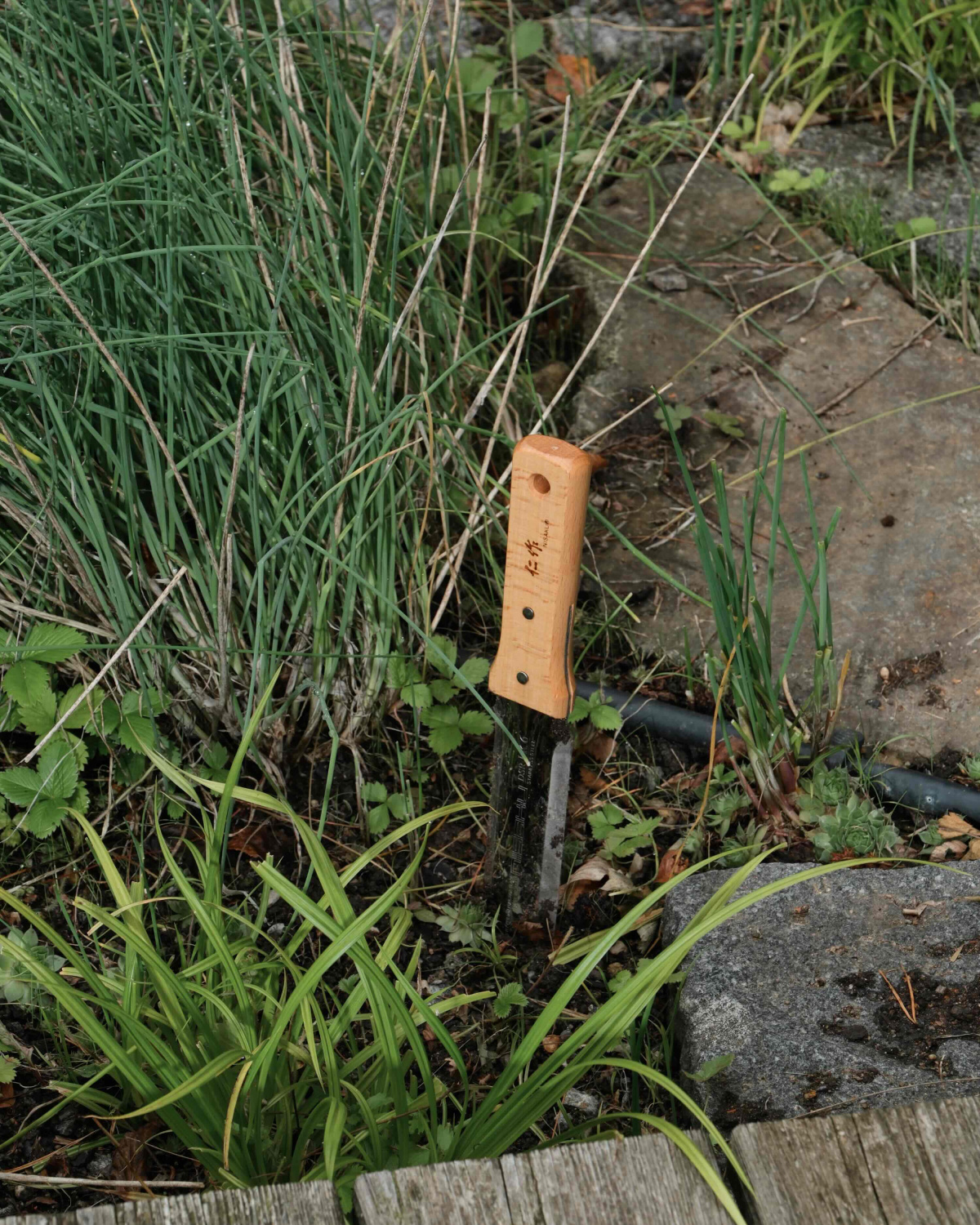
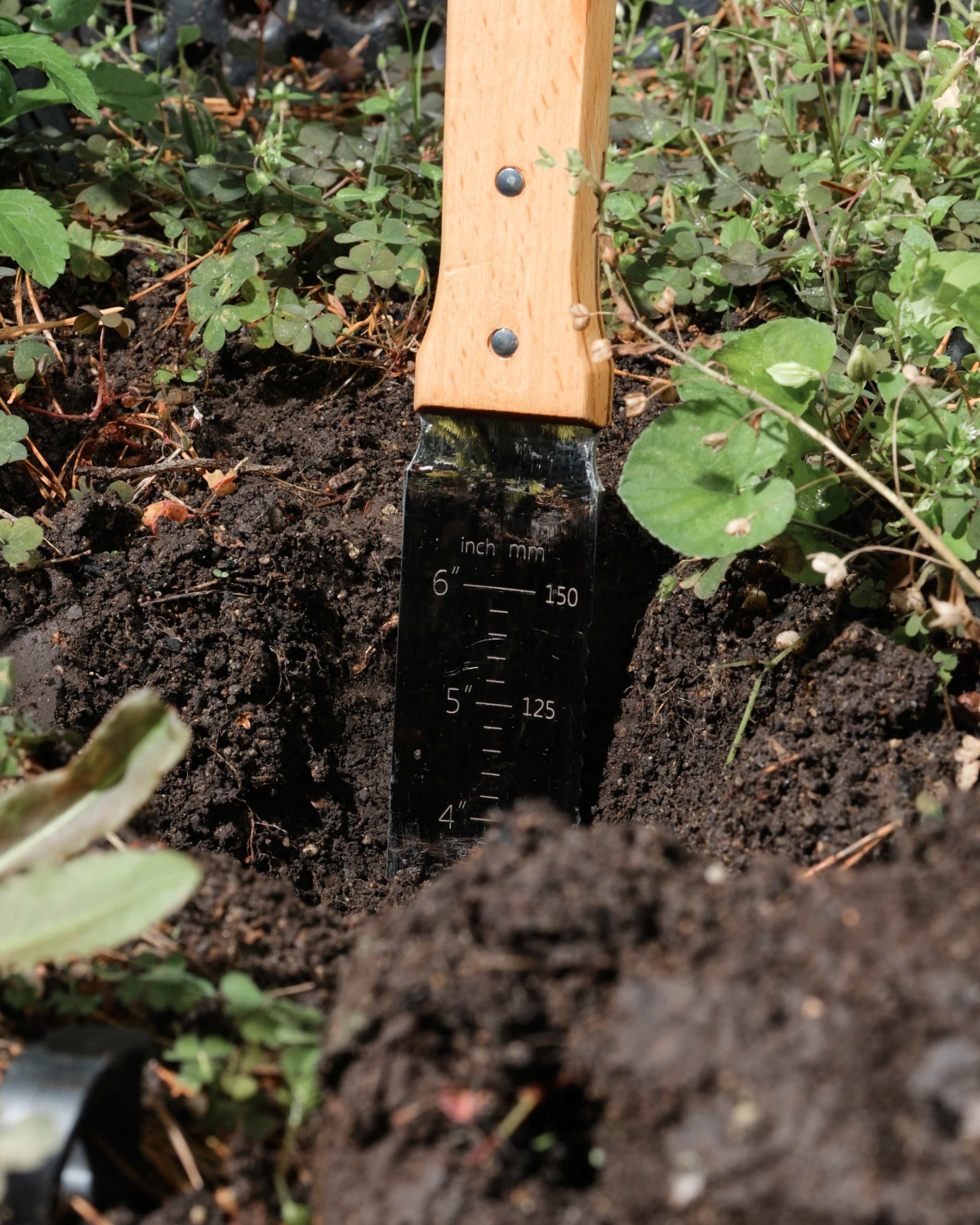
If you have not yet come across Hori Hori, its shape may seem a little unusual. It is not quite a knife, trowel, or saw. It has a narrow, curved blade, one sharp edge, and teeth on the other. The blade also features a scale for approximate depth measurement. In Japan, it originated as a tool for working in soil and collecting plants. It is only when you take it into the garden that its unusual shape begins to make sense.
TL;DR
Japanese garden knife
Digging, cutting, and weeding
Sharp edge + teeth
Depth scale
.
.
.
.
.
What is Hori Hori?
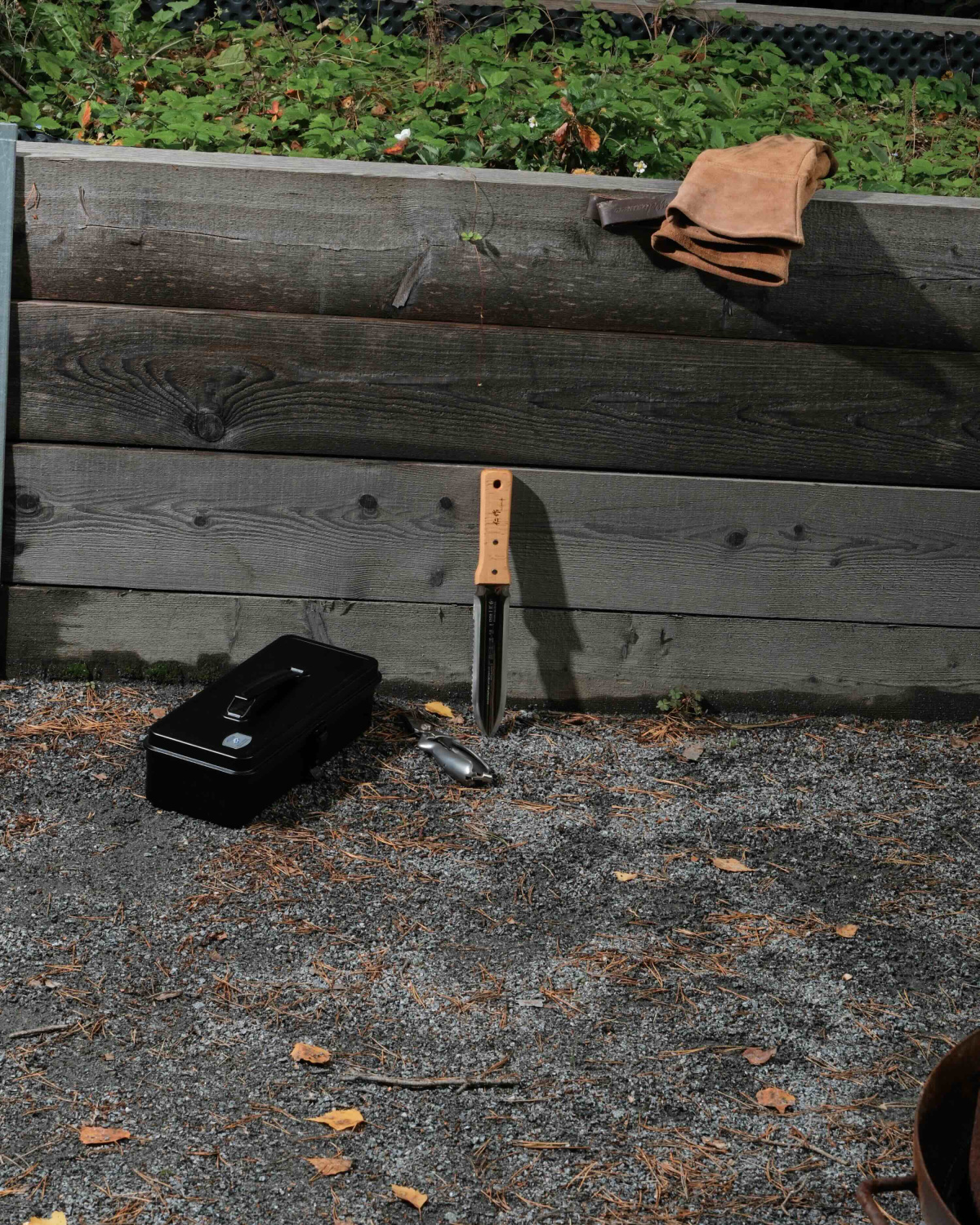
The name Hori comes from the Japanese verb horu – to dig. The doubling in Hori Hori refers to the repeated motion used when working in the soil. Similar tools were used in Japan when collecting plants and mountain herbs. It was necessary to get into the soil, loosen the roots, and remove the plant. The design reflects this purpose. A sturdy blade with a pointed tip. A slight curve. A sharp edge. Serrations on the other side. It is not several tools joined together. It is one simple shape that enables several different ways of working.
A shape that explains its function
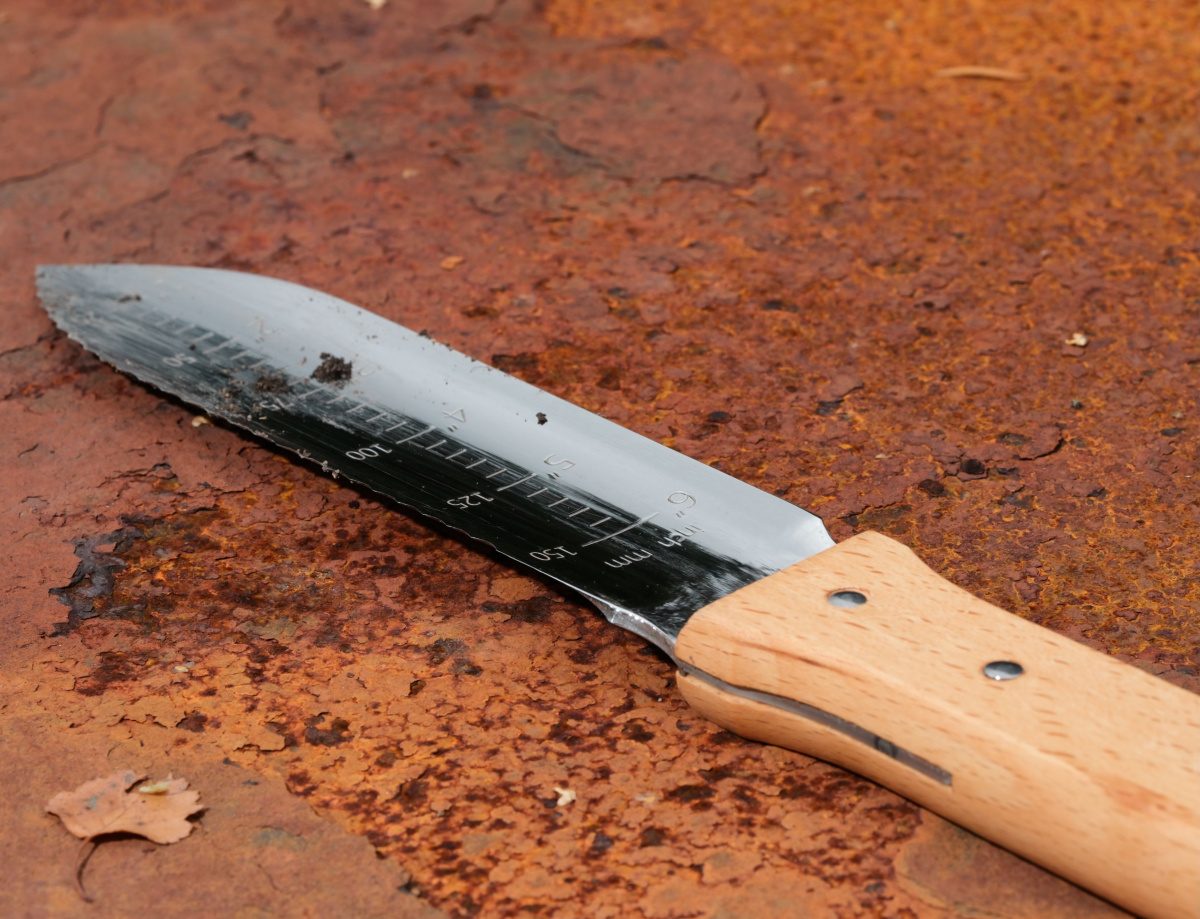
There are not many parts to a Hori Hori. Each one, however, does something slightly different during use.
Tip
The narrow tip easily penetrates the soil. It is useful when planting bulbs and seedlings, but also when you need to get under weeds or between plants in an already planted bed. Compared with a classic garden trowel, it requires significantly less space.
Curved blade
The blade is not completely flat. It is slightly curved, so it can not only loosen the soil, but also scoop it up and move it aside. This is where Hori Hori most closely resembles a trowel.
Scale
You will also find a scale on the blade. It is not a precise measuring tool, but when planting it lets you quickly see how deep a hole you have just made. It is particularly practical when planting bulbs.
Sharp edge
One side functions as a garden knife. When transplanting, you can use it to cut around the root ball, separate part of a plant, or cut through smaller roots.
Teeth
The other side of the blade has a serrated edge. It is useful when you encounter a tougher root or rhizome underground. With short strokes, you can cut through it without having to reach for another tool.
Hori Hori or garden trowel?
The two tools partly overlap, but they behave differently in use. A classic garden trowel has a wider working part and is better at scooping up soil. When you need to move a larger amount of substrate or dig a larger hole, it will be more practical. Hori Hori is narrower, sharper, and more precise. It gets more easily into harder soil, between already growing plants, or deep beneath a weed's root. And where a trowel encounters a root, Hori Hori can cut straight through it. In the garden, the two tools therefore complement each other.
Weeding
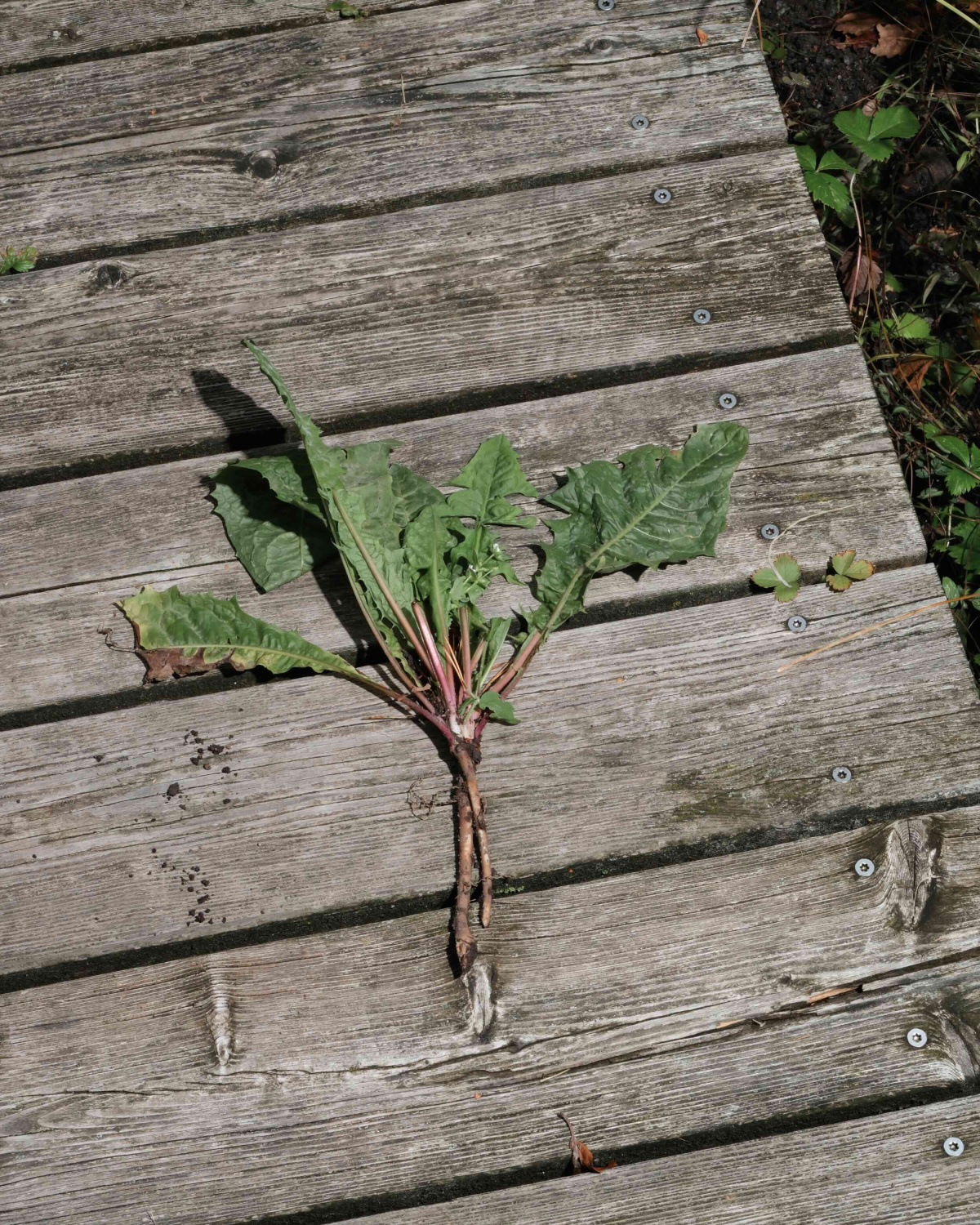
If we had to choose one task where the difference compared with an ordinary trowel is most apparent, it would probably be weeding. Instead of pulling on the leaves, insert the narrow blade next to the plant and get directly beneath its root. Loosen the soil around it and only then pull the plant out. With a dandelion or another weed with a longer root, a few extra centimetres can make quite a big difference.
Transplanting and dividing plants
It works similarly when transplanting. You can gradually cut around the root ball with the blade and loosen the soil around it. The narrow profile is particularly practical in densely planted beds, where you do not want to damage the surrounding plants while working. With older perennials or ornamental grasses, the sturdy blade can also be used to divide smaller root clumps. For large woody roots, use a saw. For stones, use a pry bar. Hori Hori is still a garden knife.
Nisaku Hori Hori
At Tokyo Tools, we offer Hori Hori by the Japanese manufacturer Nisaku in two versions. The classic Namibagata with a wooden handle is a simple and lighter option for everyday garden work.
Full Metal is a completely different version of the same tool. Its solid all-metal construction is significantly heavier and more robust, and it comes with a strong leather sheath. Functionally, it does the same job; the difference is primarily in the material, craftsmanship, and overall design.
How to care for Hori Hori
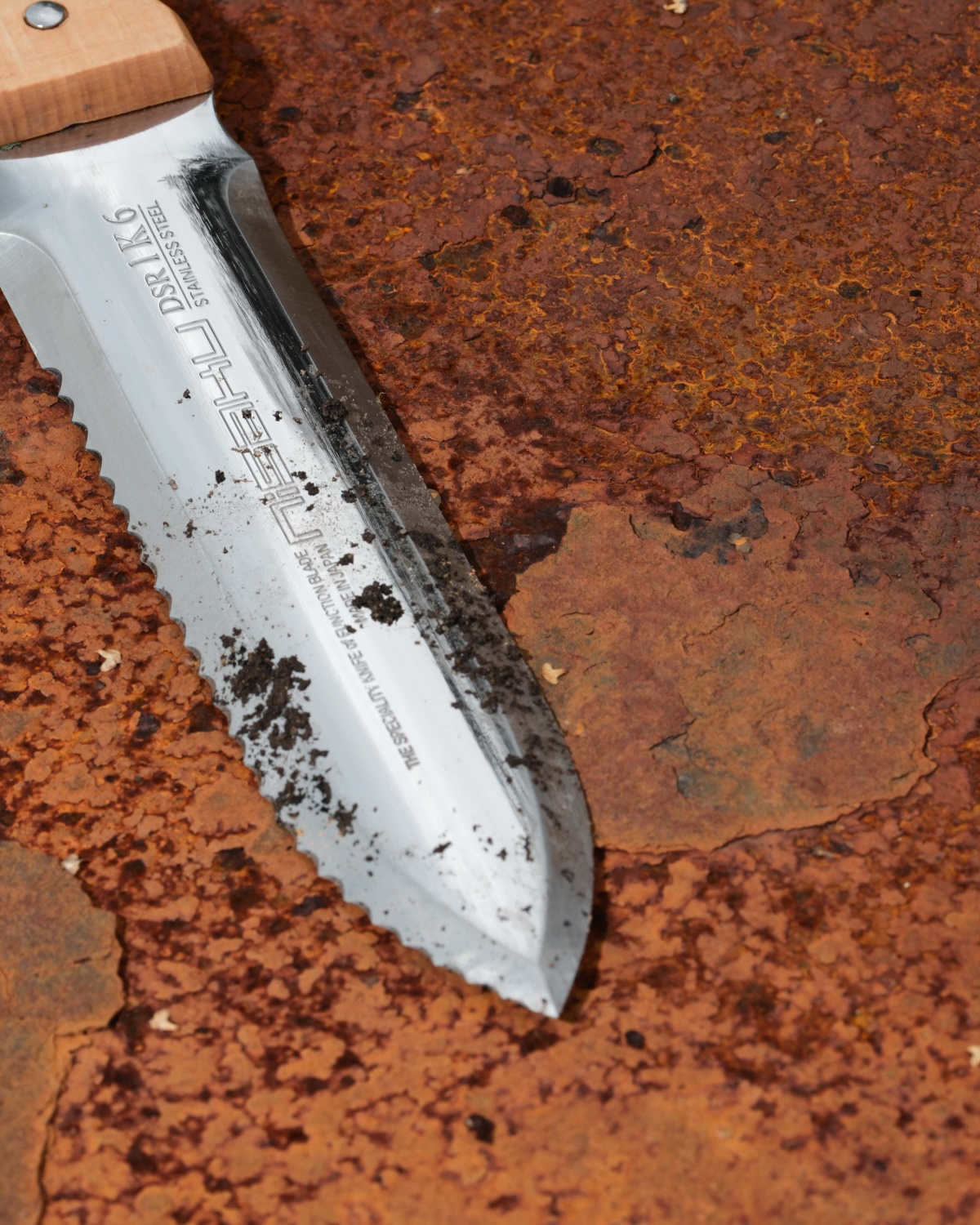
Hori Hori spends most of its time in the soil, so after use there is mainly one thing to do: do not leave it there. Remove soil and plant residue from the blade and dry the tool. The wooden handle only needs to be cleaned as necessary and occasionally treated with a suitable wood oil.
FAQ
Is Hori Hori a knife or a trowel?
Something in between. The narrow, curved blade allows you to dig and scoop up small amounts of soil, while the edge can cut roots and plants. It is therefore most commonly referred to as a Japanese garden knife.
What is the serrated edge used for?
For cutting through smaller roots, rhizomes, and tougher parts of plants that you encounter while working in the soil.
What is the scale on the blade for?
It is used to check depth approximately when planting. It is useful, for example, with bulbs and other plants that need to be planted at a specific depth.