Visit our Prague showroom – open Mon–Sat 11:00–18:00. Get directions

Japanese kitchen knife Bunka from Misuzu Hamono

Code: TT0153
Stainless Steel
3 440 Kč
Out of Stock
Delivery options
The item has been sold out…

This versatile knife from the masters at Misuzu Hamono combines the top-notch sharpness of VG-10 steel with the millennia-old tradition of Japanese lacquering. Thanks to handcrafted production in limited series and a durable handle with natural urushi lacquer, it is a unique and durable tool for everyday cooking.

Detailed information

Product detailed description

Japanese Kitchen Knife Bunka by Misuzu Hamono

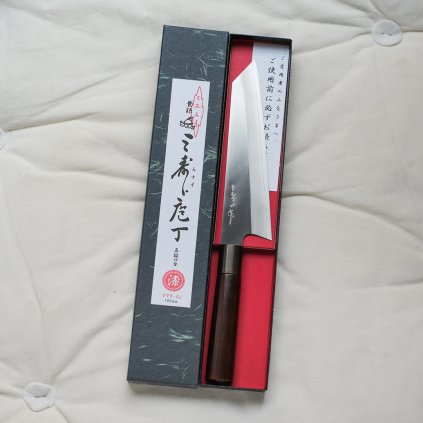
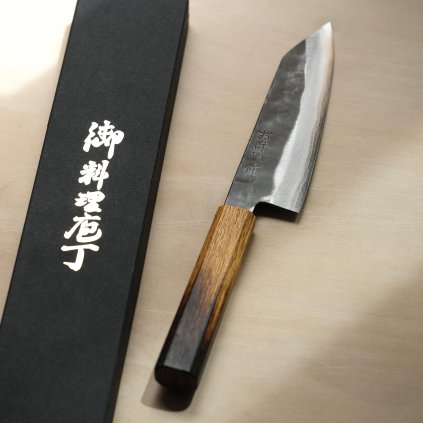
At the forge Misuzu Hamono, steel processing and the final finishing of the material are done by hand, according to traditional local techniques. Their knives are made in small workshops and only in limited series. The Bunka knife is a versatile assistant for everyday cooking. Unlike the Santoku, it has a higher profile and a characteristic beveled tip (known as K-tip). This is very sharp and allows for precise cuts, for example, when carving fruits and vegetables or filleting meat. The knife blade is made of VG-10 stainless steel with high carbon content and carries engraved kanji characters on the side. The oval magnolia handle is covered with Japanese urushi lacquer and is finished with a brass ferrule. Natural urushi lacquer has antibacterial properties, is very hard, and features high resistance to acids, bases, and alcohol. With this process, Misuzu Hamono continues the long Japanese lacquerware tradition.

Detail

Manufacture: Japan, Miki
Brand: Misuzu Hamono
Model: Bunka V01-BJ
Total length: 290 mm
Blade length: 160 mm
Blade finish: Migaki (polished)
Blade type: double-sided sharpened
Steel: VG10 stainless steel
Hardness: 60-61 HRC

Manufacturer

The forge Misuzu Hamono, located in the Japanese city of Miki, is known as the first workshop that as early as 1946 created a blade of carbon steel with outer layers of stainless steel (San Mai technique). Its founder was Mr. Shinji Suzuki. Thanks to this special construction, it is possible to achieve extreme sharpness, while the outer stainless layers effectively protect the core of the blade from corrosion and damage. The current head knife maker, Mr. Miyawaki, represents the third generation of the family. He gained his experience in the famous cutlery city of Sakai and took over the management of Misuzu Hamono in 2006.

JP Sanjuzu Cutlery Manufacturing Co., Ltd., 2-9-36 Honmachi, Miki City, Hyogo Prefecture 673-0431, Japan, tel. 0794-82-0442, mailto@3suzu.com CZ Tokyo Tools s.r.o., Slovinská 652/19, Praha 10, 10100, CZ, 773707811, info@tokyotools.cz

Material

The blade is made of VG10 stainless steel with a high carbon content. VG10 is a Japanese stainless steel, considered one of the best stainless steels for knife making. Thanks to its chemical composition, VG-10 combines the advantages of carbon and stainless steel as it can be very sharp, has excellent edge retention, is relatively easy to sharpen, and has outstanding corrosion resistance. The handle uses magnolia wood, lacquered with Japanese urushi, and finished with a brass ferrule. 

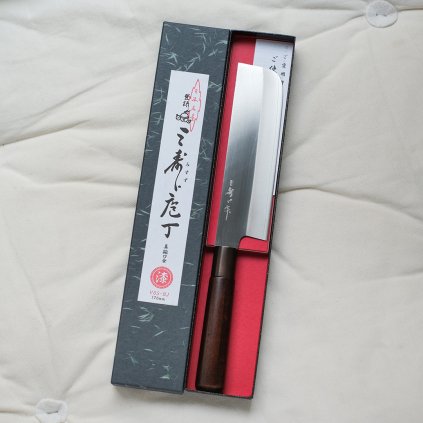
Note: Delivered in original decorated packaging.

Maintenance

To keep your Japanese knives in perfect condition, here are a few must-haves:
Wash knives by hand. Wipe with a dry cloth. Avoid the dishwasher, which can damage the blade and the wooden handle. The blade of this knife is made of stainless steel and therefore does not require as much care. Nevertheless, it is important to keep the blade clean and dry after use. To restore the appearance, the blade and handle can be oiled - preferably with linseed or camellia oil.
Do not use the knife for prying, cutting, or chopping frozen products or hard materials like bones, pumpkin, and similar. The blade may chip or break.
Use a quality wooden cutting board. Store knives in a dry place to prevent steel oxidation.
Regularly sharpen the knife on a whetstone, but remember that Japanese knives have a different edge angle, and therefore require special and finer whetstones. You can use a Japanese whetstone like KING or Suehiro.

More information can be found in the section knife care.

Japanese kitchen knife Bunka from Misuzu Hamono

Bestselling knives of 2025

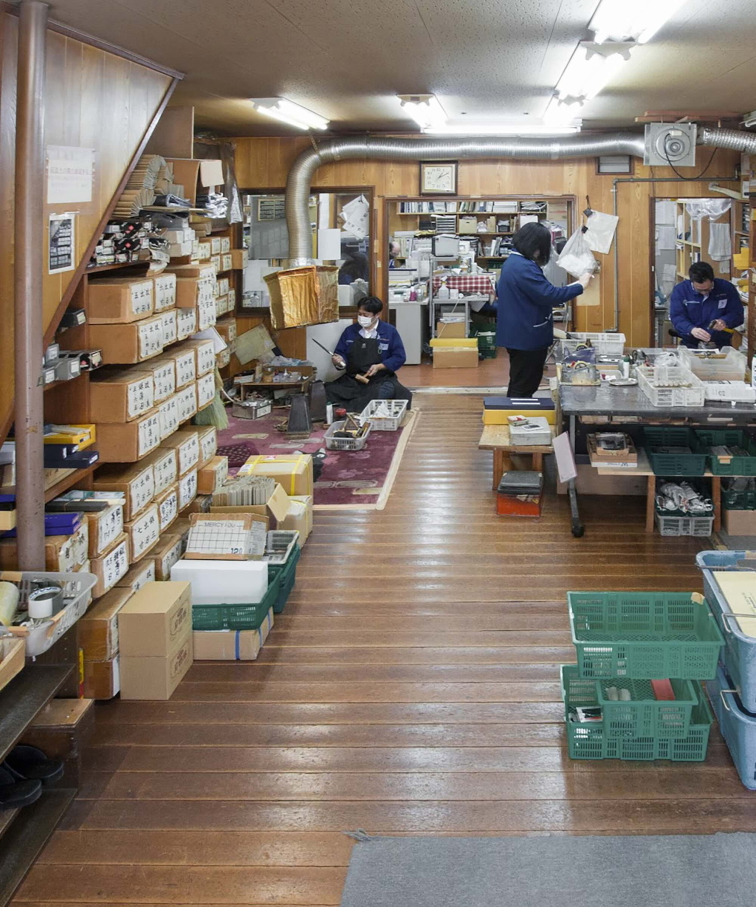
Anyone who spends more than just a few minutes a day in the kitchen knows it: over time, you develop a relationship with certain knives.
Japanese kitchen knife Bunka from Misuzu Hamono

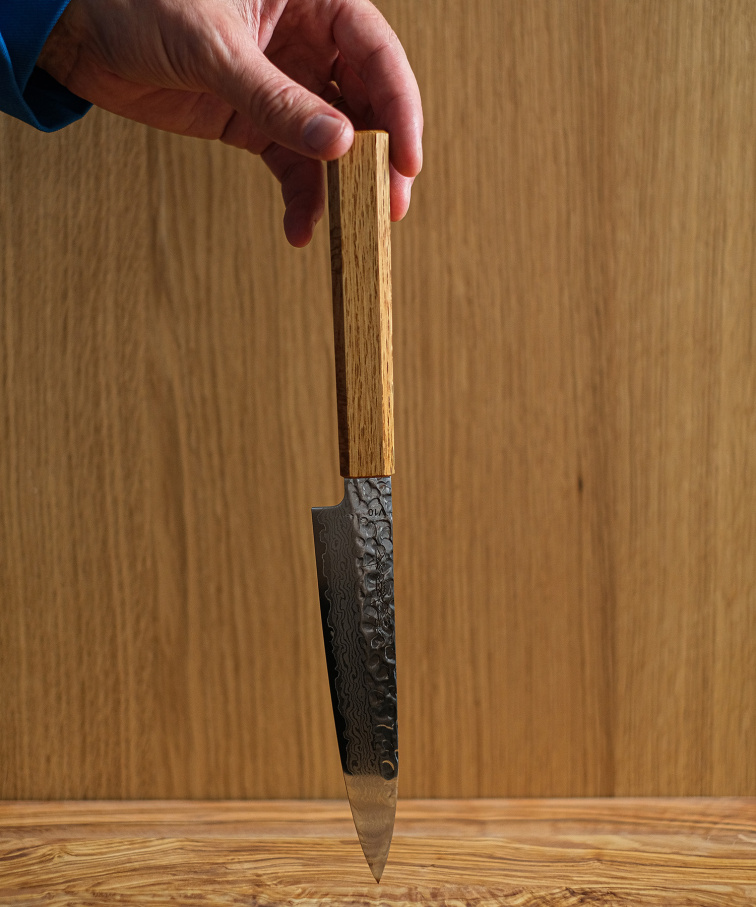
Knife Review: Petty NDV 150

Petty knives are often overlooked, even though they handle surprisingly large tasks in everyday cooking..
Japanese kitchen knife Bunka from Misuzu Hamono

Brands: Sakai Kikumori

If you're looking for kitchen tools that go beyond mere functionality, sooner or later you will come across a knifemaker..
Product reel

Be the first who will post an article to this item!

Only registered users can submit posts. Please log in or sign up.

Do not fill out this field:

Security check

Nacházející se ve městě Miki v Japonsku, Misuzu Hamono je známá jako první kovárna, která v roce 1946 vytvořila čepel z uhlíkové oceli nereagující na rez s vnějšími vrstvami z nerezové oceli (technika Sanmai). Zakladatelem byl pan Suzuki Shinji. Díky speciální konstrukci čepele lze dosáhnout extrémně ostrého ostří a vnější vrstva z nerezové oceli stále chrání ocel proti korozi a poškození. Pan Miyawaki, třetí generace v rodině Misuzu Hamono, prošel školením v proslulém nožířském městě Sakai, a v roce 2006 se stal hlavním nožířem v Misuzu Hamono. 


Vytvořil Shoptet | Design Shoptak.cz