Polished Nakiri 165 Kaji-Bei
Code: TT0441Related products
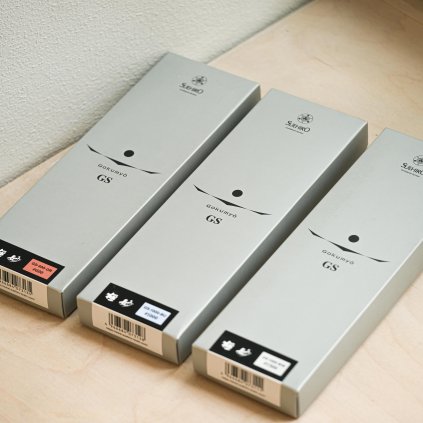
A well-crafted sharpening stone with a dense concentration of very fine air pockets. It has excellent grinding performance and smooth feedback.
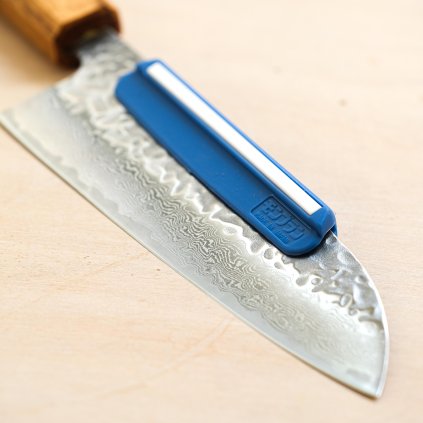
A practical tool for sharpening Japanese knives, which keeps the blade at the correct angle. Ideal for beginners. Manufactured by Shimizu Seisakusho in the Japanese...
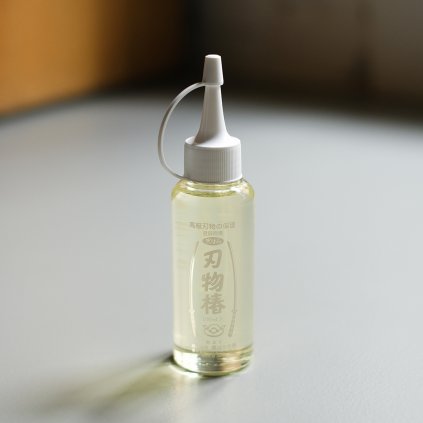
Highly refined camellia oil (Tsubaki) from Japan protects steel knives from rust and oxidation, is odorless and does not dry out. Premium oil from the brand Kurobara Honpo from...
Product detailed description
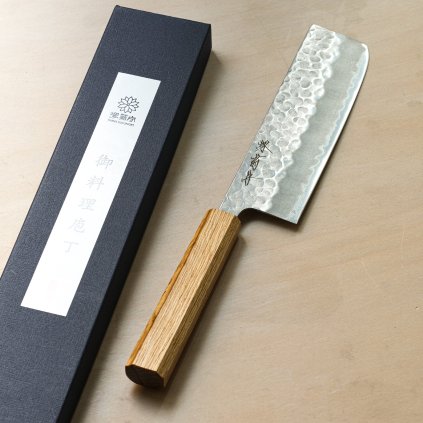
Japanese Knife Polished Nakiri 165 Kaji-Bei
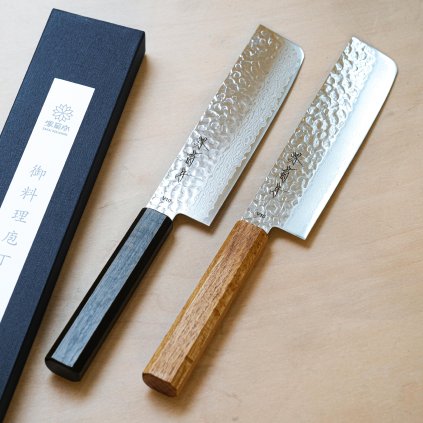
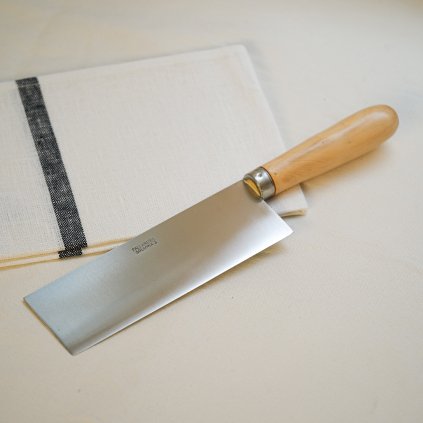
Kaji-Bei knives are forged and sharpened in Mr. Ishikawa's small forge. Production takes place by hand in Tsubame-Sanjo, a town with a rich blacksmithing tradition. Ishikawa-san creates knives with a strong character, with consistently worked, evenly forged blades. His main goal is the knife's functionality, while on the polished surface you can recognize fine traces of handwork, which make each piece slightly different. The knives excel with great sharpness and excellent edge retention. Nakiri is a knife ideal for cutting fruits and vegetables. It has a characteristic rectangular blade shape with a straight edge and a flat profile, making it ideal for vertical chopping of vegetables without a rocking motion. The blade is thin and wide, allowing it to easily penetrate even dense vegetables while also serving as a scoop for transferring sliced ingredients. It is especially ideal for clean, even cuts. This knife is made from three-layer steel, using the San-mai technique. The blade core is made from Aogami Blue Steel #2 carbon steel, and it is coated with softer stainless steel. The handle in the shape of a D is made from chestnut wood.
Detail
Production: Japan, Sanjo
Brand: Kaji-Bei
Model: Polished Nakiri 165
Overall Length: 310 mm
Blade Length: 165 mm
Blade Height: 53 mm
Blade Type: double-edged
Blade Finish: Migaki - polished
Steel: Aogami Blue Steel #2
Hardness: 62-63 HRC
Manufacturer
Kaji-Bei knives come from a small blacksmith's workshop hidden in a center renowned for its blacksmithing tradition. The city of Tsubame Sanjo in Niigata Prefecture has a rich blacksmithing history that dates back to 1635. Ishikawa-san, who leads the workshop, creates knives with strong spines and generous proportions, giving them the distinctive character of the city of Sanjo. He specializes in smaller types of knives, and his fishing knives Makiri are used throughout Japan. As for kitchen knives, he only produces Santoku and Nakiri knives, which you can now find in our portfolio.
JP Kaji-Bei part of the Echigo Sanjo Blacksmith Group / Sanjo Kaji Dojo, 11-53 Motomachi, Sanjo-shi, Niigata 955-0072, Japan, +81-256-34-8080, kaji@city.sanjo.niigata.jp CZ Tokyo Tools s.r.o., Slovinská 652/19, Prague 10, 10100, CZ, 773707811, info@tokyotools.cz

Material
The knife features a blade made of Aogami Blue Steel #2 carbon steel with a Migaki finish and a stainless cladding. Aogami Blue #2 is a traditional Japanese carbon steel alloyed with tungsten and chromium, known for its excellent edge retention. It combines hardness with good toughness and relatively easy sharpening. The handle shaped in a D is made from lacquered chestnut wood with a plastic ferrule.
Note: Delivered in original packaging.
Maintenance
If you want to maintain your Japanese knives in perfect condition, here are some must-haves:
Store knives in a dry place to prevent oxidation of the steel.
Wash knives by hand. Wipe with a dry cloth. Avoid the dishwasher, which can damage the edge.
Steel with a higher carbon content offers long-lasting sharpness but requires more care than stainless steel. The knife needs to be oiled regularly, preferably before the first use. Keep the carbon steel blade clean and dry after use. After cleaning, apply a thin layer of oil - preferably linseed or camellia oil.
Do not use the knife for prying, cutting or chopping frozen products or hard materials such as bones, pumpkins, etc. The blade may chip or break.
Use a quality wooden cutting board.
Sharpen the knife regularly on a whetstone, but remember that Japanese knives have a different edge angle and therefore require special and finer whetstones. You can use, for example, a Japanese sharpening stone KING or Suehiro.
More information can be found in the section knife care.
Japanese kitchen knife hand-forged in the city of Sakai. Useful Nakiri model for slicing fruits and vegetables. Blade made of carbon steel with Tsuchime finish and oak...
Japanese kitchen knife from the Yuri series, manufactured by Shizu Hamono based in the blacksmithing city of Seki. A useful Nakiri model for cutting fruits and vegetables. It is...
Japanese kitchen knife hand-forged in the city of Sakai. A useful Nakiri model for cutting fruits and vegetables. Blade made of VG10 stainless steel with a damask sheath,...
Handmade kitchen knife made of stainless steel in the traditional Japanese Nakiri shape. An ideal knife for cutting fruits and vegetables. It comes from the workshop of the last...