Visit our Prague showroom – open Mon–Sat 11:00–18:00. Get directions

Hocho Kobo Gyuto 210 Tadafusa

Code: TT0426
SLD semi-stainless steel
3 990 Kč
In Stock
Delivery options

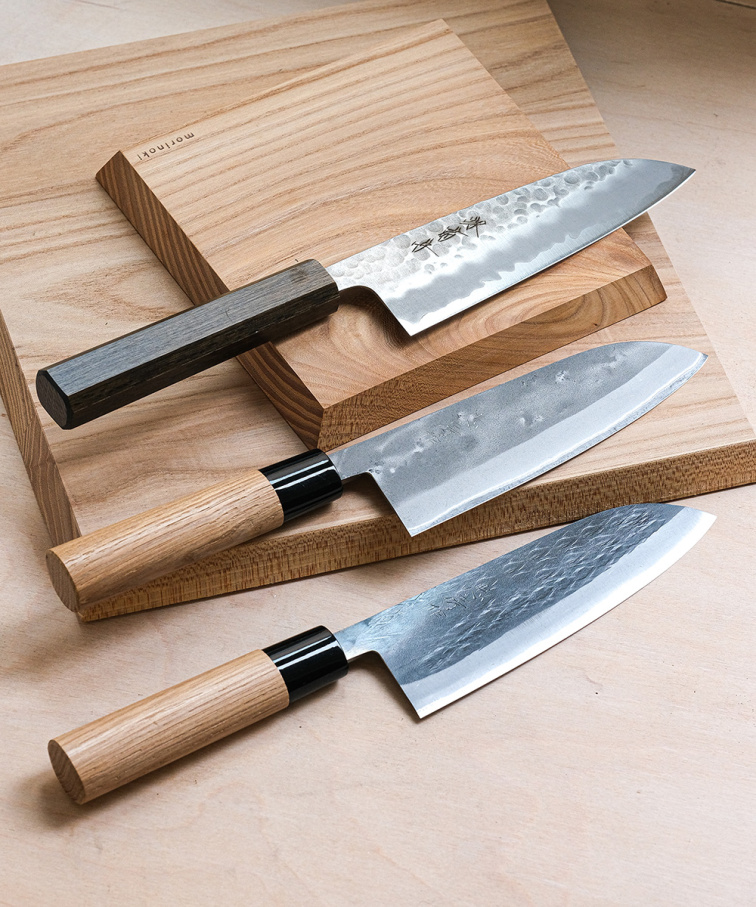
Japanese kitchen knife from the Hocho Kobo series, designed by Fumie Shibata. A versatile Gyuto model, made from SLD steel with stainless cladding and a handle made of carbonized chestnut wood. 

Detailed information

Product detailed description

Hocho Kobo Gyuto 210 Tadafusa

The Hocho Kobo knife series, which has won the Good-Design Award, is ideal for demanding home cooks and professionals. It was created in collaboration with designer Fumie Shibata, who designed beautiful and durable knives suitable for everyday use. Gyuto, or the Japanese “chef’s knife,” is generally considered a versatile knife with many uses. It has a longer and narrower blade than Santoku and a slightly curved profile. It is ideal for cutting meat, fish, vegetables, and herbs. Due to its length, it is well-suited for long strokes when slicing meat, while the rounded edge allows the use of classic rocking technique when chopping vegetables finely. The blade of the knife has a three-layer construction - San-mai technique. The core is made of hard steel SLD (Semi-Stainless Steel) and is coated with softer stainless steel. SLD holds its edge exceptionally well, yet is easy to sharpen and maintain. It is more durable than most carbon steels and has the advantage of being relatively rust-resistant. Over time, it slowly oxidizes and darkens, but with proper care, you don't need to worry about rust. The handle is made of antibacterial carbonized chestnut wood.

Detail

Manufacture: Japan, Sanjo
Brand: Tadafusa
Model: Hocho Kobo HK-4 Gyuto
Total Length: 340 mm
Blade Length: 210 mm
Blade Height: 48 mm
Blade Type: double-edged
Blade Finish: Migaki - polished
Steel: SLD + stainless steel
Hardness: 60 HRC 

Manufacturer

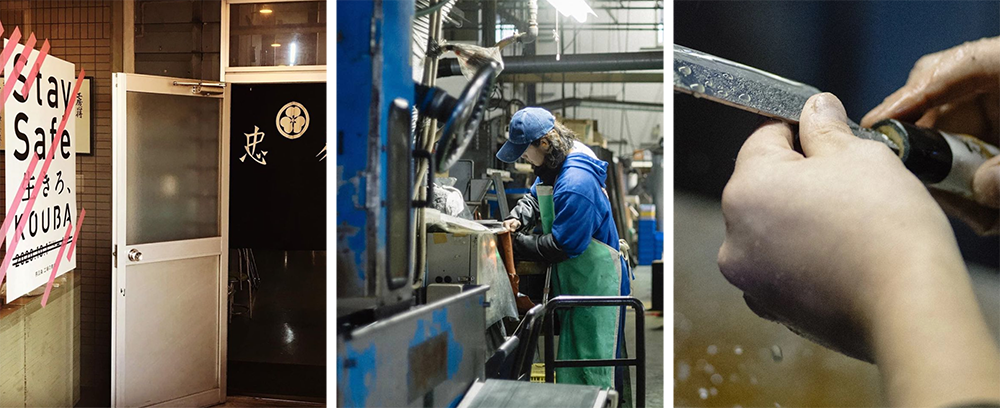
Founder of Tadafusa - Torasaburo Sone - established his company in 1948. Tadafusa is based in the city of Sanjo in the Niigata prefecture, combining production based on long-standing tradition with contemporary aesthetics and the demands of today. It regularly collaborates with contemporary industrial designers and holds several Good-Design Awards. Tadafusa focuses on traditional handmade production with an emphasis on affordability, which is why their knives are among the more reasonably priced handmade pieces from Japan. The specific material processing can result in slight inaccuracies, which are a natural hallmark of the brand and lend the knives a unique character. Similarly to the Kaji-Bei brand, whose style appears almost rustic with visible traces of craftsmanship (scratches, grinder marks, or distinctive wood grain), we have also gradually grown fond of Tadafusa for their sharpness, agility, and unique appearance.

JP Tadafusa co., Ltd., 27-16 Higashihonjoji, Sanjo-city, Niigata, 955-0823, +81-256-32-218, info@tadafusa.com CZ Tokyo Tools s.r.o., Slovinská 652/19, Praha 10, 10100, CZ, 773707811, info@tokyotools.cz

Material

The knife has a blade made from three-layer steel (SLD + stainless steel). Semi-stainless steel SLD was originally designed by Hitachi for cutting other steels. SLD is hard and easy to sharpen. It retains its sharpness as long as carbon steel but is much easier to maintain.
The handle is made of carbonized chestnut wood. Antibacterial carbonized wood is wood that has been heat-treated in a kiln, bringing it closer to charcoal. This wood has almost no moisture or nutrients, making it difficult for bacteria to settle and multiply.

Note: The knife is delivered in a beautiful cardboard package.

Maintenance

If you want to keep your Japanese knives in perfect condition, here are a few must-haves: Wash the knives by hand. Wipe with a dry cloth. Regularly coat them with oil on the blade and handle. Avoid dishwashers, which can damage the edge. The blade of this knife is made of semi-stainless steel SLD. SLD is a compromise between the edge retention abilities of carbon steel and the corrosion resistance of stainless steel. This steel will rust if you allow it. For proper care, it's essential to keep the blade clean and dry after use, especially if cutting something acidic. To increase its resistance, you can apply a thin layer of oil on the blade - ideally linseed or camellia oil. Regularly sharpen the knives with a sharpening stone, but remember that Japanese knives have a different edge angle and thus require special and finer sharpening stones. For a single-edged knife, primarily sharpen the sharp side, and from the other side, just remove the burr from the edge. Use a quality wooden cutting board. Store the knives in a dry place to prevent steel oxidation. Do not usefor cutting or chopping frozen products or bones. The blade may chip or break.

Hocho Kobo Gyuto 210 Tadafusa

Bestselling knives of 2025

Anyone who spends more than just a few minutes a day in the kitchen knows it: over time, you develop a relationship with certain knives.
Hocho Kobo Gyuto 210 Tadafusa

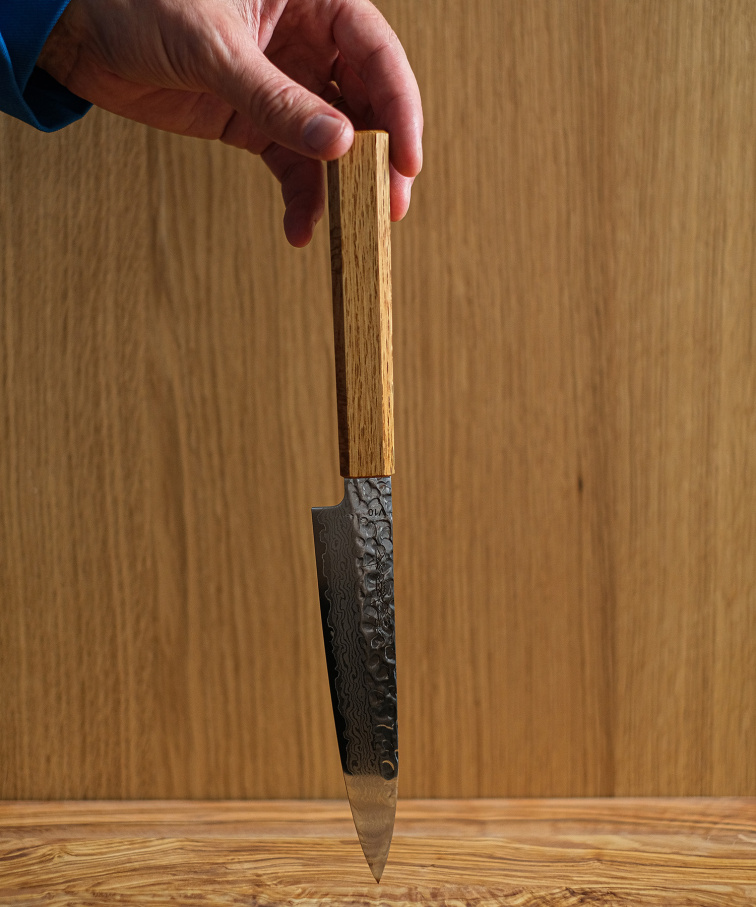
Knife Review: Petty NDV 150

Petty knives are often overlooked, even though they handle surprisingly large tasks in everyday cooking..
Hocho Kobo Gyuto 210 Tadafusa

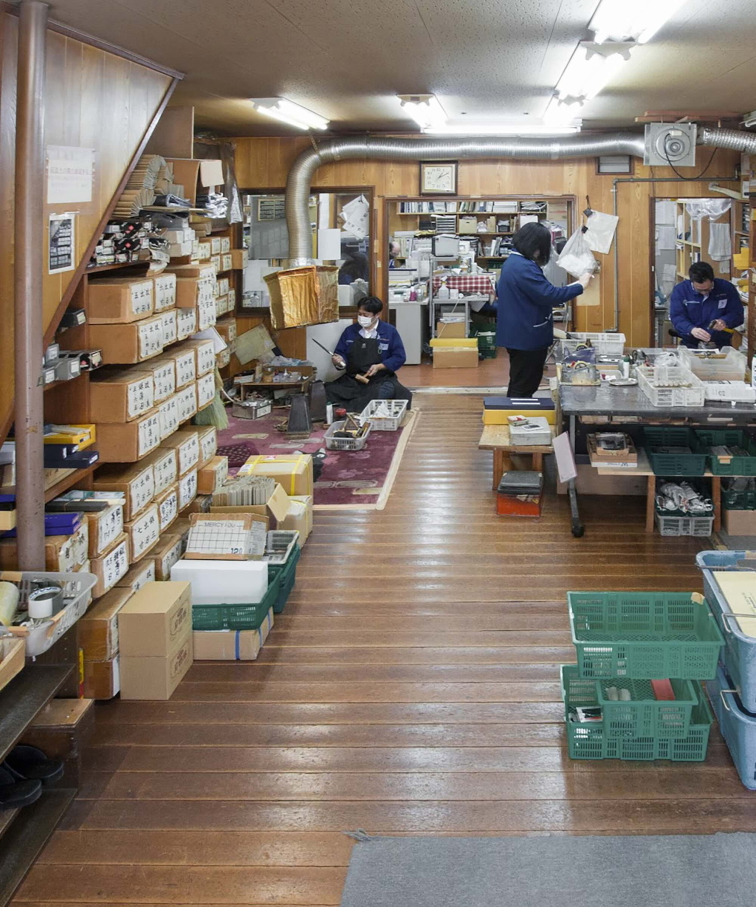
Brands: Sakai Kikumori

If you're looking for kitchen tools that go beyond mere functionality, sooner or later you will come across a knifemaker..

Discussion

Be the first who will post an article to this item!

Only registered users can submit posts. Please log in or sign up.

Do not fill out this field:

Security check

TADAFUSA_BRAND-SLIM

Zakladatel Tadafusa - Torasaburo Sone - založil svou společnost v roce 1948. Tadafusa sídlí ve městě Sanjo v prefektuře Niigata. Nyní již třetí generace společnosti pod vedením Tadayukiho Soneho spojuje výrobu založenou na dlouholeté tradici se současnou estetikou a požadavky dnešní doby. Příkladem jsou spolupráce s průmyslovými designéry, jako je Fumie Shibata pro řadu Hocho Kobo a Yusuke Seki pro jejich lokální showroom nožů. Také díky tomu je Tadafusa držitelem řady ocenění Good-Design Awards. 


Vytvořil Shoptet | Design Shoptak.cz