Polished Nakiri 165 Tadafusa
Code: TT0552Related products
Highly refined camellia oil (Tsubaki) from Japan protects steel knives from rust and oxidation, is odorless and does not dry out. Premium oil from the brand Kurobara Honpo from...
Synthetic water sharpening stone made in Osaka, Japan. Ideal for most sharpened blades, such as kitchen knives, planes, axes, chisels, gardening shears, and more.
A practical rust and dirt remover, ideal especially for carbon steel knife blades. It can also be used on gardening tools or scissors, as well as to remove water stains and...
Product detailed description
Polished Nakiri 165 Tadafusa
The Nakiri knife from Tadafusa is hand-forged in the city of Tsubame-Sanjo, renowned for its blacksmithing tradition. The Nakiri, a knife with a characteristic rectangular blade with a straight edge and flat profile, is ideal for cutting fruits and vegetables. The wide blade easily penetrates even dense vegetables and also serves as a scoop for transferring chopped ingredients. It is particularly ideal for clean, even cuts. The knife is made using the traditional San-mai technique from three-layer steel. The hard core of Aogami Blue Steel #2 carbon steel ensures an exceptionally sharp and long-lasting edge. The softer stainless steel cladding protects the blade from damage and increases its durability. The handle made of chestnut wood has been treated with a carbonization process, making it water-resistant and antibacterial. The features of this knife make it a practical and comfortable tool that you will reach for every day, especially if you frequently prepare vegetable dishes and fruit snacks in your kitchen.
Detail
Manufacture: Japan, Sanjo
Brand: Tadafusa
Model: Polished Nakiri 165 S-23
Overall Length: 305 mm
Blade Length: 165 mm
Blade Height: 52 mm
Blade Type: double-edged
Blade Finish: Migaki - polished
Steel: Aogami Blue Steel #2 + stainless steel
Hardness: 62-63 HRC
Manufacturer
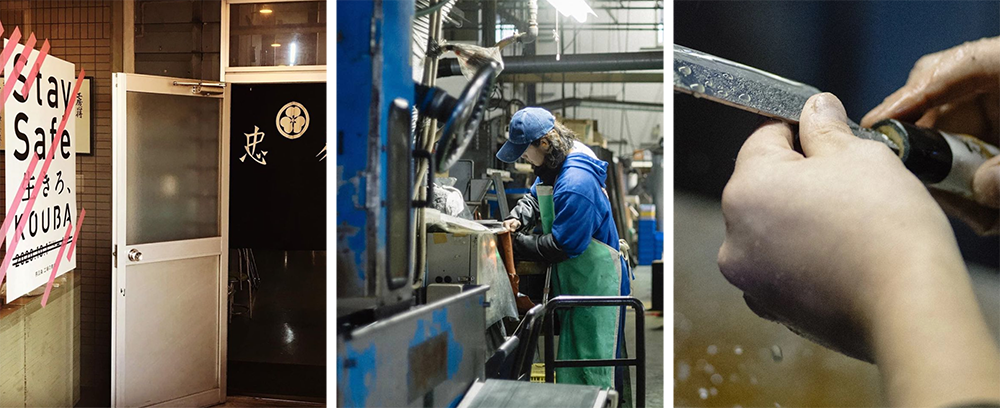
Founder of Tadafusa - Torasaburo Sone - established his company in 1948. Tadafusa is based in the city of Sanjo in Niigata Prefecture and combines production based on a long-standing tradition with contemporary aesthetics and the demands of today. They regularly collaborate with contemporary industrial designers and have received numerous Good-Design Awards. Tadafusa focuses on traditional handmade production with an emphasis on accessibility, which is why their knives are among the more affordably priced handmade pieces from Japan. The specific processing of materials may result in minor inaccuracies, which are a natural hallmark of the brand and give the knives a distinctive character. Similar to the Kaji-Bei brand, whose style appears almost rustic with visible traces of handwork (scratches, grinder marks, or pronounced wood grain), we have gradually come to appreciate Tadafusa's sharpness, agility, and unique appearance.
JPTadafusa co., Ltd., 27-16 Higashihonjoji, Sanjo-city, Niigata, 955-0823, +81-256-32-218, info@tadafusa.com CZ Tokyo Tools s.r.o., Slovinská 652/19, Prague 10, 10100, CZ, 773707811, info@tokyotools.cz

Material
The knife has a blade made from carbon steel Aogami Blue Steel #2 with a Migaki finish and stainless cladding. Aogami Blue #2 is a traditional Japanese carbon steel alloyed with tungsten and chromium, known for excellent edge retention. It combines hardness with good toughness and relatively easy sharpening.
The oval handle is made from carbonized chestnut wood with a plastic ring. Antibacterial carbonized wood is wood that has been smoked in a kiln, thus coming closer to charcoal. This wood has almost no moisture or nutrients, making it impossible for bacteria to settle and multiply.
Note: Shipped in original packaging.
Maintenance
If you want to keep your Japanese knives in perfect condition, here are a few must-haves: Wash knives by hand. Wipe dry with a cloth. Regularly apply oil to both the blade and handle. Avoid the dishwasher, which can damage the edge. Steel with a higher carbon content offers greater sharpness, easier sharpening, but requires more care compared to stainless steel. The knife needs to be continuously oiled, ideally before first use. Keep the carbon steel blade clean and dry after use. After cleaning, apply a thin layer of oil - preferably linseed or camellia oil. The blade of this knife is clad in stainless steel, so its corrosion resistance is much higher. Pay particular attention to the exposed sharpest part of the blade, which should be kept clean and dry after each use. Regularly sharpen knives on a whetstone, but remember that Japanese knives have a different sharpening angle and thus require special and finer whetstones. Use quality wooden cutting boards. Store knives in a dry place to prevent steel oxidation. Avoid using for cutting or chopping frozen products or bones. The blade may chip or break.
Japanese kitchen knife, hand-forged in the city of Sanjo. An indispensable Santoku model, made from Aogami #2 carbon steel with a stainless cladding and a handle made from...
Japanese kitchen knife, hand-forged in the city of Sanjo. An indispensable Santoku model, made from SLD steel with a stainless cladding and a handle made of carbonized chestnut...
Japanese kitchen knife, hand-forged in the city of Sanjo. A useful Nakiri model for slicing fruits and vegetables, made from SLD steel with stainless cladding and a handle made...
Handmade kitchen knife made of stainless steel in the traditional Japanese Nakiri shape. An ideal knife for cutting fruits and vegetables. It comes from the workshop of the last...

Zakladatel Tadafusa - Torasaburo Sone - založil svou společnost v roce 1948. Tadafusa sídlí ve městě Sanjo v prefektuře Niigata. Nyní již třetí generace společnosti pod vedením Tadayukiho Soneho spojuje výrobu založenou na dlouholeté tradici se současnou estetikou a požadavky dnešní doby. Příkladem jsou spolupráce s průmyslovými designéry, jako je Fumie Shibata pro řadu Hocho Kobo a Yusuke Seki pro jejich lokální showroom nožů. Také díky tomu je Tadafusa držitelem řady ocenění Good-Design Awards.